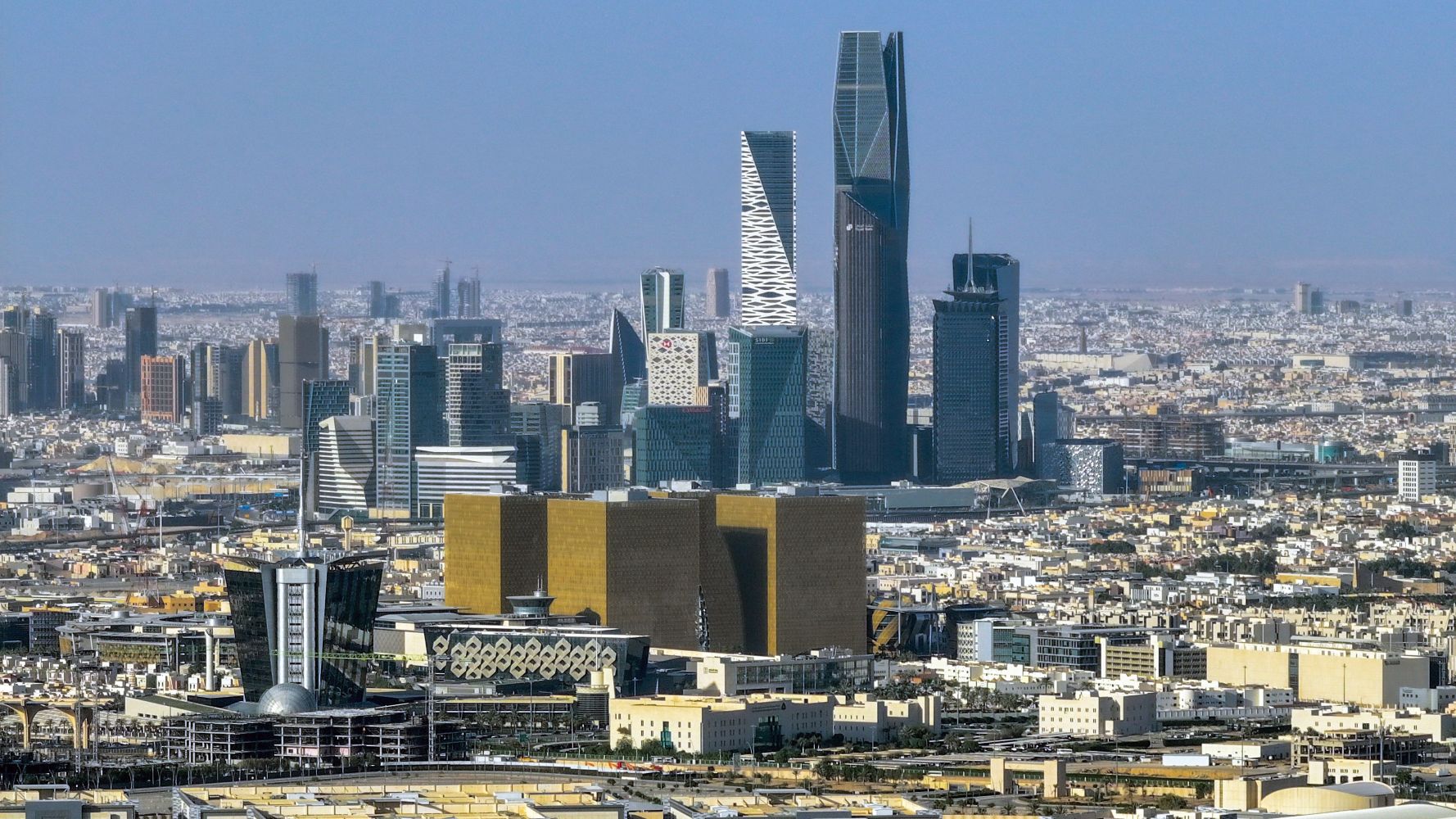
A prominent high-rise in Riyadh that serves as the global headquarters of Saudi Arabia’s powerful Public Investment Fund (PIF) has sustained a second direct impact from a suspected hostile attack in less than seven days, escalating already soaring cross-border tensions between Riyadh and Houthi-aligned forces based in Yemen.
Saudi Arabian officials formally denounced the Tuesday drone assault, which local authorities attribute to Houthi-linked combatants, as a cowardly act of terrorism. The kingdom’s Civil Defence agency confirmed 11 non-life-threatening injuries among occupants of the PIF Tower, and released verified imagery showing visible structural damage to the 385-meter landmark, which ranks among the tallest skyscrapers in the Saudi capital and sits at the core of the King Abdullah Financial District, the country’s flagship hub for global finance and investment. The tower had already suffered minor damage in a separate similar attack the prior Thursday, marking a rare pattern of repeated targeting of a high-profile Saudi government asset in a concentrated time frame.
The strike on Riyadh unfolded simultaneously with a series of Saudi coalition airstrikes on civilian transit vehicles in Wadi Maabaq, located in Yemen’s Lahij governorate, according to reports from Yemen’s state-run Saba news agency. Local eyewitnesses confirmed the aerial bombardment targeted two passenger buses and multiple cargo trucks, killing at least 25 civilians and injuring 6 others. Residents on the ground reported that charred human remains were still trapped inside one of the destroyed buses, making victim identification extremely difficult, and that circling Saudi fighter jets blocked emergency medical teams and local volunteers from accessing the strike site for hours, exacerbating the casualty toll.
The dual incidents highlight the rapidly deteriorating security landscape across the Saudi-Yemen border after Riyadh formally resumed large-scale military operations in Yemen in July, bringing an end to a years-long fragile ceasefire that had drastically reduced cross-border violence. Since the ceasefire collapsed, Houthi forces have made sweeping territorial advances, seizing full control of Yemen’s southern coastline and the strategically critical Bab al-Mandab strait, a narrow maritime chokepoint that links the Gulf of Aden to the Red Sea and serves as a key transit route for nearly 12% of global commercial shipping bound for the Suez Canal. The Houthi movement now exercises de facto authority over all vessel movements passing through the waterway, a development that has sent shockwaves through global supply chain networks and maritime security circles.
The long-running Yemeni civil conflict, which first erupted in 2014 following a large-scale Houthi military offensive to seize the capital Sanaa, has killed an estimated 400,000 people to date, with humanitarian organizations confirming that the vast majority of civilian fatalities stem from years of relentless Saudi-led coalition airstrikes and a sweeping economic blockade imposed on all Houthi-controlled territory, which has pushed millions of Yemenis to the brink of famine. The latest string of attacks on Saudi soil follows a pattern of escalating Houthi long-range strike capabilities that have repeatedly targeted high-value Saudi assets in recent months: earlier in November, a facility belonging to Saudi state energy giant Aramco was damaged in a strike inside Riyadh, while an assault on Riyadh’s international airport in October left at least 14 people dead.
Riyadh’s landmark ‘PIF Tower’ struck in aerial attack for second time in five days