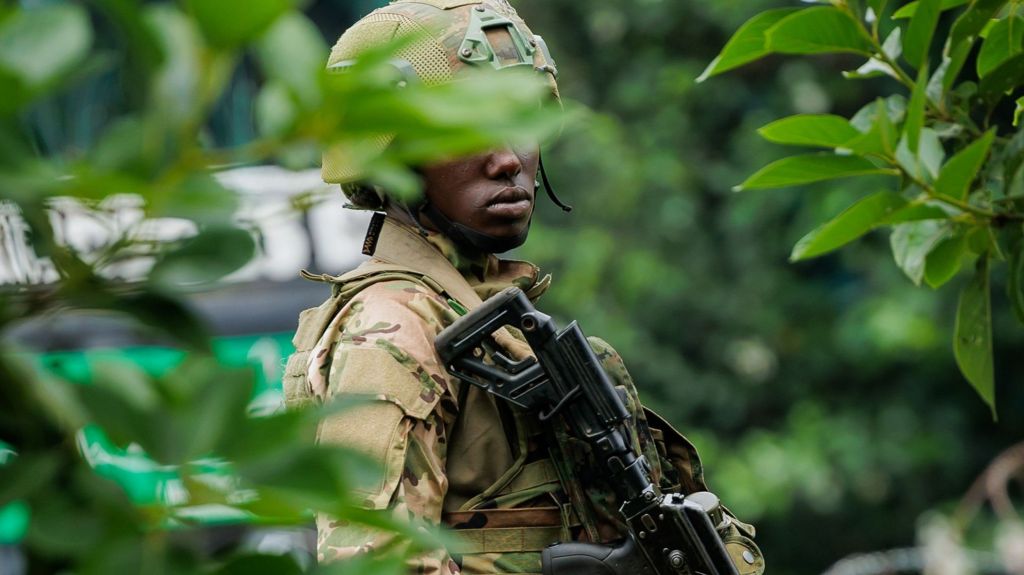
A volatile new chapter in eastern Democratic Republic of Congo’s long-running conflict unfolded this week, as national military authorities launched an urgent search for a missing aircraft, following public claims from a prominent rebel faction that it had shot down a government warplane targeting the strategic town of Minembwe in South Kivu province. The Congolese armed forces confirmed on Sunday that it lost all communications with a small Cessna 208 cargo plane mid-flight, initially attributing the disappearance to adverse weather conditions, and noted that no updates on the status of the aircraft or its crew had been confirmed as of Monday. The rebel group Front for the Refoundation of the Nation (FRN) issued a statement the same day as the plane vanished, asserting its forces had targeted and downed a military aircraft that was on an operational mission to carry out airstrikes on Minembwe. The rebels reported four personnel were aboard the craft, including two foreign pilots: one Ugandan national, and a South African who was claimed to have been captured alive by FRN fighters. At this stage, the British Broadcasting Corporation has not been able to independently corroborate the rebel group’s shootdown claim, and officials have not yet confirmed if the missing Cessna reported by the Congolese military is the exact same aircraft the FRN says it destroyed. The incident quickly drew cross-regional scrutiny after a unverified video circulated widely on social media, showing a man being interrogated next to scattered aircraft wreckage, who identified himself as a Ugandan national and stated he had been deployed by his home government. In response to the footage, Ugandan military leadership issued an official denial of any involvement in the operation. A public post on X attributed to Uganda’s army chief General Muhoozi Kainerugaba explicitly stated that the Uganda People’s Defence Force (UPDF) had no connection to the aircraft downed near Minembwe, and that the private company linked to the flight had been penalized, though no details about the firm or the nature of the penalty were released. Kainerugaba later added a formal directive barring all Ugandan citizens from working for mercenary organizations operating inside DR Congo. South African investigative outlet Mail & Guardian cited an FRN spokesperson who confirmed the captured surviving pilot was a South African national, describing him as a mercenary with no legitimate ties to the communities his mission intended to attack. “We are now facing a multi-nationalized conflict in eastern DRC,” FRN deputy spokesperson Oscar Balinda told the publication. The Congolese government has a well-documented history of contracting foreign mercenary personnel to support its counter-insurgency operations against rebel groups in the mineral-rich eastern provinces. Tensions and armed clashes between the FRN and government troops have escalated sharply in recent days, with rebel leadership accusing Kinshasa of deliberately carrying out airstrikes on densely populated civilian neighborhoods. The FRN currently maintains control over swathes of eastern DRC territory, including the major urban hub of Goma, following a series of rapid territorial advances the group made across the region in 2024. The ongoing surge in violence is creating cascading humanitarian crises across the conflict zone. Medical charity Médecins Sans Frontières announced over the weekend that intense fighting in North Kivu had forced multiple of its field teams to pause all mobile outreach services temporarily to ensure staff safety. The World Health Organization has also warned that the active Ebola outbreak centered in eastern DRC is being severely hampered by the ongoing hostilities, as large numbers of frontline health workers are trapped in combat zones, and access to at-risk communities for vaccination and treatment teams is blocked. Eastern DR Congo has been plagued by decades of overlapping armed insurgencies, territorial disputes and regional power rivalries, with large portions of the outbreak’s epicenter falling under rebel administrative control, creating massive barriers to coordinated public health responses.