The unprecedented return of Jensen Huang to the helm of semiconductor giant Nvidia has sent shockwaves across global tech and political circles, emerging as a viral top trending topic on China’s dominant social platform Weibo, where millions of users celebrated the comeback of the iconic industry leader who won widespread local affection earlier this year after viral clips showed him enjoying street-side noodles and bubble tea during a mainland visit in May. Many online observers noted the uncharacteristic absence of his signature leather jacket in footage of his return to Nvidia’s Silicon Valley headquarters, but far more weighty geopolitical undercurrents underpin the widely dubbed “comeback for the ages” that many Chinese commentators frame as a symbolic vindication for Beijing.
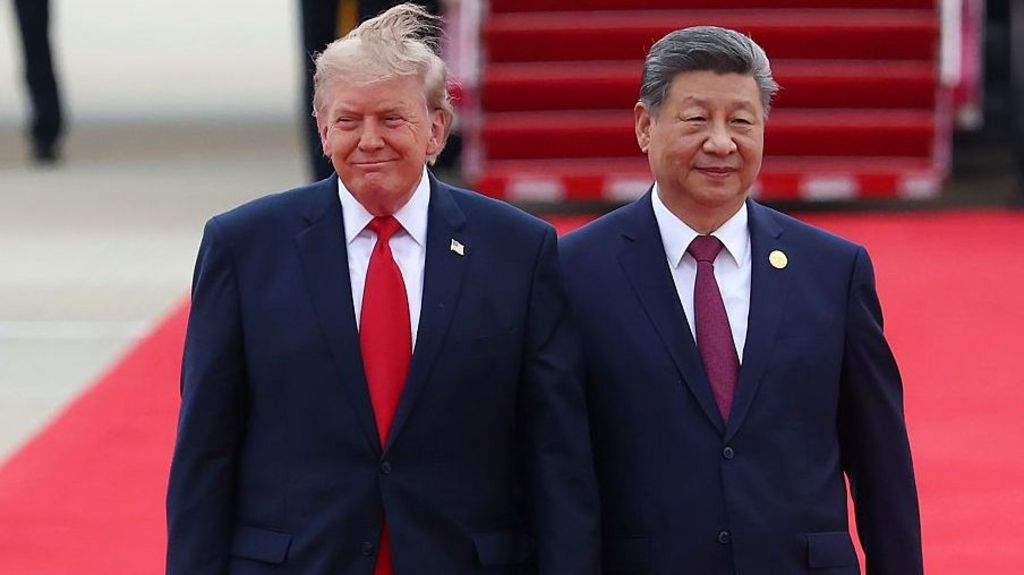
The saga unfolded against months of swirling unsubstantiated allegations that a woman linked to Huang had been recruited as a operative by China’s Ministry of State Security, claims that Beijing has firmly dismissed as a fabricated smear campaign. Chinese state media, including the Communist Party-affiliated Global Times, has characterized the entire investigation as a politically motivated witch hunt orchestrated by anti-China hardliners in Washington. The narrative shifted dramatically when U.S. President Donald Trump and the White House publicly stated that Huang poses no national security risk, even as formal probes into the alleged espionage ties remain technically active. The timing of Huang’s reinstatement, mere days after President Xi Jinping and Trump held a high-profile bilateral meeting in Shenzhen last week, has not gone unnoticed by diplomatic and policy circles, with Trump confirming that the two leaders discussed the Nvidia CEO during their closed-door talks, though no further details of the conversation have been released, and Beijing has declined official comment on the matter.
The episode has offered senior Chinese officials critical new insights into Washington’s internal divides, laying bare two distinct camps within U.S. policy circles: one faction pushing for sweeping, strict export controls to bar Chinese firms from access to cutting-edge semiconductor technology to preserve U.S. national security advantages, and another aligned with Huang’s long-held position that such restrictions will backfire by accelerating China’s domestic development of independent chip alternatives, while permanently locking U.S. tech firms out of the world’s second largest consumer market. Huang has repeatedly warned policymakers that overly broad export bans will only empower competitors like Huawei to build fully self-sufficient domestic supply chains, inflicting lasting harm on U.S. industry revenue and market share.
Critically, Huang’s return to Nvidia’s leadership does not signal an imminent easing of U.S. tech curbs targeting China. The U.S. Bureau of Industry and Security is rolling out sweeping new regulatory measures that extend far beyond direct chip sales to China, closing longstanding loopholes that have allowed Chinese enterprises to access high-performance Nvidia and AMD chips via cloud computing infrastructure hosted in third-party nations including Singapore, Malaysia, and Thailand. These new rules represent a major escalation of U.S. tech containment efforts, and Beijing has yet to announce any formal retaliatory measures, though global investors are closely monitoring for signs of a tit-for-tat escalation that could trigger volatility across U.S. equity markets.
The incident has also given Xi new clarity on Trump’s core domestic priorities, particularly the U.S. president’s intense focus on maintaining stable, buoyant stock market performance, a concern so significant that Trump was willing to intervene in the internal personnel decision of one of the world’s most valuable companies. Though the White House has stressed that Trump’s personal financial holdings, including a stake in Nvidia, are held in a blind trust managed by his adult sons, the episode has highlighted potential points of leverage for Beijing, which has previously deployed its near-monopoly on global rare earth metal supplies to force U.S. negotiators to make concessions in past trade talks. A new cycle of escalation, combining tightened U.S. chip restrictions and Chinese rare earth export curbs, would send cascading shocks through global supply chains, as U.S. industries from automotive manufacturing to defense contractors to domestic chipmakers all rely heavily on access to Chinese rare earth materials for core production processes.
The broader U.S.-China strategic rivalry has now shifted its central focus away from the tariff battles that dominated bilateral relations in earlier years, centering instead on control over critical advanced technology and strategic mineral supplies that will define both nations’ military influence and long-term global economic dominance. The saga is far from concluded: Huang is scheduled to testify before U.S. Congress next month, and a newly Democrat-controlled Congress taking office in January is poised to ramp up scrutiny of the case, with even prominent Republican lawmakers such as Arkansas Senator Tom Cotton publicly arguing that the controversy “is just the tip of the iceberg and it’s not resolved because Jensen Huang has his job back.” The trajectory of the Huang affair will shape the terms of the upcoming planned December meeting between Trump and Xi, as both sides race to negotiate a partial trade deal amid these mounting overlapping tensions.
What China’s Xi could take away from Jensen Huang’s return to Nvidia