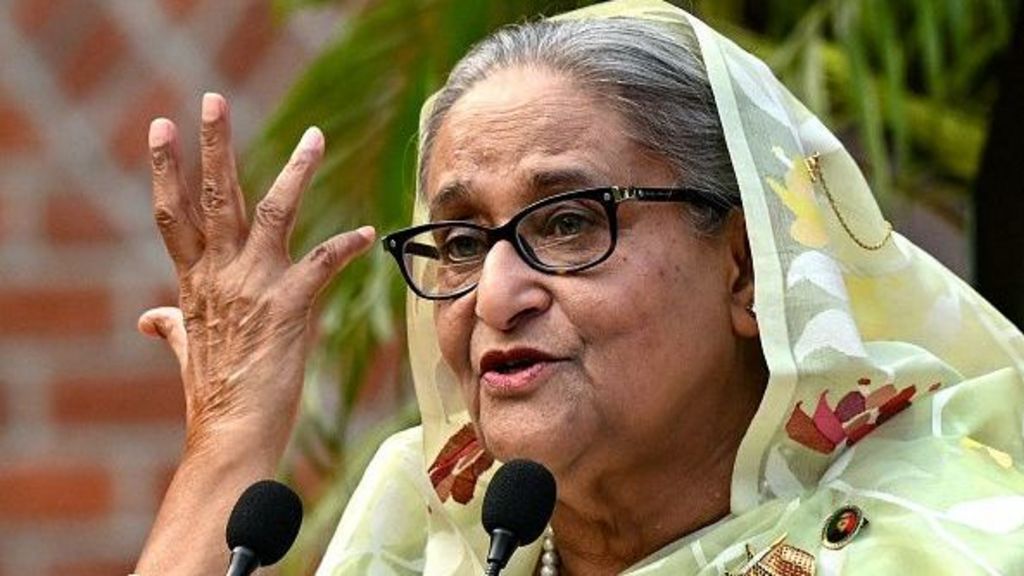
More than two years after a mass popular uprising forced her to flee her 15-year premiership, former Bangladesh prime minister Sheikh Hasina, who has resided in exile in New Delhi since August 2024, has formally declared her intention to return to Dhaka on 16 December, her official spokesperson confirmed this week. In a striking demand, Hasina’s team has called on the current Bangladeshi administration to arrange official air transport to bring her back from the Indian capital, noting she was initially evacuated to India aboard a Bangladeshi government aircraft in the chaotic final hours of her rule. The chosen date carries profound national and personal symbolism: 16 December marks Bangladesh’s Victory Day, the anniversary of the 1971 conclusion of the country’s independence war against Pakistan, a movement led by Hasina’s father, founding father Sheikh Mujibur Rahman.
The announcement has ignited a sharp, hostile response from Dhaka’s ruling administration. Bangladesh’s state minister for foreign affairs Humayun Kabir told a Tuesday press briefing that Hasina would never be permitted to enter the country as a regular civilian passenger, and that security forces would take her into custody in handcuffs immediately upon arrival. Kabir went a step further to accuse Hasina and the Indian government of orchestrating and funding recent wave of unrest across Bangladesh, claiming the pair were backing what he described as “terrorist activities” carried out by activists from Hasina’s long-dormant Awami League party. The Awami League was formally banned from all political activities in May of last year under the interim administration led by Nobel Peace Prize winner Muhammad Yunus, and was later barred from participating in February’s general election that saw long-time opposition figure Tarique Rahman of the Bangladesh Nationalist Party sworn in as prime minister. Despite the blanket ban, thousands of Awami League loyalists have staged repeated street demonstrations and called for nationwide general strikes to demand Hasina’s repatriation.
The context for Hasina’s exile traces back to the 2024 youth-led movement that began as a series of peaceful student protests against controversial government job quota policies, which escalated into a nationwide mass uprising after security forces launched a lethal crackdown on demonstrators. The United Nations estimates that as many as 1,400 people were killed across the country during the months of unrest, as tens of thousands of protesters flooded central Dhaka and stormed Hasina’s official residential compound, forcing her to flee to India. A Bangladeshi court later sentenced Hasina to death in absentia on charges of crimes against humanity linked to that deadly crackdown, allegations she has consistently and categorically denied.
Hasina has openly acknowledged the extreme personal risk she faces by returning, telling a press gathering in Delhi via audio link in August, on the second anniversary of her ouster, “I know that they may put me in jail or they may kill me, anything may happen, but still I have to go back.” Her ongoing political activities from Indian territory have created significant diplomatic friction for New Delhi, which maintained extremely close bilateral ties with Hasina during her 15 consecutive years in power. Indian officials had hoped that the transition to a new elected government in Dhaka would create an opening to reset fraying cross-border relations, but those efforts have been complicated by the unresolved extradition request for Hasina submitted by Bangladesh. New Delhi’s foreign ministry confirmed in April that it was reviewing the extradition request and seeking to engage constructively with the new Bangladeshi administration to strengthen bilateral cooperation, but has not issued an official comment on Hasina’s announced return plans as of press time. For his part, newly elected Prime Minister Tarique Rahman has not yet accepted a standing invitation to visit India, nine months after taking office, having instead made official trips to China, Japan and Malaysia, and skipping the India-hosted BRICS summit in September. While diplomatic teams from both nations have resumed discussions to schedule a long-delayed state visit, no formal dates have been publicly released.