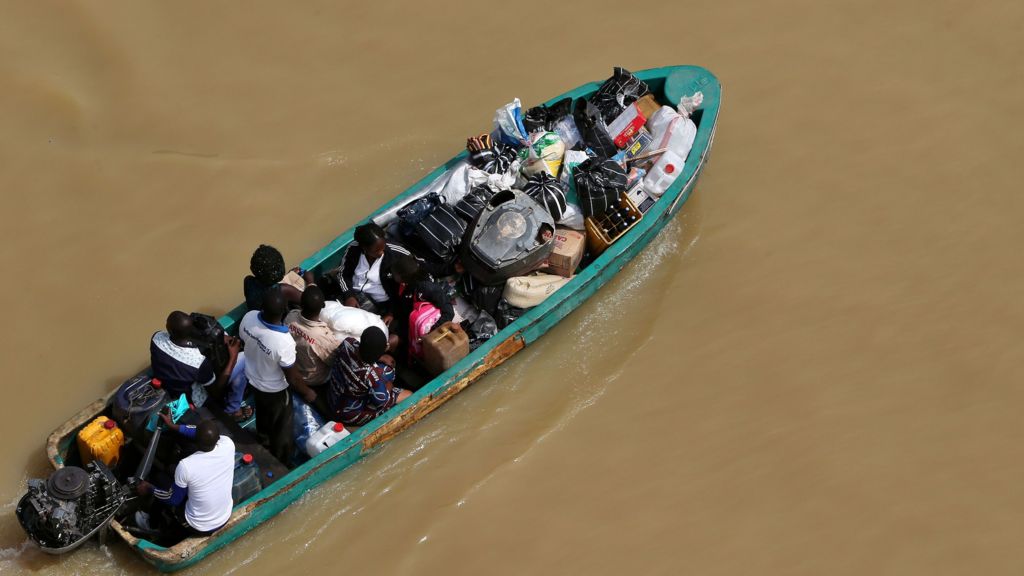
A frantic, time-sensitive search and recovery operation is underway across Nigeria’s inland waterways following a tragic Friday capsizing of a passenger vessel carrying mourners en route to a funeral ceremony. As confirmed by a spokesperson from the National Emergency Management Agency (NEMA) in an interview with the BBC, rescue teams have successfully pulled 50 survivors from the water and recovered 29 bodies to date, with efforts still ongoing to locate any unaccounted passengers.
According to Bayelsa State police spokesperson Musa Mohammed, the ill-fated craft departed from the Ayama community when it suffered sudden mechanical malfunctions mid-journey. Panicked passengers reportedly begged the vessel’s operator to steer toward the nearest shore to avoid a catastrophic breakdown, but the operator allegedly refused to adjust course, a decision that directly precipitated the fatal sinking. Survivors recounted scenes of chaotic desperation in the immediate aftermath of the accident, as dozens of people fought to stay afloat amid churning water while waiting for emergency response teams to reach the remote riverine location. One survivor, Charity Ebikaboaere, told local outlet Arise News that she was forced to bite a fellow passenger who was dragging her underwater to avoid drowning, while another survivor named Tari Samuel noted that all their personal belongings, including cash and mobile phones, were lost, but he and his siblings managed to survive the ordeal.
The disaster has spurred immediate federal and state action to crack down on longstanding safety lapses that have made Nigerian inland waterways a frequent site of fatal maritime incidents. NEMA spokesperson Manzo Ezekiel flagged two pervasive, high-risk practices driving repeated tragedies: the widespread use of untrained, uncertified boat operators, and the common refusal of passengers to wear life jackets, with many riverine residents incorrectly assuming their familiarity with local waterways eliminates the need for basic safety gear. Bayelsa State Commissioner for Information Ebiuwou Koku-Obiyai echoed these warnings in an official Saturday statement, emphasizing that reckless behaviors including overloading, excessive speeding, and operating vessels without proper safety equipment must end immediately, as no journey is worth the loss of human life.
Nigerian President Bola Tinubu issued official condolences to the families of the deceased in a public post on social platform X, directing all federal disaster management agencies to coordinate fully to ensure search and recovery efforts run as efficiently as possible. In a mark of respect for the victims, Tinubu also ordered that his previously scheduled Saturday election rally in Ibadan, Oyo State, be scaled back to a low-key, subdued event without the usual large fanfare.
This latest capsizing is part of a disturbing pattern of recurring boat accidents across Nigeria, where remote riverine communities often rely on water transport as their primary travel option due to severely limited paved road access. Earlier this August, an overloaded vessel capsized in north-western Sokoto State, killing at least 50 people, the majority of them children. In January of this year, a leaking passenger boat sank in north-eastern Yobe State, leaving no fewer than 25 people dead. Federal authorities have now pledged to ramp up enforcement of existing maritime safety regulations across all inland waterways to prevent further preventable loss of life.