During a nationally televised Saturday interview with Turkish broadcaster TGRT Haber on November 22, 2026, Turkish Foreign Minister Hakan Fidan sounded a stark public alarm that Israel could be laying the groundwork for a full-scale military operation inside Syrian territory, leveraging long-running support for a select Druze armed faction in southern Syria to manufacture a deliberate provocation against Damascus forces. Fidan confirmed that Ankara has already flagged this high-risk scenario to its regional partners, as well as senior diplomatic and security officials from the United States and across European capitals.
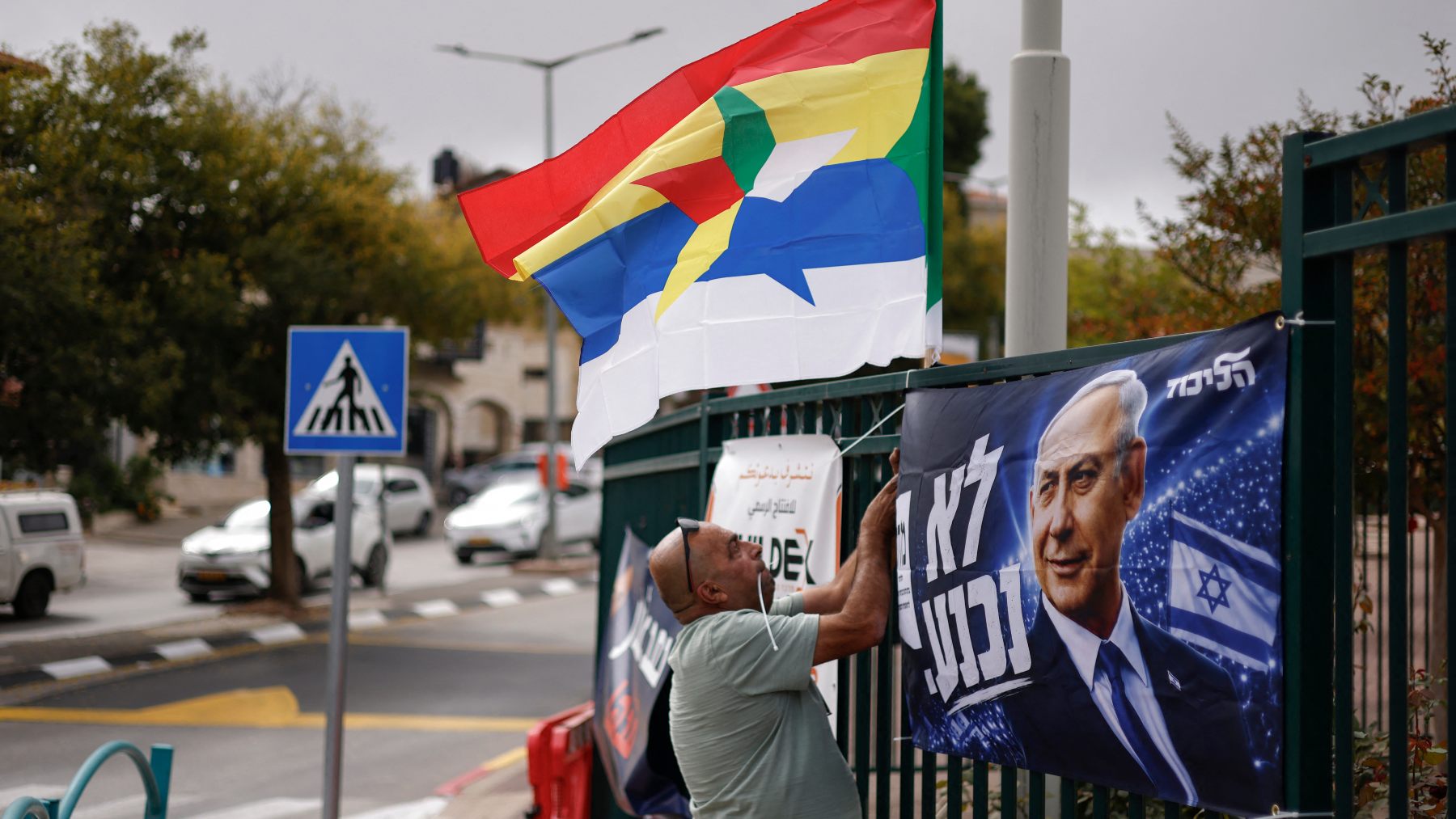
According to Fidan’s on-the-record account, Syria’s Druze community is broadly split across three major tribal blocs, two of which maintain explicit loyalty to the Syrian government and hold staunch anti-Israel positions. The third, however, is receiving regular airdrops of weapons, ammunition, and tactical equipment from Israeli military helicopters on a weekly basis, with the explicit goal of inciting clashes with Syrian national army units to create a credible casus belli for Tel Aviv to intervene directly.
The warning comes against a backdrop of months of escalating activity in Sweida, the majority-Druze southern Syrian province that operates as a de facto autonomous zone under the oversight of influential spiritual leader Sheikh Hikmat al-Hijri, who has publicly aligned himself with Israel. In a controversial July 2026 statement, al-Hijri even floated the idea of formal integration of Sweida into Israeli territory to preserve the province’s local autonomy. Multiple independent reports dating back to recent months corroborate Fidan’s allegations: The National reported last month that Israeli helicopters had delivered surveillance gear, radar systems, sniper rifles, and night-vision equipment to Sweida’s dominant Israeli-backed militia coalition, the Sweida National Guard, via flight paths over the Yarmouk River basin and rural areas of neighboring Deraa. A senior Syrian government official also confirmed to The Jerusalem Post in October that an Israeli helicopter had landed directly inside Sweida to unload large stockpiles of small arms and ammunition.
Analysts frame Fidan’s public remarks as a deliberate, proactive deterrence move rather than a reactive escalation. Omer Ozkizilcik, a non-resident senior fellow at the Atlantic Council, told Middle East Eye that Ankara’s public warning was crafted explicitly to dissuade Israel from taking reckless unilateral action in southern Syria before any incursion could be launched. “Turkey is trying to raise global awareness and prevent it from happening entirely,” Ozkizilcik explained, adding that a major Israeli ground offensive in southern Syria would act as a “Pandora’s box” triggering cascading military escalation across the entire region, one that would almost inevitably draw in Turkey even if Ankara initially sought to avoid direct troop deployments. He noted that Turkey would likely move to coordinate closely with the Syrian national army and its Arab regional allies to push back against any Israeli incursion, a dynamic that would create catastrophic military, political, and diplomatic fallout for Israel.
The Turkish foreign minister’s public statement was delivered just days after he hosted his Syrian counterpart Asaad al-Shaibani for high-level talks in Ankara, where Fidan publicly demanded that Israel immediately end all its ongoing military strikes in southern Syria and anchor all cross-border security arrangements to the 1974 Disengagement of Forces Agreement. “The security of any state cannot be built upon the destabilisation of its neighbours,” Fidan emphasized during their joint press conference. The UN’s deputy special envoy for Syria, Claudio Cordone, also recently updated the UN Security Council that Damascus has deployed additional military units to Sweida amid reports of sustained Israeli support for local non-state armed actors, noting that the province remains trapped in a volatile security and political stalemate.
Analysts also link the rising risk of Israeli military action in southern Syria to Israeli Prime Minister Benjamin Netanyahu’s persistent domestic political uncertainty, pointing out that the long-serving leader has a well-documented track record of launching targeted military operations to shore up his domestic political and electoral standing. With U.S. administrative obstacles currently blocking a large-scale Israeli strike on Iran, Ozkizilcik argues that southern Syria has emerged as the most plausible alternative theatre for Netanyahu to launch a new military campaign to distract from domestic pressures. Fidan himself flagged this exact dynamic back in April 2026, noting that Israel was temporarily holding back on aggressive actions in Syria due to its concurrent confrontations with Iran, but had never abandoned its long-term intervention plans.
During the wide-ranging televised interview, Fidan also addressed several other high-profile regional and diplomatic issues. He revealed that Israel is actively blocking the entry of thousands of prefabricated container homes that Turkey had earmarked for delivery to displaced civilian populations in Gaza, units that had originally been deployed to house survivors of Turkey’s devastating 2023 earthquakes. Fidan said Israeli authorities were citing the metal composition of the containers as a pretext, claiming Hamas could repurpose the material to manufacture weapons.
Turning to U.S. domestic political dynamics shaping Middle East policy, Fidan described an ongoing “hidden struggle” unfolding within the United States between two competing factions: one that prioritizes advancing Israeli interests above all else, and a growing opposing camp that puts American national interests first. He argued that for decades, U.S. Middle East policy has disproportionately served Israeli priorities rather than core American interests, and that Netanyahu’s recent policy moves have significantly undermined former U.S. President Donald Trump’s political standing, turning a leader who campaigned on a promise to deliver historic regional peace deals into a figure widely seen as entering unnecessary wars to advance Israeli goals. He added that public hostility toward Israel is steadily rising across the U.S., and that a growing bipartisan current in Washington is pushing back against unconditioned support for new military interventions in the Middle East.
Fidan also moved to defend Turkey’s recent Mecca Joint Defence Agreement, signed in August 2026 alongside Saudi Arabia and Pakistan, which codifies a mutual defence commitment under which each signatory will treat an armed attack on any other member as an attack on itself. He pushed back against domestic critics in Turkey who have warned the pact could drag Turkish troops into deadly conflicts in Yemen’s desert, noting that unlike a century ago when Yemen was part of the Ottoman Empire, Yemen is now a fully independent sovereign state, and that the level of public criticism directed at the new Islamic regional defence alliance stands in stark contrast to the lack of public pushback when Turkey deployed thousands of troops to Afghanistan as part of NATO missions in prior decades.