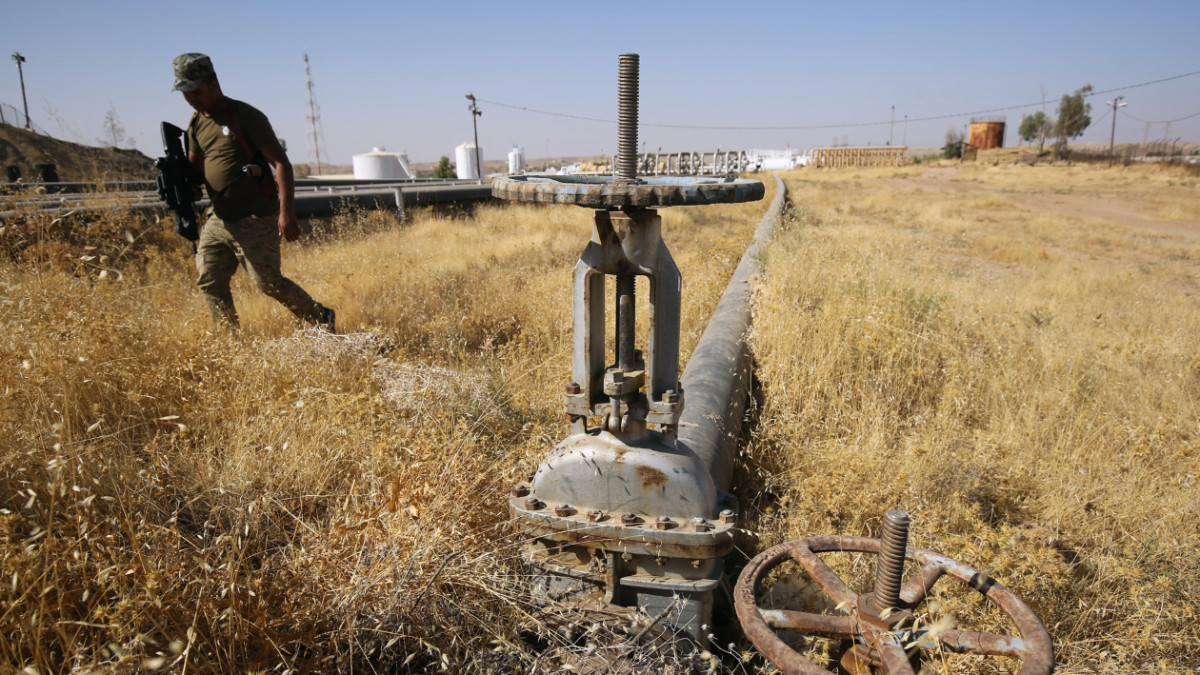
In a stark public assessment shared via an essay published in The Economist on Wednesday, International Energy Agency (IEA) Executive Director Fatih Birol issued a grave warning that the ongoing US-Israeli military campaign targeting Iran has completely eroded long-standing global trust in the Strait of Hormuz as a secure, dependable maritime corridor for global energy exports. Birol emphasized that there is no plausible, evidence-backed route to restore the pre-conflict operational and market conditions that defined the strait as of February 2026, noting that the chokepoint has already seen one full disruption to shipping flows that sent seismic shocks through global oil and natural gas markets, with a very real risk of repeated future blockades. While Birol acknowledged that global energy systems could technically function even if the strait is fully cut off, he stressed that such a scenario would bring severe, widespread operational and economic pain. The IEA followed up Birol’s public remarks on Thursday with the release of its latest World Energy Outlook report, which laid out detailed cost estimates and strategic roadmaps for reducing global reliance on the 39-kilometer-wide strategic waterway that currently carries roughly a third of all global seaborne oil trade. The agency calculated that constructing new, expanded pipeline networks that circumnavigate the strait entirely would require an estimated $40 billion in total investment, a cost that would add approximately $2 to the per-barrel price of all Middle Eastern crude shipped to global markets. To fully offset the strait’s export capacity via non-Middle Eastern alternative energy supplies, an additional $200 billion in global investment would be required. The report further noted that a slate of new cross-regional pipeline projects already under construction or active consideration across the Middle East could collectively move up to 7 million barrels of crude per day to export terminals outside the Persian Gulf, eliminating the need for those volumes to transit the Hormuz chokepoint. Under the IEA’s modeled “Low Hormuz Case” scenario, which assumes full completion of all these planned bypass pipelines, coordinated output increases from non-Gulf oil producers, and targeted demand reduction measures from major energy importers, total volumes required to transit the Strait of Hormuz could drop to just 2 million barrels per day by 2035, drastically reducing the waterway’s systemic market relevance. Across the Middle East, national governments have already accelerated efforts to operationalize these bypass routes to shield their export revenue from future Hormuz disruptions. Saudi Arabia is moving forward with capacity expansions for its existing East-West Pipeline, which transports crude from its Eastern Province oil fields to the Red Sea export terminal at Yanbu. The United Arab Emirates has also doubled down on investments in its own cross-emirate pipeline network that routes exports directly to the Gulf of Oman, avoiding the strait entirely. As first reported by Middle East Eye, US diplomatic teams have also been working to revive a long-dormant cross-border pipeline link between Iraq and Syria to create another bypass option. Most recently this week, Iraq resumed full crude shipments via the long-idle Kirkuk-Ceyhan Pipeline, which transports northern Iraqi oil directly to Turkish Mediterranean export terminals. Despite the rapid rollout of these alternative routes, the IEA cautioned that none of the proposed pipelines are invulnerable to targeted attacks, pointing to past strikes on Saudi Arabia’s East-West Pipeline by Houthi forces and Iraqi militias as a clear demonstration of risk. The agency concluded that persistent regional instability across the Middle East will leave even these new export corridors exposed to disruption, and that while gradual diversification away from reliance on the Strait of Hormuz is achievable over a 10-year timeline, full decoupling from Middle Eastern energy supplies as a whole remains economically and logistically unfeasible for the foreseeable future.