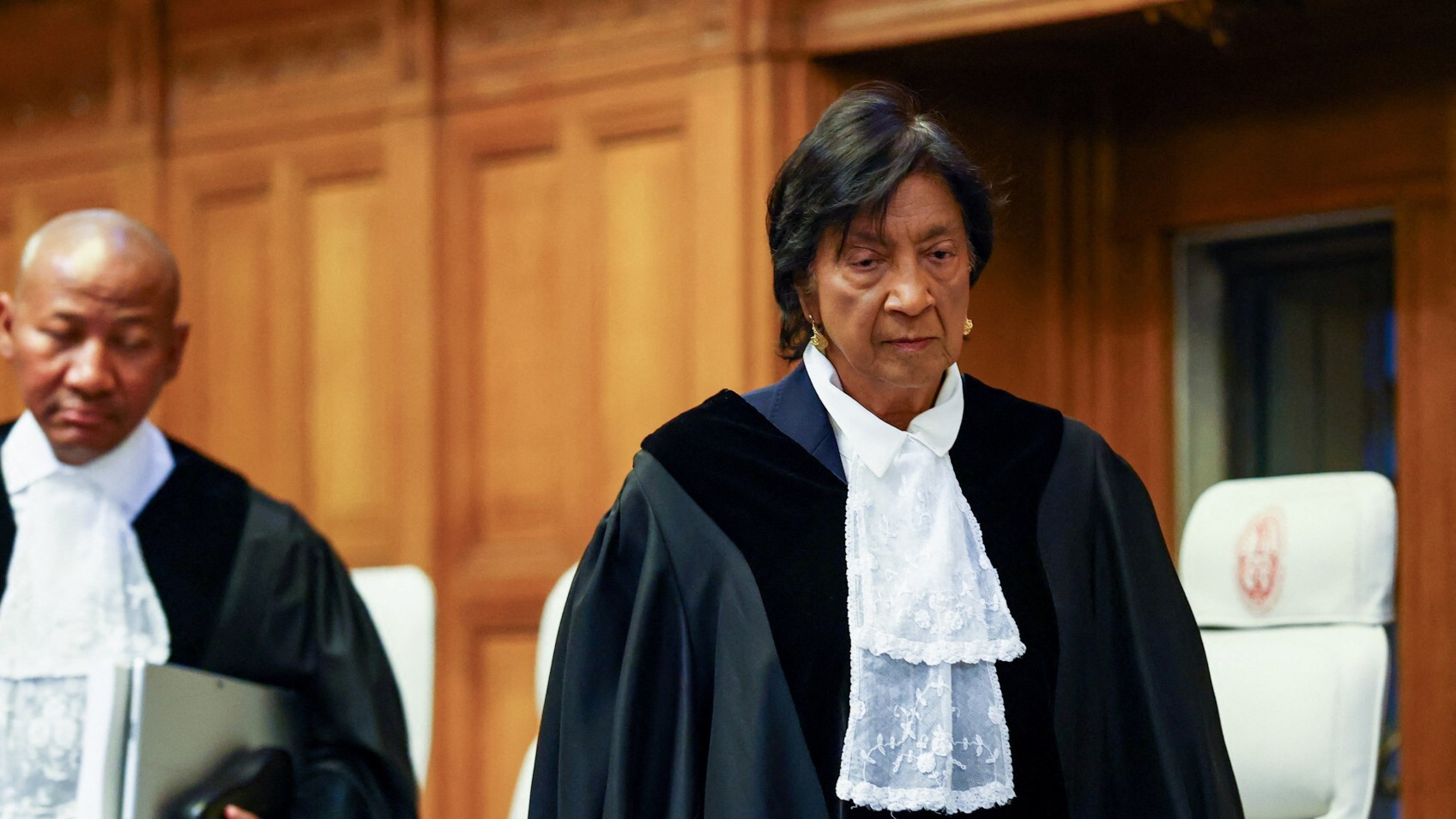
A landmark, first-of-its-kind ruling from the United Nations’ highest judicial body, the International Court of Justice, has formally found the state of Myanmar responsible for perpetrating genocide against the Rohingya ethnic minority, delivering a 9-6 majority decision on Thursday that rejects longstanding state defenses framing large-scale military operations as legitimate counterinsurgency campaigns against armed groups. The ruling, which marks the first time the ICJ has ever held a sovereign state accountable for genocide under the 1948 Genocide Convention, rejects Myanmar’s official argument that its 2017 operations in Rakhine State were a measured response to attacks by Rohingya militant factions. Instead, the panel of judges determined that the only reasonable inference to draw from the documented pattern of mass killings, widespread sexual violence, systematic property destruction and targeted harm to Rohingya communities is that state security forces acted with explicit intent to destroy a substantial segment of the protected Rohingya population in northern Rakhine. Under the Genocide Convention, documented atrocities alone do not meet the legal threshold for genocide: prosecutors are required to prove specific, deliberate intent to eliminate a protected national, ethnic, racial or religious group, a standard that the ICJ has historically required to be the only plausible conclusion drawn from a consistent pattern of state conduct, even in the absence of explicit direct evidence of intent. This newly established legal framework carries unprecedented weight for the separate pending ICJ case brought by South Africa against Israel, which alleges the state has perpetrated genocide against Palestinian populations in Gaza. Israel has repeatedly defended its ongoing military campaign in Gaza as a targeted operation exclusively against Hamas and other armed militant groups, claiming its security objectives automatically negate any possibility of genocidal intent. Leading genocide scholars and legal experts note the Myanmar ruling directly undermines that line of defense. Melanie O’Brien, former president of the International Association of Genocide Scholars, pointed out that the scale of documented harm to Palestinian civilians vastly outpaces the atrocities committed against the Rohingya: “Israel has killed over 20,000 children, which is far more than the 2,000 killed by Myanmar,” she noted, adding that the ICJ’s consideration of decades of systematic state discrimination and persecution against the Rohingya as contextual evidence of genocidal intent is directly applicable to the well-documented long history of Israeli state policies targeting Palestinian communities. Nimer Sultany, a London-based law professor and genocide specialist, highlighted that the ICJ explicitly referenced decades of successive anti-Rohingya military operations dating back to 1978 as supporting evidence of premeditated genocidal intent, a precedent that aligns with the repeated Israeli military campaigns against Gaza that have unfolded since 2000. Sultany also noted the ICJ’s formal recognition that UN investigative reports constitute reliable, admissible evidence in cases where a state bars independent international monitors from accessing conflict zones. Israel has consistently denied UN investigators entry to Gaza to probe alleged atrocities, but existing findings from the UN’s official Commission of Inquiry on the Gaza conflict have already concluded that Palestinian civilians, including large numbers of children, have been directly targeted in genocidal acts. The Myanmar ruling found the state responsible for three of the four genocidal acts outlined in the Gambia’s original 2019 submission: mass killing of group members, infliction of severe bodily and mental harm, and imposition of conditions designed to prevent births within the targeted Rohingya community. It stopped short of finding Myanmar had deliberately imposed life-threatening conditions calculated to bring about the total physical destruction of the group, a threshold Sultany argues will be far easier to meet in the Gaza case, given overwhelming UN documentation of widespread famine, systemic starvation, and the deliberate blocking of critical humanitarian aid to Gaza’s civilian population. The ICJ has already issued multiple legally binding interim orders mandating Israel to take all measures to prevent genocidal acts against Palestinians, but UN monitoring bodies have documented that Israeli military operations have continued unabated, with no meaningful compliance with those court directives.
ICJ ruling on Rohingya genocide could strengthen South Africa’s case against Israel