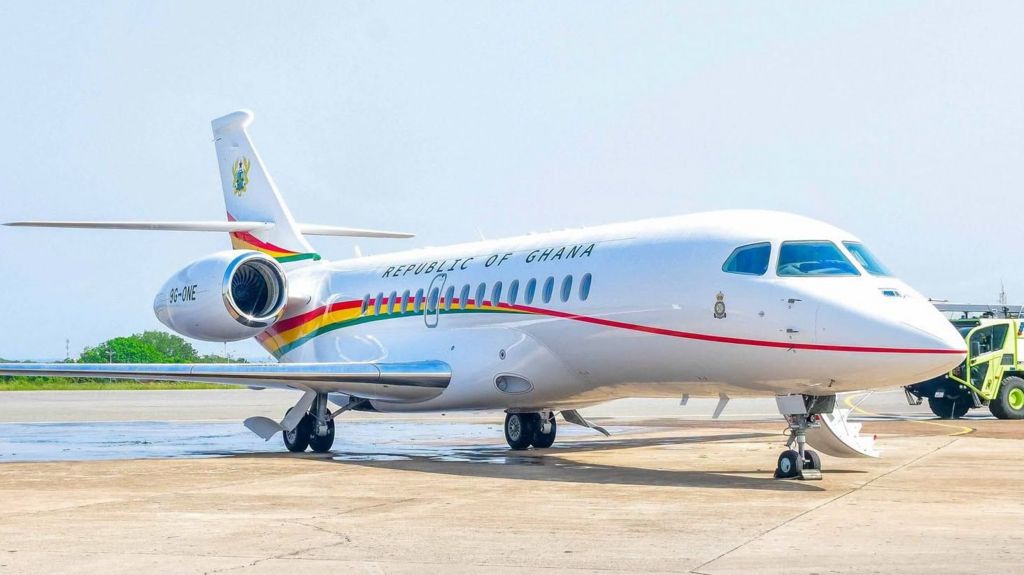
A fiery political dispute has erupted in Ghana following the official delivery of a brand-new French-manufactured Dassault Aviation Falcon 6X presidential aircraft to the Ghana Air Force this week, with the John Mahama administration facing widespread criticism over the multi-million-dollar acquisition at a time when large swathes of the population grapple with severe cost-of-living pressures. The long-range business jet, which was formally welcomed with a traditional water salute at a national airbase on Monday, carries a reported price tag of $61 million, having secured parliamentary approval last December as part of a broader military aviation modernization package that also includes four Airbus helicopters. The replacement aircraft is set to retire Ghana’s current 16-year-old Falcon 900EX fleet, which has been plagued by persistent mechanical faults including structural corrosion and fuel tank leakages, and was even stranded in France for months in 2025 during extended mandatory repairs. Government representatives argue the new Falcon 6X’s extended flight range will eliminate unnecessary mid-journey refuelling stops on international presidential travel, drastically improving operational reliability for official state visits. However, the purchase has triggered immediate cross-party outrage, most notably from leading opposition figure and Member of Parliament Samuel Abu Jinapor, who has slammed the ruling National Democratic Congress (NDC) for rank hypocrisy. Jinapor highlighted that the NDC, while sitting in opposition, had fiercely rejected identical proposals to acquire a new presidential jet, arguing that such lavish spending was indefensible amid Ghana’s years of crippling economic turmoil that forced the nation to secure a $3 billion International Monetary Fund bailout. He has now called for full public transparency around the full procurement process, financing mechanisms, and detailed cost breakdowns for the aircraft, noting that millions of Ghanaians continue to face sky-high youth unemployment and unaffordable basic goods and services. Public anger has spilled over onto social media platforms too, with thousands of local users pointing out that the $61 million allocated for the jet could have funded critical public services including salaries for tens of thousands of new nurses and teachers to address longstanding staffing gaps in under-resourced public institutions. In response to the mounting backlash, senior government officials have vigorously defended the acquisition, insisting that Ghana’s macroeconomic landscape has transformed dramatically since the NDC’s earlier opposition to the jet purchase. Peter Lanchene Toobu, chairman of parliament’s defence committee, clarified that the NDC never rejected the principle of upgrading the presidential air fleet, only the timing of such a large capital outlay when the national economy was on the brink of collapse. He confirmed that the government did not take on new debt to fund the purchase, citing recent gains in local currency strength, falling import costs, and stabilized inflation as proof that the current economic recovery phase is the fiscally responsible window to proceed with the long-planned fleet upgrade. Government spokesperson Kwakye Ofosu further pushed back against accusations of misplaced priorities, pointing to sharp drops in local prices for construction materials and reduced national borrowing costs as tangible markers of economic progress, while also publicly debunking viral unsubstantiated claims that the new jet features a private luxury bedroom and full onboard bathroom. Ofosu joked that President Mahama had no plans to “bathe in the air”, explaining that the aircraft only comes with standard lie-flat reclining seats for long-haul travel, with no dedicated private bathing facilities installed. The high-profile controversy unfolds exactly as the Mahama administration works to showcase tangible signs of national economic recovery to voters, following years of harsh austerity measures implemented as part of the country’s IMF bailout programme.