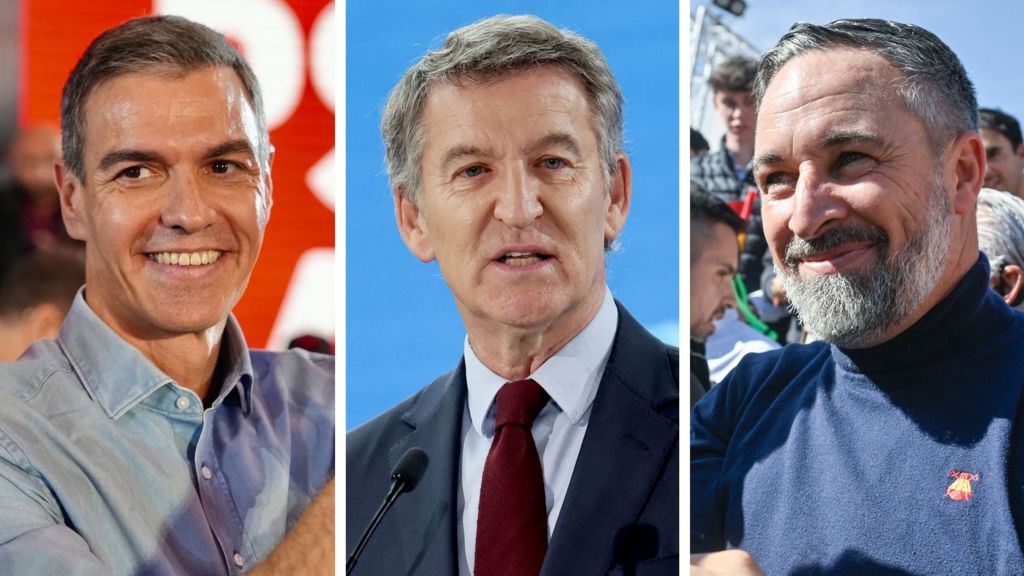
Spanish voters are set to head to the polls on 29 November for an unplanned snap general election, called eight months ahead of the original schedule, after nearly a decade of Socialist-led governance under Prime Minister Pedro Sánchez. Polling aggregates consistently place the centre-right conservative People’s Party (PP) and its potential far-right ally Vox as the clear frontrunners to secure a governing majority, as the ruling PSOE Socialist bloc grapples with a cascading series of setbacks that have derailed its initial campaign focus on addressing the country’s crippling national housing crisis.
The incumbent administration has been buffeted in recent months by high-profile corruption scandals linked to senior party figures and members of Sánchez’s immediate family, a tense cross-border migrant surge in the North African exclave of Ceuta, and two consecutive catastrophic rail accidents separated by just nine months that killed a combined total of 115 people. The most recent of these disasters, a 28 October crash near Urda that claimed 69 lives, completely overshadowed the official launch of the Socialist campaign.
Leading the pack of prime ministerial hopefuls is 62-year-old Alberto Núñez Feijóo, who has served as the PP’s opposition leader since 2022. A veteran public administrator with 13 years of experience as regional president of the north-western Galicia autonomous community under his belt, he has held continuous public office since 1991. His core electoral pitch centres on proven, steady governance, with his signature campaign line: “It’s called management: and it’s what I know how to do, it’s what I want to do, and it’s the change Spain needs.” While he led the PP to win the largest share of parliamentary seats in the 2023 general election, he fell short of an absolute majority, forcing Sánchez to cling to power via fragile pacts with left-wing allies and Catalan and Basque nationalist pro-independence parties. Feijóo has stated his ideal scenario is a standalone PP majority, but has not ruled out a national governing coalition with Vox under strictly defined red lines, after the two parties already formed joint administrations in four Spanish regions. A little-known figure on the international stage who openly admits he has invested little effort in learning English, he has pushed back on criticisms of his limited foreign language skills, arguing, “I don’t know English, but I know how to govern.”
Incumbent prime minister Pedro Sánchez, who has led the PSOE for 12 years and occupied the premiership since 2018, has built a reputation as a relentless political survivor, having staged dramatic come-from-behind victories in 2017 and 2023. He called the early snap election with the stated goal of centering the national conversation on solving Spain’s chronic affordable housing shortage, vowing to deliver “an epic comeback of a progressive Spain” at the ballot box. This contest, however, marks his sixth national election in 11 years and is widely regarded as the most challenging of his career. While he can point to official economic projections forecasting 2.6% annual GDP growth for Spain by 2026, driven largely by a booming tourism sector, he faces mounting, unresolved legal headaches for his inner circle: former transport minister José Luis Ábalos is currently serving a 24-year prison sentence for accepting kickbacks, senior PSOE figure Santos Cerdán is awaiting trial on bribery allegations which he denies, Sánchez’s wife Begoña Gómez faces charges of influence peddling and embezzlement which she contests, and his brother David has been barred from public office for nine years over proven professional misconduct, a ruling he is appealing. At the official Socialist campaign launch, Gómez made her first ever public party address, directly appealing to female voters to turn out for the progressive bloc, noting “when women step forward, all of Spain follows.”
The third major force reshaping the election landscape is Santiago Abascal’s anti-immigration populist party Vox, which current polling places solidly in third position, siphoning critical working-class votes away from the Socialist bloc. The 50-year-old party leader rejects widespread characterisations of his movement as far-right, and has successfully dragged Vox into Spain’s political mainstream, even drawing record viewership for his appearance on a top-rated primetime state television entertainment show during the campaign cycle. A former PP member who joined the conservative party at 18 and cut his teeth as a local councillor and Basque regional MP, his worldview was deeply shaped by decades of threats and violent intimidation his family endured at the hands of Basque separatist militant group ETA, which targeted both his father and grandfather for their public service roles. He split from the PP in 2013, founded Vox a year later, and in 2019 led the party to national parliamentary representation, making it the first hard-right faction to hold significant seats in the Congress of Deputies in more than four decades. Running on a Trump-adjacent “Make Spain Great Again” slogan, Abascal’s policy platform prioritises the mass repatriation of undocumented migrants, the “remigration” of foreign nationals he claims do not contribute to Spanish society, deploying the Spanish navy to reinforce border security, and rolling back all devolved autonomy for Catalan and Basque pro-independence movements. His critics draw direct parallels between his party’s rhetoric and policies and elements of Francisco Franco’s 20th century fascist dictatorship, a comparison Vox strenuously denies.
The broader field of minor and regional parties also carries substantial weight in what is shaping up to be a fragmented electoral landscape. Former Barcelona mayor Ada Colau now leads Frente Amplio (Broad Front), a rebranded four-party left-wing coalition previously known as Sumar that once held joint cabinet positions with the Socialists, but has haemorrhaged supporters to Sánchez’s bloc in recent weeks and now sits in fourth place in polling. A long-time housing activist, Colau has centred her campaign on aggressive rent control measures and expanding affordable public housing stock. Elsewhere, pro-Catalan independence parties have forged new alliances: ERC leader Gabriel Rufián has struck a joint campaign deal with Podemos’ Irene Montero to maximise their seat share, while the small but kingmaking Junts per Catalunya party, which held just seven seats in the 350-seat Congress but propped up Sánchez’s minority government for years, triggered the snap election by rejecting the Socialist administration’s flagship housing reform bill last month. Junts’ lead candidate Míriam Nogueras has confirmed that Catalan self-determination demands will take top priority in any post-election negotiation, and the party’s exiled former leader Carles Puigdemont, who has lived outside Spain since leading the failed 2017 Catalan independence referendum, has announced he will return to the country immediately after votes are counted.
Other rising political figures to watch include Isabel Díaz Ayuso, the wildly popular PP president of the Madrid region, whose 31-year-old conservative stronghold and maverick, voter-friendly communication style have led many analysts to tip her as a future prime ministerial contender, despite ongoing controversies over a judicial investigation into her partner’s alleged tax fraud and forgery, and criticism of her regional government’s purchase of a luxury penthouse for official use. For the Socialists, 46-year-old Economy Minister Carlos Cuerpo, who was appointed interim transport minister in the wake of the fatal Urda rail crash, is consistently ranked as the most popular politician in Spain by the official Centre for Sociological Research, and is widely seen as a future Socialist leadership prospect. Vox’s rising star is 30-year-old MP Carlos Hernández Quero, the party’s housing policy spokesperson, while newly formed far-right anti-establishment party Se Acabó la Fiesta, led by 36-year-old MEP Alvise Pérez, has already poached three seats in the 2024 European elections and is targeting disaffected Vox voters to secure its first national congressional representation.