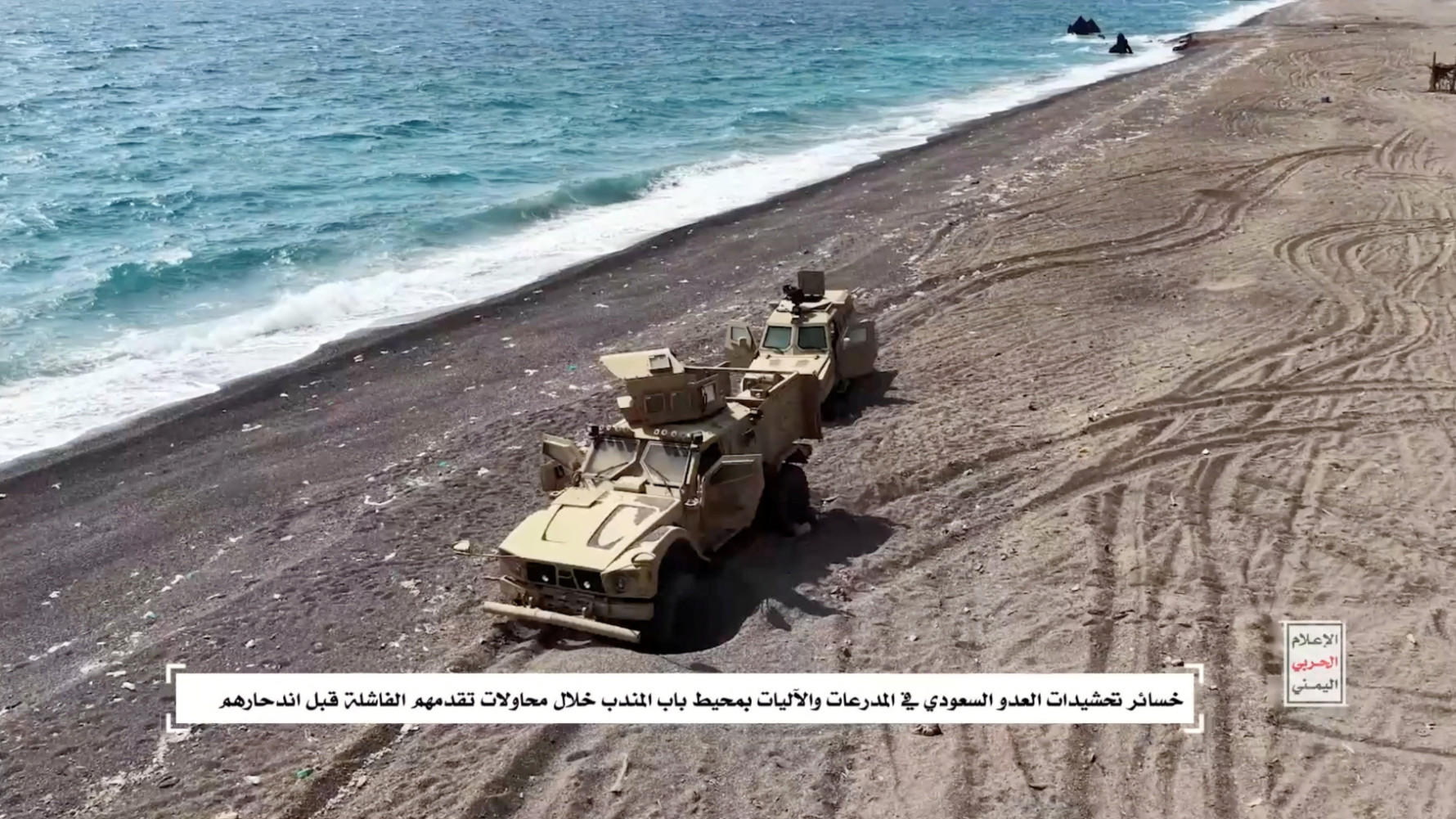
In the opening days of last month, Rashad al-Alimi, chairman of Yemen’s internationally recognized Presidential Leadership Council, formally announced the launch of Operation Fajr al-Yemen, translated as “Dawn of Yemen.” The high-profile campaign was framed as a coordinated push to reestablish full state institutional control across contested territories, recapture the Houthi-held capital Sanaa, and dismantle the Ansar Allah (Houthi) movement’s de facto governance over large swathes of northern and central Yemen. The announcement came barely 24 hours after Houthi fighters seized extensive swathes of territory in Taiz governorate and locked down every entry point to the provincial capital of Taiz city, a longstanding flashpoint in Yemen’s decade-long civil conflict. Contrary to the government’s stated operational objectives, no meaningful pro-government territorial advances have materialized in the weeks following the operation’s launch. Instead, Houthi forces have not only consolidated their grip on newly captured areas of Taiz, but also made dramatic, unimpeded inroads across neighboring Lahij governorate in Yemen’s strategically critical southwest. On Yemen’s Red Sea west coast, fierce clashes persisted for weeks in the Dhubab district, where pro-government troops initially retained control of the Dhubab military airbase and its surrounding perimeter. During this same window, Houthi units advanced steadily through Lahij’s rugged mountain ranges and remote valley corridors, moving rapidly toward a full encirclement of pro-government military positions strung along the coastal plain. On Sunday, 15 November, Yemeni government military command announced a full, unplanned redeployment of all troops stationed in the Bab al-Mandab Strait corridor and the Dhubab military airfield, framing the pullback as a deliberate tactical repositioning to shore up defenses around the country’s provisional capital of Aden and its adjacent southern governorates. Houthi forces moved unopposed into every position vacated by retreating government troops that same day. The rapid advance leaves Houthi units roughly 70 kilometers from the northern perimeter of Aden, as scattered pro-government formations regroup to establish layered defensive lines to protect the port city. The latest territorial sweep also grants the Houthi movement full control of roughly 60 kilometers of Gulf of Aden coastline, stretching from the Bab al-Mandab chokepoint eastward toward Aden governorate, including the strategically sensitive coastal enclave of Khour Omaira. Leading Yemeni political analyst Abdulsattar al-Shamiri, who also serves as CEO of the Johood Center for Studies and Research, framed the chaotic government withdrawals as a symptom of systemic failures in battlefield management, rather than a pre-planned strategic maneuver. He noted that critical gaps in frontline positioning were left unaddressed in the early phases of the campaign, allowing Houthi units to execute wide flanking maneuvers that threatened to cut off and besiege pro-government units that had pushed toward Dhubab. “This reflects a complete inability to manage the battle and control the ground through coordinated, collective oversight across all disparate military units operating under government command,” Shamiri told Middle East Eye. The analyst added that the collapse exposed crippling logistical shortfalls across pro-government forces, including systemic failures to rapidly deliver food rations and ammunition to frontline outposts, and a lack of extraction capabilities for small isolated units stationed in mountainous zones, which are left with no choice but to retreat once their supplies are exhausted. “What unfolded is also the direct result of the total collapse of the Tur al-Baha military axis, which abandoned vast swathes of territory in the Taiz countryside in a disorganized retreat,” he explained. “That sudden pullout triggered widespread confusion among remaining pro-government forces on the west coast, and among units dispatched to plug the gaps created by the axis’s collapse across southern rural Taiz, and the Lahij governorate districts of Tur al-Baha and al-Maqatirah. I believe government forces positioned in and around Dhubab acted out of fear of being fully outflanked by Houthi fighters and trapped in a position where they would be slowly worn down, so they opted to concentrate their remaining manpower on defending Lahij and Aden specifically.” While Shamiri acknowledged the Houthi movement could attempt a full push south toward Aden, he assessed that such an operation would face major obstacles, most notably the aerial support provided to pro-government forces by the Saudi-led military coalition that intervened in Yemen in 2015. “A Houthi advance on Aden is not entirely impossible, but it will not be easy for them, and the probability of such an operation succeeding in the current environment is very low,” he noted. He added that if pro-government forces successfully reorganize their theater of operations, the redeployment could create opportunities to launch renewed offensives on alternate frontlines and transition back from a defensive posture to offensive operations. The last time Houthi forces seized full control of Aden governorate was in 2015, in the opening months of Yemen’s civil war, before Saudi-backed pro-government troops retook the city and pushed north into adjacent governorates including Lahij. Fellow Yemeni political analyst Mansour al-Muntasir echoed Shamiri’s assessment that the recent collapses in Dhubab and surrounding areas stem from deep flaws in government military planning and conflicting operational priorities among disparate anti-Houthi armed factions. The vast majority of pro-government troops that withdrew from the coastal zones on 15 November hail from southern Yemeni governorates, a dynamic that has led a segment of southern political activists to publicly defend the pullback, arguing that these forces should prioritize defending southern territories against Houthi incursions and effectively abandon governorates north of Aden to Houthi forces and allied northern armed groups. Muntasir cautioned, however, that this localized southern priority cannot be confirmed as the sole driver of the retreat. “I do not rule out that some southern armed groups may have chosen to prioritize protecting Aden and broader southern territories, but it is inaccurate to claim this is the only reason behind the withdrawal,” he told Middle East Eye. Pushing back against widespread narratives that frame recent Houthi territorial gains as evidence of surging popular support among local communities, Muntasir argued: “I do not believe the Houthi advance is necessarily proof of widespread popular acceptance, so much as it is a direct product of deep internal divisions and catastrophic coordination failures among their adversaries.” At least three distinct armed factions are currently deployed to fight Houthi forces across Lahij governorate: the al-Amaliqa (Giants Brigades), the Nation’s Shield Forces, and the National Guard. Though all three groups operate under separate, independent command structures, they are formally subordinate to Yemen’s Ministry of Defence. With Houthi forces now in full control of all territories surrounding the Bab al-Mandab Strait, one of the world’s busiest global shipping lanes, Muntasir warned the movement is positioned to leverage its new strategic advantage. “In my estimation, the Houthis may exploit their control over these high-value strategic areas to consolidate their influence across the Bab al-Mandab corridor, while keeping the operational option of advancing further south toward Aden permanently open,” he explained. “The real long-term danger is that ongoing fragmentation and infighting among government and southern armed forces could grant them additional unimpeded opportunities to expand their territorial control.” The rapid escalation of fighting has triggered a catastrophic new wave of population displacement. The International Organization for Migration recorded that 347,321 Yemenis were forced to flee their homes between 1 August and 14 November of this year, including 18,780 people (3,130 families) displaced in just the seven-day window between 8 and 14 November. Separately, the United Nations High Commissioner for Refugees issued an urgent warning that nearly 9,600 displaced people residing at the Kharaz Refugee Camp in Lahij governorate face rapidly escalating life-threatening risks as active fighting moves closer to the facility. Abdulrahman al-Asadi, a veteran Yemeni humanitarian activist who has collaborated with dozens of local aid groups across the country, described the on-the-ground humanitarian situation as deeply alarming, noting that hundreds of thousands of displaced families have lost both their homes and their entire sources of livelihood amid the sudden surge in violence. “The real challenge is not just securing enough aid supplies, but successfully delivering those supplies to the vulnerable populations that need them through humanitarian organizations, local implementing partners, and frontline field teams,” he explained. “There are massive operational barriers, most notably ongoing active clashes, widespread road closures, pervasive insecurity, and the extreme difficulty of accessing hard-to-reach conflict-affected areas.” Prior to this latest wave of military escalation, Yemen was already home to 5.2 million internally displaced people, out of a total of 22.3 million people across the country classified as in need of life-saving humanitarian assistance, per the official 2026 Yemen Humanitarian Needs and Response Plan.
Yemen’s government forces withdraw from Bab al-Mandab and west coast to defend Aden