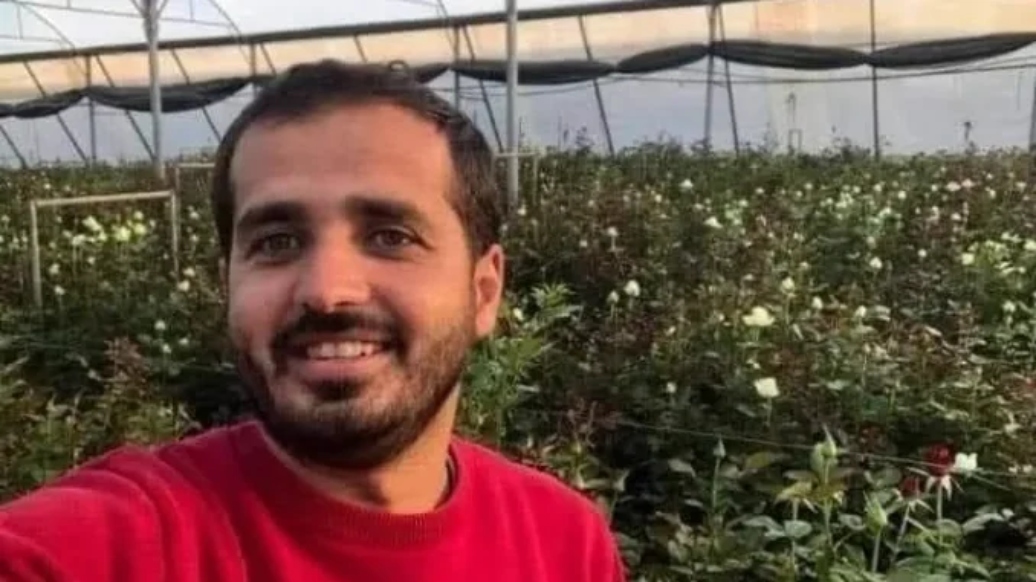
In a pre-dawn military incursion on Sunday, Israeli forces raided the Jenin-area home of award-nominated freelance photojournalist Mohammed Atiq, who contributes to prominent international outlets including Middle East Eye, in the town of Burqin. Soldiers detonated the property’s front door, conducted a sweeping search that left minor damage to household belongings, and forcibly seized Atiq before transporting him to an undisclosed military facility, leaving his entire family completely in the dark about his location and detention conditions. The raid unfolded with additional alarming details: troops initially threatened to arrest Atiq’s eight-month pregnant wife, ordering her to get dressed for transport, before female military personnel who arrived on scene opted to leave her unapprehended upon learning of her advanced pregnancy. The soldiers also threw Atiq’s professional camera, his core work tool, onto the exterior of the property during the search.
The 32-year-old photojournalist, who has faced repeated detentions at Israeli military checkpoints and while covering on-the-ground events in past years, including a multi-hour detention just one month prior while documenting the annual olive harvest in the nearby village of Anza, was first imprisoned by Israeli authorities back in 2016. His father Ahmed Atiq, speaking on behalf of the entire family, confirmed that no signs of physical assault on Mohammed were observed during the Sunday raid, but that the family has received zero formal updates on his status in the days following his arrest. While the Israeli military liaison office has told the family it is monitoring the case and will share updates when available, no actionable information has been provided, prompting the family to issue a public call for full transparency over Atiq’s detention location and his immediate unconditional release.
Atiq’s apprehension is the latest documented case in a sweeping, systematic campaign targeting Palestinian media workers that has accelerated dramatically since October 7, 2023, according to verified data from leading Palestinian prisoner advocacy and journalist representative bodies. The Palestinian Journalists Syndicate (PJS) has recorded a total of roughly 210 journalists, 23 of whom are women, arrested by Israeli forces in the 2+ years following that date. The independent Palestinian Prisoners’ Club (PPC) confirms that 38 journalists, including five women, remain behind bars in Israeli occupation detention facilities as of the latest public update, with two additional Gaza-based media workers classified as victims of enforced disappearance since October 2023, with no verifiable information on their fate available to their families or legal representatives. Tragically, over 260 journalists have been killed in Israeli military attacks across the Gaza Strip during the same period.
The PPC’s public statement outlines that Israeli judicial and military authorities rely on a narrow set of unsubstantiated pretexts to justify the mass targeting of press workers, most frequently vague allegations of “incitement” and references to closed, unchallengeable “secret files”, alongside the widespread use of administrative detention policies that allow indefinite imprisonment without formal charges, public trials, or access to basic legal safeguards. This systemic crackdown is not limited to the occupied West Bank or Gaza, the organization notes, pointing to the recent prosecution of Palestinian journalist Saeed Hassanein, who resides within the 1948-occupied territories of present-day Israel, for no stated reason other than his published journalistic work and public political stances.
Detained media workers face rampant, documented abuses that violate core tenets of international humanitarian law and global human rights conventions, the PPC emphasizes. These violations include sustained physical assault, psychological torture, degrading mistreatment, deliberate denial of fundamental access to healthcare, family visits, and legal counsel, as well as severely substandard detention conditions. The case of imprisoned journalist Bushra al-Tawil is highlighted as a particularly egregious example: she has been held in punitive solitary confinement for more than two months, subjected to unannounced frequent raids on her cell, targeted with tear gas deployed inside her detention wing, placed under constant round-the-clock surveillance, and repeatedly barred from meeting with her legal representatives.
Omar Nazzal, a senior member of the PJS general secretariat, confirmed that the syndicate has launched a two-pronged response strategy to push back against the mass detention of media workers. The first track is focused on on-the-ground legal advocacy: the syndicate has coordinated with specialized prisoner support entities to assign four dedicated lawyers, each tasked with representing a cohort of detained journalists based on their assigned detention facility, to attend all their military court hearings and push for due process. The second track centers on international diplomatic and civil society outreach: the syndicate compiles regularly updated, evidence-backed reports cataloging abuses against detained journalists, which are submitted to the International Federation of Journalists and relevant United Nations mandate bodies focused on freedom of expression and the protection of media workers. These submissions have occasionally prompted public statements and formal inquiries from global institutions demanding Israeli authorities clarify detention conditions or release imprisoned journalists, Nazzal noted, but to date these efforts have failed to produce tangible, widespread results on the ground, with arrests and systemic targeting of journalists continuing without interruption. He stressed that reversing these repressive policies will require sustained, long-term coordinated pressure from global press freedom bodies, rather than isolated ad-hoc statements.
Latest aggregated statistics released by Palestinian prisoner monitoring institutions in early November 2026 show that the total number of Palestinian detainees held in Israeli prisons and military custody stands at approximately 9,300. This population includes roughly 90 female prisoners, more than 350 child detainees, over 3,000 individuals held under administrative detention orders, and 1,419 detainees from the Gaza Strip that Israeli authorities have formally classified as “unlawful combatants”. These publicly released figures do not account for the full number of Palestinian detainees being held in unofficial Israeli military camps and temporary field detention centers, where access for monitors and legal representatives is almost entirely restricted.