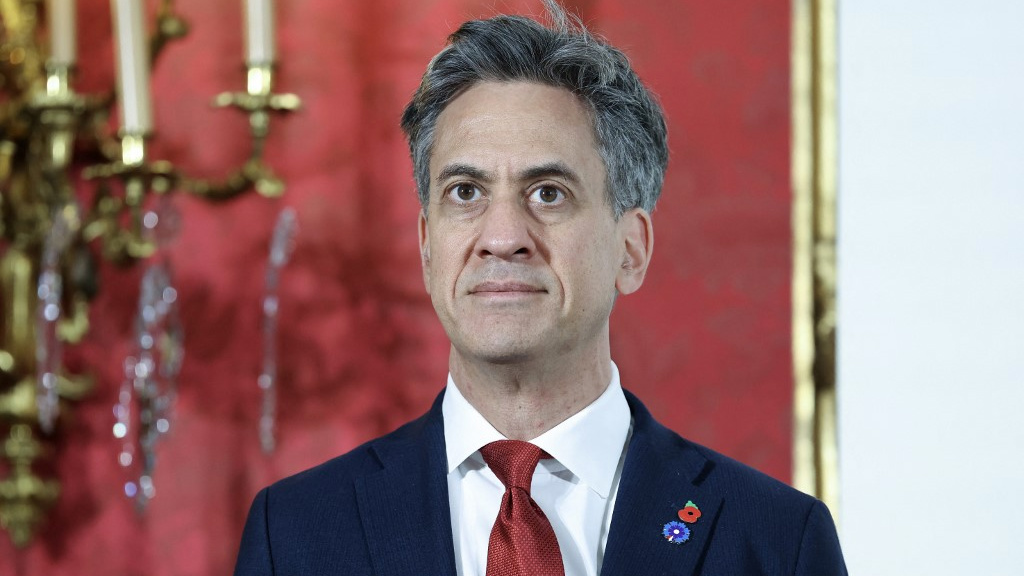
The United Kingdom has rolled out its inaugural tranche of punitive measures targeting Israeli entities tied to unlawful settlements in the occupied West Bank, marking the first concrete action following a sweeping sanctions framework announced back in September. Foreign Secretary Ed Miliband formally unveiled the new restrictions on a Tuesday, timed deliberately just ahead of the Israeli government’s planned awarding of construction tenders for the controversial E1 settlement bloc – a project widely condemned for its potential to physically bisect the occupied West Bank and shatter any geographic feasibility of a contiguous future Palestinian state.
This first round of sanctions names eight Israeli firms operating across the construction, property development, and architectural sectors, all linked to illegal settlement expansion activities. The UK is also imposing restrictions on Tsav9, a far-right Israeli activist movement previously sanctioned by the United States in 2024, which has orchestrated coordinated blockades of border crossings, ports, and supply routes to prevent humanitarian aid convoys from reaching civilians in the Gaza Strip. The UK Foreign Office explicitly noted that the group’s publicly stated core mission is to cut off all life-saving aid access to Gaza, exacerbating the already catastrophic humanitarian crisis facing local residents.
In a public address accompanying the announcement, Miliband emphasized that the preservation of the two-state solution remains the unshakable guiding principle of the UK government’s Middle East policy. “My message to all parties considering involvement in the E1 settlement project is unambiguous: do not submit bids, do not commence construction, and do not profit from the deliberate erasure of the two-state solution,” he stated. The foreign secretary further stressed that the UK would not remain passive as actors blocking critical aid deepen the intolerable civilian suffering in Gaza, noting that the current status quo across the West Bank and Gaza is entirely unacceptable. He also reaffirmed London’s commitment to engaging constructively with a future Israeli government and the Palestinian Authority to advance enduring peace and shared security for both Israeli and Palestinian communities. The full official list of sanctioned entities was published publicly by the Foreign Office immediately following Miliband’s statement.
Reaction to the new measures from regional policy experts has been mixed. Chris Doyle, director of the Council for Arab-British Understanding, described the move as a long-overdue welcome first step under the new sanctions regime, particularly for targeting both settlement-linked construction firms and the Gaza aid-blocking Tsav9 group. However, Doyle pointed out a critical gap in the current policy, arguing that the measures fail to hold the Israeli state itself accountable for its central role in enabling systematic settlement expansion and imposing widespread restrictions on humanitarian aid flows into Gaza. “The core reality is that the Israeli government is the primary architect of settlement construction, and the same government is the leading actor restricting life-saving aid from reaching Gaza’s civilian population,” he added.
Government insiders note that full rollout of the comprehensive sanctions package first announced in September could take as long as nine months to complete. Senior UK officials told Middle East Eye on condition of anonymity last month that the government intends to follow through with the full set of sweeping sanctions – including restrictions on firms providing construction and real estate services for settlement expansion – even if long-serving Israeli Prime Minister Benjamin Netanyahu leaves office. However, internal deliberations within the Foreign Office have revealed divisions: some diplomats have advocated for limiting sanctions exclusively to Israeli firms complicit in illegal settlement activities, while excluding British entities that are also involved in supporting settlement operations. Other officials have additionally pushed for exemptions for companies that conduct the majority of their commercial operations inside Israel’s pre-1967 borders, even if they also run limited operations in the occupied Palestinian territories.
When fully implemented, the final sanctions framework will mandate that all British banks, pension funds, and asset managers fully divest from companies that operate in the illegal settlements. The rules will also prohibit UK-based financial institutions from issuing mortgages, providing insurance coverage, or delivering any other financial services that directly support settlement-related activities.
UK imposes sanctions on eight Israeli firms and a group blocking Gaza aid