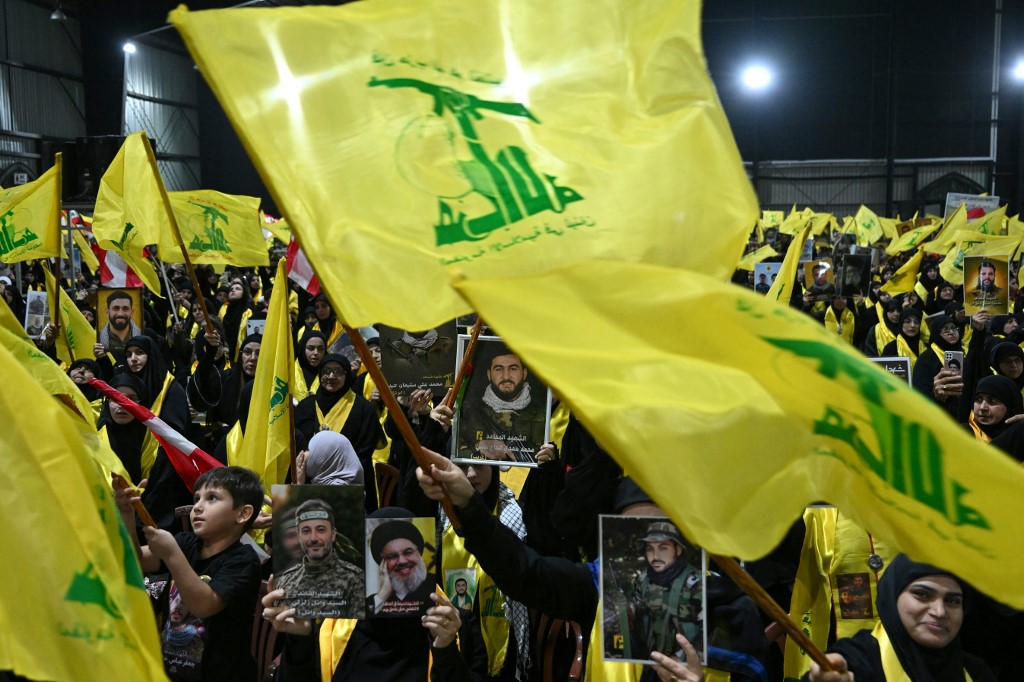
Top Turkish diplomatic officials have laid out a clear precondition for any viable path toward Hezbollah’s disarmament in Lebanon, stating exclusively to Middle East Eye that no such process can move forward until Israel fully ends its decades-long and expanding occupation of sovereign Lebanese land. The remarks come as Ankara ramps up high-stakes diplomatic engagement across the Levant, following the seismic political shift that brought a new governing administration to power in Damascus late last year. Over recent months, Turkey has hosted a series of senior Lebanese state representatives, capped by an official state visit from Lebanese President Joseph Aoun in July. Just last week, Bilal Erdogan, son of Turkish President Recep Tayyip Erdogan, completed a three-day diplomatic mission to Beirut, where he met with a cross-section of Lebanese stakeholders including senior government officials, community dignitaries, and leaders from the country’s diverse religious and political blocs. Multiple Ankara insiders confirmed to MEE that Turkey’s intensified regional outreach is rooted in a strategic assessment that stability across Iraq, Syria, and Lebanon is inextricably interconnected, forming a contiguous security belt that shapes the safety of the entire Eastern Mediterranean and broader Middle East. Turkish policymakers argue that no sustainable peace can take hold in Syria unless Lebanon is also stabilized, a framing that has guided Ankara’s quiet mediation efforts to restart constructive dialogue between Beirut and Damascus. That push yielded a landmark visit from Syrian Foreign Minister Asaad al-Shaibani to Beirut in July, a trip widely hailed as the official opening of a new chapter in bilateral relations between the two long-intertwined nations. A senior Turkish official speaking on condition of anonymity explained the regional vision: “We view the Iraq-Syria-Lebanon corridor as a single strategic unit whose collective security directly impacts every corner of this wider region. Our goal is to foster targeted, practical cooperation between the three governments to de-escalate long-simmering cross-border tensions.” Lebanese regional affairs researcher Sohaib Jawhar noted that Ankara’s policy calculus has evolved to frame Lebanon as a core component of Syria’s immediate strategic landscape, with particular emphasis on stability in northern Lebanon as a prerequisite for Syria’s post-conflict reconstruction and planned regional economic integration. Jawhar also highlighted a key motivating factor behind Turkey’s expanded engagement in Lebanon: growing concern that recent trilateral energy and security pacts signed between Israel, Cyprus, and Greece in the Eastern Mediterranean risk cementing a new regional order that deliberately sidelined Ankara from critical decision-making processes. Erdogan’s recent trip to Beirut was explicitly designed to expand Turkey’s traditional network of partnerships in Lebanon beyond its longstanding ties with Sunni Arab political factions, to build working relationships with representatives of the country’s Christian, Druze, and Alawite communities. Though widely shared social media footage of his enthusiastic public reception in the majority-Sunni Tripoli stronghold sparked unsubstantiated rumors that Ankara was seeking to unify Lebanon’s disparate Sunni political blocs, a source directly familiar with the visit’s closed-door discussions confirmed to MEE that no such conversations took place, and the trip’s sole mandate was to deepen formal intergovernmental ties between Turkey and Lebanon. The question of Hezbollah’s future status as an armed non-state actor remains the most intractable unresolved political issue in Lebanon. Even after a sustained campaign of targeted assassinations and armed assaults that have weakened the group’s leadership and rank-and-file over recent months, the movement has repeatedly demonstrated its capacity to regroup and maintain its armed resistance against Israeli military incursions. The senior Turkish official criticized Israel for actively creating new military facts on the ground rather than upholding its previously signed international commitments, noting that while Hezbollah fully withdrew its fighters north of the Litani River in line with existing UN resolutions, Israel has repeatedly violated its own pledges to refrain from establishing new military outposts on Lebanese sovereign territory. “You cannot reasonably demand Hezbollah disarm at a moment when Israeli occupation of Lebanese land is actively expanding,” the official emphasized. “That is a fundamentally contradictory, impossible equation that must be discarded entirely for any progress to occur.” The current wave of cross-border hostilities escalated in March 2025, when Israel launched a full-scale ground invasion of Lebanon after Hezbollah resumed rocket fire in response to the joint U.S.-Israeli military campaign against Iran that began on February 28 of that year. Subsequent U.S.-brokered bilateral negotiations between Israel and the Lebanese government produced a tentative framework that envisioned phased Israeli military withdrawal matched by the deployment of the Lebanese Armed Forces across all southern border regions and the gradual disarmament of Hezbollah. The arrangement was initially rolled out in small pilot zones across southern Lebanon, but implementation has completely stalled over the past several months. Turkish diplomatic representatives have explicitly communicated to their U.S. counterparts that the U.S.-backed framework will never succeed unless Washington takes concrete steps to halt ongoing Israeli land grabs and military expansions. Ankara has also rejected a proposal floated by U.S. President Donald Trump that newly installed Syrian President Ahmed al-Sharaa intervene directly in Lebanon to force Hezbollah’s disarmament, a plan that Damascus has already publicly rejected. Turkish officials warn that such an externally imposed intervention would almost certainly fail and carry a catastrophic risk of reigniting a full-scale civil war in Lebanon. The Turkish official went on to accuse Israel of deliberately entrenching its occupation by constructing dozens of new temporary military outposts across southern Lebanon, and systematically converting many of these positions into permanent fortified installations. Jawhar echoed this analysis, noting that Ankara does not view Hezbollah’s disarmament as an issue that can be resolved in isolation from the broader political and security context that led to the group’s founding. “Israel’s ongoing occupation of Lebanese territory and continuous cross-border attacks provide Hezbollah with its most foundational justification for retaining its independent military capabilities, paired with more recent framing from the group that cites what it views as a new existential threat emerging from post-transition Syria,” Jawhar explained. He also clarified that Turkey’s current stance does not equal unqualified support for Hezbollah operating as an independent armed force outside of state control, pointing to Ankara’s prior successful mediation work in Iraq to support the central government’s efforts to bring all non-state armed groups and weapons under formal state authority. Earlier this year, Israeli and Syrian negotiators held a series of preliminary talks focused on updating a bilateral security agreement rooted in their 1974 Golan Heights disengagement accord. The Turkish official revealed that Ankara spent more than 12 months facilitating backchannel talks between Israeli and Syrian officials to broker a mutually acceptable security arrangement for southern Syria, but that Israeli negotiators flatly rejected Turkey’s proposed updated framework. “As we anticipated, the Israelis refused to sign any binding agreement, and they have no intention of halting their territorial expansions regardless of diplomatic pressure,” the official said. Turkish policymakers argue that this deliberate Israeli unwillingness to sign formal peace accords explains why Israel regularly puts forward diplomatic proposals that it already knows Lebanon and Syria will reject out of hand. A senior Israeli official pushed back against this characterization in September, telling local media that Damascus lost its motivation to finalize a security deal after international sanctions on Syria were lifted following the collapse of the Assad government in December 2024. The Israeli official added that Jerusalem would never accept any agreement that required it to withdraw from the newly established buffer zone it seized after Assad’s fall, describing the territory as an irreplaceable national security asset. Even so, Turkish officials hold out cautious optimism that a potential new Israeli governing coalition could adopt a more pragmatic diplomatic posture that would unlock rapid progress toward a broader regional settlement for Lebanon. “But as long as Israel continues its expansionist campaigns into Syrian and Lebanese territory, alongside its ongoing operations in Gaza and the West Bank, these cycles of violence will only continue to claim more lives and generate even deeper instability across the entire region,” the Turkish official warned. Jawhar concluded that Turkey is uniquely positioned to broker a viable long-term settlement, given its longstanding diplomatic ties to Iran, its established communication channels with every major Lebanese political and religious faction, and its working relationship with the current U.S. administration. A Turkish-mediated framework could link a full Israeli withdrawal and permanent end to cross-border attacks with a multi-year program to strengthen the Lebanese Armed Forces and facilitate inclusive national dialogue aimed at gradually transferring all weapons in the country under the exclusive control of the Lebanese state. Even so, Jawhar acknowledged that Ankara’s direct ability to shape Hezbollah’s internal decision-making remains limited, and any final settlement will require buy-in from all regional stakeholders.