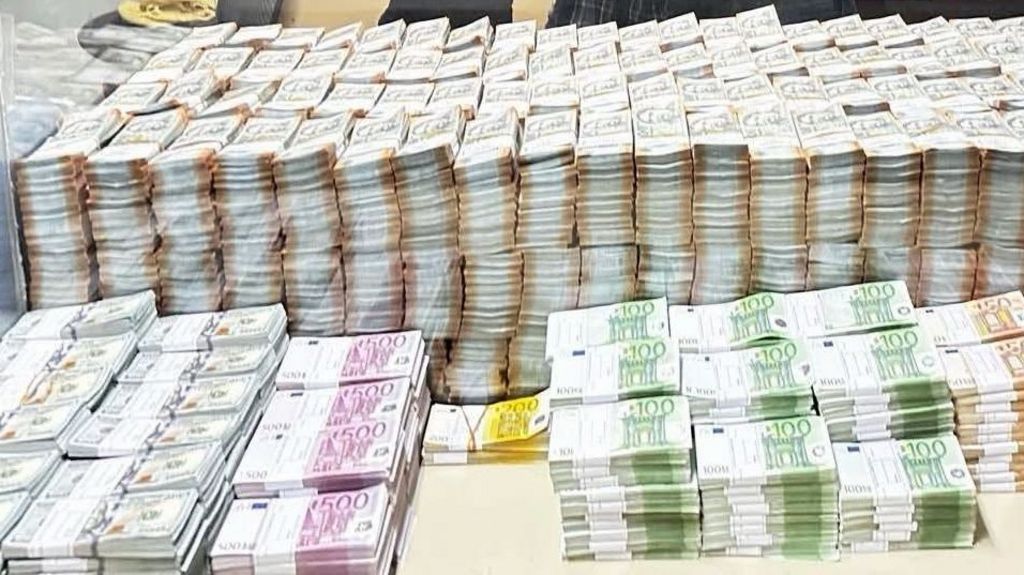
Hungary’s newly established National Asset Recovery and Protection Office (NVVH) has announced the recovery of nearly $19.5 million in undeclared cash, stashed across remote rural sites including locked farm outbuildings, secluded forest plots, private residences, and unmarked warehouses, during a targeted corruption investigation into Miklós Seszták, former national development minister under ex-prime minister Viktor Orbán. The recovered funds, broken down to 5.07 billion Hungarian forints, 2.66 million euros, and 1.26 million U.S. dollars, have been fully transferred to the Hungarian national treasury for public use. Seszták, who served in Orbán’s administration for four years of the leader’s 16 consecutive years in power, stands accused of accepting bribes in a fraudulent scheme linked to the Hungarian state transport company, though he has formally denied all allegations of misconduct. This high-profile seizure is a core milestone of the sweeping anti-corruption agenda campaigned on by current Prime Minister Péter Magyar, who defeated Orbán in a decisive landslide general election last April after running on pledges of full “regime change” and systemic reform to roll back policies implemented during Orbán’s long tenure. Magyar framed the two-day cross-country search operation that uncovered the hidden cash as a symbolic break from the previous administration’s alleged network of corrupt patronage, declaring the operation marked the end of what he called the former ruling “mafia state.” The NVVH was explicitly founded by Magyar’s government to probe widespread graft allegations tied to the Orbán era, under a broader official initiative codenamed “Operation Purgatory.” For years, Orbán’s successive governments faced repeated domestic and EU accusations of operating an opaque patronage system that awarded high-value state contracts exclusively to close political allies, with the European Union formally classifying Hungary under his leadership as an “electoral autocracy.” Orbán has consistently and strongly rejected all corruption claims leveled against his administration. The Seszták probe is part of a wider crackdown on high-profile figures from the previous government: as of September, two former Orbán ministers including Seszták, alongside former Hungarian central bank governor Gyorgy Matolcsy, have been placed under arrest in separate, parallel graft investigations, all of whom have pleaded not guilty to the charges against them. Tensions between the new administration and Orbán’s remaining political circle escalated further earlier this week, when Hungarian law enforcement detained Orbán’s younger brother and three additional suspects in an ongoing people-smuggling probe. The former prime minister has decried the wave of investigations as blatant political retaliation, stating publicly that the detentions are part of a “dirty game” designed to eliminate all legitimate political opposition and install a de facto one-party system, claiming he is the true target of the probes and that his brother is being used as a pawn to reach him.