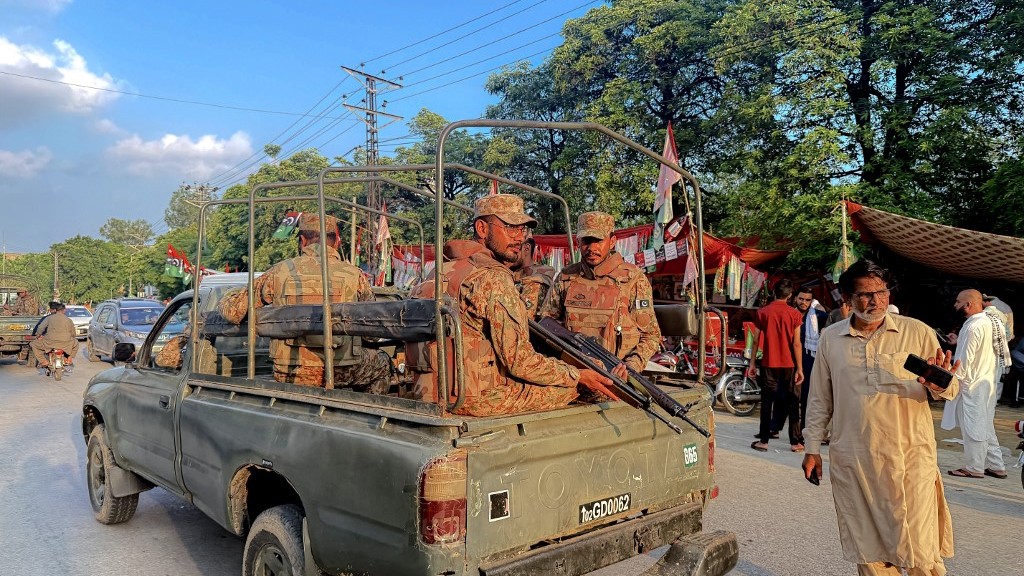
Leading global human rights watchdog Amnesty International has issued a formal, urgent call to the recently inaugurated administration in Pakistan-administered Azad Jammu and Kashmir, demanding the immediate release of hundreds of arbitrarily detained activists who were locked up under sweeping counter-terrorism legislation for participating in peaceful demonstrations against soaring living costs in the region.
The advocacy organization laid out its full set of reform demands in an official letter addressed directly to newly elected regional Prime Minister Syed Iftikhar Ali Gilani, urging his incoming cabinet to roll back systemic human rights erosions by formally repealing the official ban on the grassroots collective Joint Awami Action Committee (JAAC).
Isabelle Lassee, Deputy Regional Director for Amnesty International’s South Asia office, emphasized in the signed correspondence that a coordinated, rapid campaign to curtail fundamental civic freedoms has been unfolding across the territory since June of this year. “We call upon your government and all relevant authorities to ensure that the human rights of all those inside the region are fully upheld, rather than targeted for peaceful expression of legitimate grievances,” Lassee wrote.
She went on to specify that the decision to outlaw the JAAC by listing it under the first schedule of the 2014 Azad Jammu and Kashmir Anti-Terrorism Act represents a clear violation of three core universal human rights: freedom of association, freedom of expression, and the right to peaceful public assembly. Launched in 2023, the JAAC is a broad, cross-sector coalition that unites local traders, legal professionals, student representatives, civil society organizers, and independent local political figures, all of whom have led public campaigns against cripplingly high electricity tariffs, skyrocketing flour costs, burdensome new taxation policies, and chronically underfunded public services that have left ordinary residents of Pakistan-administered Kashmir facing severe economic hardship.
Earlier in 2024, a wave of largely peaceful mass demonstrations protesting the unrelenting cost-of-living crisis escalated into isolated episodes of unrest, prompting regional authorities to launch a sweeping, punitive crackdown that culminated in the official designation of the JAAC as a terrorist organization. In the months following the ban, hundreds of activists, peaceful protesters, and independent local journalists have been added to official anti-terrorism watchlists and detained, with charges premised on alleged loose affiliations with the JAAC or their on-the-ground coverage of the cost-of-living demonstrations.
The draconian ban has sparked widespread solidarity actions among the global Kashmiri diaspora, with coordinated protest rallies held in dozens of major cities across Western Europe and North America to demand an end to the civil liberties crackdown. The ongoing public unrest in the semi-autonomous territory has emerged as one of the most pressing early policy challenges for Gilani’s newly installed administration. A senior leader with the Pakistan Muslim League-Nawaz (PML-N) party, Gilani assumed the office of regional prime minister in August 2024, after being formally nominated by the party’s national leadership, a selection process that unfolded amid well-documented internal rifts within the party’s local regional chapter.
His rise to the top regional post came on the heels of months of sustained street protests and political turbulence, during which tens of thousands of local residents voiced long-simmering grievances over systemic governance failures, plummeting economic conditions, and heavy-handed treatment by state security forces. The sweeping anti-activist crackdown has already drawn significant international scrutiny, with multiple independent United Nations human rights experts and dozens of global civil society groups raising formal public alarms over the misuse of counter-terrorism legislation to target non-violent civic organizers and suppress legitimate public dissent.