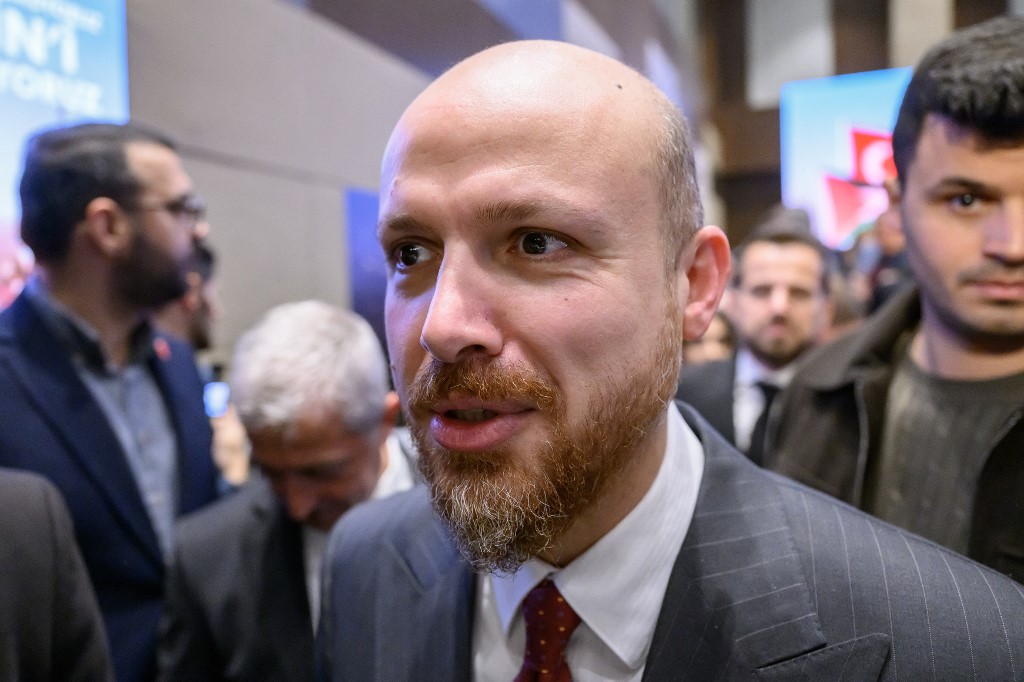
Over two days of tightly scheduled engagements across Beirut and Tripoli, Bilal Erdogan, son of Turkish President Recep Tayyip Erdogan and a prominent public figure with no formal Turkish government portfolio, has drawn widespread curiosity across the Middle East for his series of closed-door and public meetings with top Lebanese state and community leaders. Though widely recognized for his decades of work advancing traditional Turkish sports, global humanitarian aid initiatives and cross-border philanthropy, Erdogan’s high-level Beirut itinerary at a moment of simmering regional geopolitical tensions has fueled public debate over unstated motivations behind the trip, with many regional observers pointing to long-running speculation that he could emerge as a potential successor to his father at the helm of Turkish national leadership. Multiple sources with direct knowledge of the visit, however, have pushed back firmly against framing the trip as a politically charged diplomatic mission. A senior Lebanese government official confirmed to Middle East Eye that the entire itinerary was pre-coordinated with Lebanese state authorities, framing the visit as explicitly social and economic in scope: Erdogan arrived accompanied by a cohort of Turkish business leaders and representatives from leading national institutions, with the explicit goal of delivering a public message of solidarity and support for crisis-hit Lebanon. To further emphasize the cultural framing of the trip, Erdogan’s official delegation included Selim Argun, president of the Yunus Emre Institute, the global Turkish state-backed body mandated to promote Turkish language, arts and cultural heritage through its international network of branches. Invited by Lebanese Deputy Prime Minister Tarek Mitri, who oversees Beirut’s official diplomatic portfolios for relations with Ankara and Damascus, Erdogan held a series of high-stakes meetings with Lebanese President Joseph Aoun, Parliament Speaker Nabih Berri, Future Movement Vice President Bahia Hariri, and veteran Druze political leader Walid Jumblatt, former head of the Progressive Socialist Party. During these closed sessions, participants confirmed that discussions centered on actionable joint projects between Turkish private firms, public institutions and Lebanese state agencies spanning the transport, trade, and export development sectors. The senior Lebanese official also noted that Erdogan repeatedly warned attendees of the security risks Israel poses to both Lebanon and Syria, while highlighting Turkey’s longstanding role as a constructive intermediary linking the two neighboring states. The trip forms part of a broader, years-long pattern of independent international travel for Erdogan, who has made similar self-organized visits to Tokyo earlier this month, Syria earlier in 2026, as well as multiple stops across Europe, North Africa and South Asia in recent years, according to sources close to him. One trip planning insider explicitly dismissed widespread rumors that Erdogan was operating behind the scenes to mediate ongoing regional frictions, including reported tensions between Hezbollah and Syria’s new ruling government – a set of tensions that Reuters claimed Ankara hosted talks to de-escalate last month, a report both Turkish and Syrian state officials formally denied. “This is purely about exploring Lebanon, meeting its key stakeholders, hearing their perspectives, building friendship, and deepening understanding of the region,” the planning source emphasized, adding that every segment of the visit had been warmly received by all participating parties. On the second day of his Lebanon tour, Erdogan traveled to Tripoli, Lebanon’s historic Sunni majority stronghold, where he was greeted by enthusiastic crowds waving Turkish and Lebanese national flags. Members of the local Iman Scouting Association lined his route to see him off, chanting supportive religious slogans documented in widely shared social media footage. Official reporting from Turkey’s state-run Anadolu Agency confirmed that during his Tripoli stop, Erdogan held audiences with the city’s Mufti Sheikh Muhammad Imam, the head of the Alawi Islamic Council Sheikh Ali Qaddour, as well as a broad cross-section of Muslim and Christian religious leaders gathered in a local mosque’s meeting hall, including the Maronite Archbishop of Tripoli Youssef Soueif and Greek Orthodox Archbishop Ephrem Kyriakos. Speaking at the Lebanon-Turkey Strategic Leadership Dialogue hosted by Lebanon’s Ministry of Economy on Friday, Erdogan delivered a keynote address framing his visit as a reaffirmation of the centuries-old fraternal ties between the Turkish and Lebanese peoples, with a specific focus on their shared historical and cultural heritage. He outlined a vision for inclusive regional prosperity, noting that with the right enabling policy conditions, both Lebanon and Syria could replicate the 20-year trajectory of steady economic growth Turkey has delivered for its citizens. He emphasized that lasting stability across neighboring states including Greece, Armenia, Lebanon and Syria is a core national interest for Turkey, and a critical prerequisite for collective regional peace and shared prosperity. Erdogan also called on Muslim majority nations and other regional states to prioritize the well-being of their immediate neighbors before pursuing external priorities, framing cross-border regional solidarity as the most effective path to resolving shared economic and security challenges.