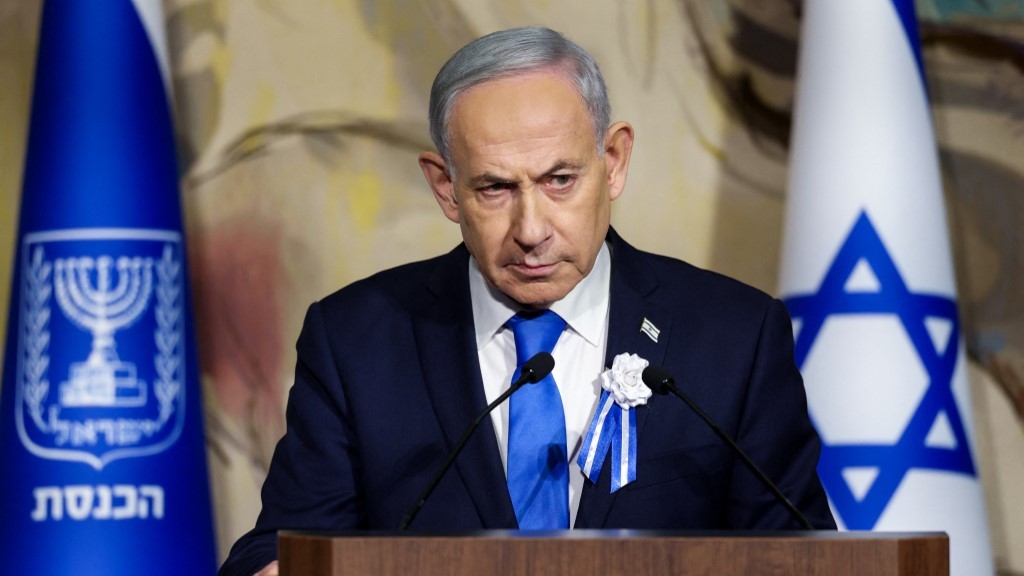
A dramatic new rift has emerged in Israel’s volatile post-election political landscape, as Mansour Abbas, head of the Palestinian-led United Arab List (Ra’am), confirmed on Wednesday that sitting Prime Minister Benjamin Netanyahu has been quietly reaching out to him via a trusted personal aide for closed-door discussions, even as Netanyahu publicly demonizes Palestinian political factions in Israel as terrorist sympathizers dedicated to the destruction of the state. In an exclusive interview with Israel’s Kan public radio, Abbas laid bare the stark hypocrisy of the prime minister’s dual-track approach, noting that Netanyahu’s private queries focused on two core priorities: the United Arab List’s formal position on pending legislation that would bar a sitting prime minister facing criminal indictment from holding office, and whether the party was genuinely prepared to join a cross-faction coalition to oust Netanyahu’s current administration. “The moment his personal political interests are on the line, Arab citizens of Israel are suddenly deemed legitimate; he styles himself the folksy ‘Abu Yair,’ and suddenly Mansour Abbas is a respectable, acceptable negotiating partner,” Abbas told the station, in a scathing rebuke of the prime minister’s public posturing. The backchannel overtures come at a historic inflection point for Israeli electoral politics: Palestinian-majority parties Ra’am and the broader Joint List secured a combined record 19 seats in the latest Knesset vote, driven by a sharp surge in voter turnout among Palestinian citizens of Israel, giving the two factions decisive kingmaker power to tip the balance between rival blocs and determine who will form the next governing coalition. That pivotal electoral standing has done nothing to soften Netanyahu’s public rhetorical attacks, however. In a fiery address to the Knesset late Tuesday evening, the prime minister framed both Palestinian-led parties as existential threats to Israel, claiming their only shared goal was to dismantle the Israeli state, with internal disagreements limited exclusively to what form of government would replace it on Israel’s “ruins.” “Let us be clear about the true intentions of these factions,” Netanyahu told the chamber. “We have no objection to advancing policies that improve the socioeconomic livelihoods of Arab citizens in Israel, but that is not, and never has been, their core objective.” Turning a direct warning to rival political figures considering partnering with the Palestinian factions in a unity coalition, Netanyahu added, “Do you not see the full scope of their national ambitions, and the harm they intend to inflict on this country?” Abbas pushed back forcefully against those incendiary claims, stating that Netanyahu’s public remarks had put his personal safety and the safety of his immediate family at direct risk, confirming that he has received multiple credible threats from disparate groups in the wake of the speech. “Our party has enshrined peaceful coexistence as one of our foundational governing principles,” Abbas emphasized. “The repeated accusations that we back terrorism are categorically false, and have never held any merit. We are law-abiding, equal citizens of the State of Israel.” In a separate interview with Israel’s Channel 12, Abbas further rejected Netanyahu’s framing of his party’s agenda, clarifying, “We have no intention of establishing an Islamist state or a separate Arab state within Israel’s borders. We identify first and foremost as citizens of Israel, and our formal policy supports a negotiated end to the long-running Israeli-Palestinian conflict through a mutually agreed two-state solution.” Senior opposition figure Gadi Eisenkot, who was formally tapped by Israel’s president to lead negotiations to form a new governing coalition, issued a blistering condemnation of Netanyahu’s parliamentary address, labeling it delusional, deliberately divisive, hate-mongering and a national disgrace. Eisenkot’s centrist Yashar party confirmed that it had previously scheduled formal coalition negotiation talks with Netanyahu’s Likud party, but immediately cancelled the planned meeting in direct response to the prime minister’s incendiary speech. “I sat and watched the outgoing prime minister abuse a formal state parliamentary occasion to deliver a delusional, divisive, hate-filled and shameful address,” Eisenkot wrote in a public post on social media platform X. “This performance has only strengthened my absolute conviction that he is unfit to hold public office for even a single additional minute.”
Netanyahu sought private talks with Palestinian party leader despite public attacks