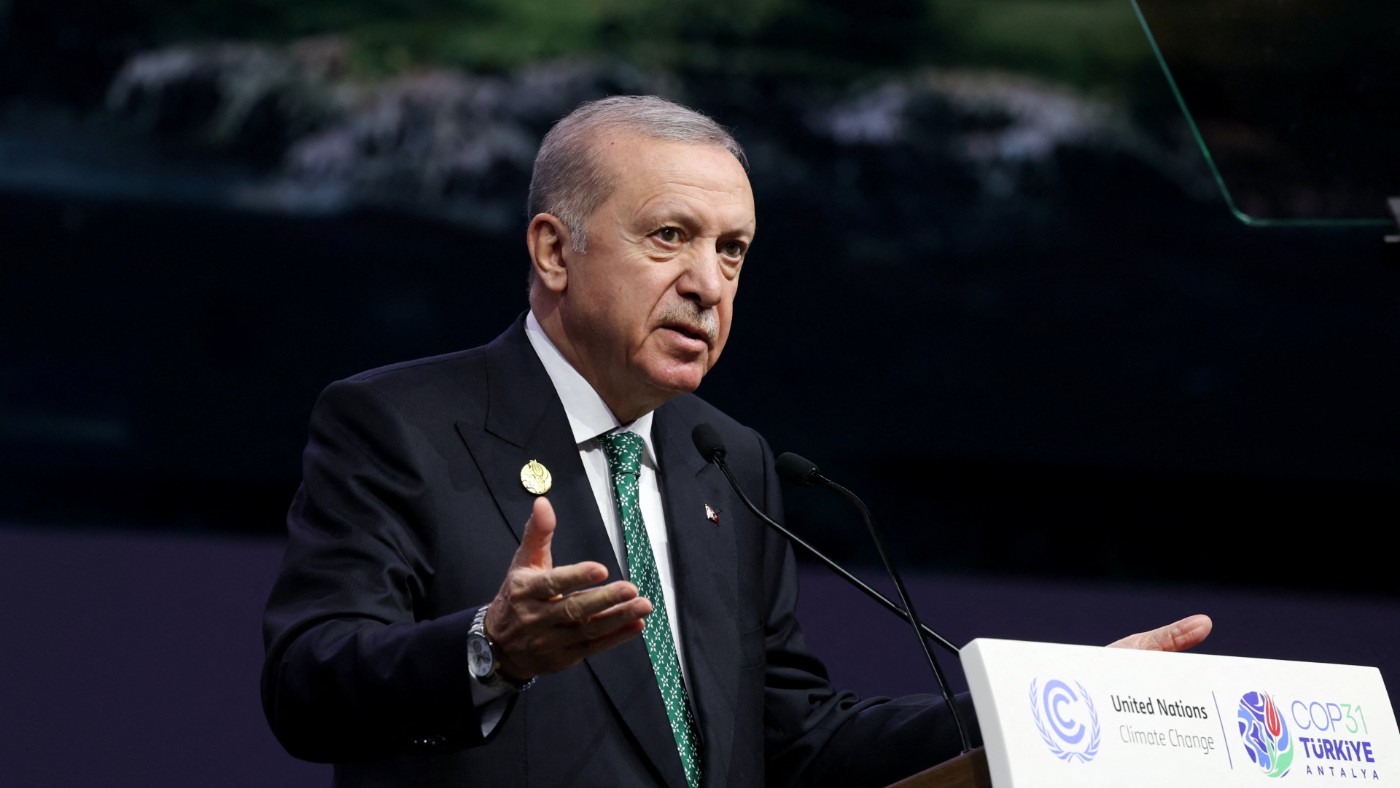
During the opening plenary of the 2026 UN COP31 climate summit hosted in Antalya, Turkey, President Recep Tayyip Erdogan delivered a landmark address that linked the ongoing humanitarian catastrophe in Gaza to the broader existential threat of global climate change. Erdogan first drew global delegates’ attention to the unprecedented dual crisis facing the Palestinian enclave, which has endured a sustained Israeli military campaign since October 2023. He emphasized that beyond the widely documented human atrocities amounting to genocide, Gaza is also suffering deliberate ecocide: centuries-old heritage olive groves that sustained local communities for generations have been uprooted, topsoil and groundwater reserves have been rendered toxic by military ordnance and rubble leachate, and nearly all urban infrastructure has been reduced to sprawling fields of debris. Compounding these man-made harms, unseasonably heavy winter rainfall and flash floods have recently swept through displaced persons camp sites across the territory, submerging tens of thousands of makeshift tents and emergency shelters. Erdogan painted a harrowing portrait of the situation for Gaza’s most vulnerable residents: hundreds of thousands of displaced people, many of them orphaned or separated from their families, are now exposed to frigid floodwaters with no safe shelter, with countless young children trembling from hypothermia as they struggle to survive. He issued an urgent call for all border access points to Gaza to be immediately opened to unimpeded humanitarian aid, and for the long-running policy of isolating the enclave to be fully terminated. Shifting focus to the core mandate of the COP31 summit, Erdogan framed climate change as one of the most severe existential threats humanity has ever confronted, stressing that the entire global population shares a single shared planetary home. “We have no alternative sky, no second Earth, no replacement oceans, forests or marine ecosystems,” he told assembled leaders, warning that rampant overconsumption driven by corporate greed has pushed the planet to a breaking point. He stressed that the most critical intergenerational legacy world leaders can deliver is a cleaner, greener, more equitable global system before the planet crosses irreversible uninhabitable thresholds. Erdogan also called out developed nations for failing to fulfill their longstanding climate finance obligations, noting that while broad policy agreements on emission reduction frameworks have been reached in past summits, these commitments have never been translated into tangible, funded action. Outgoing UN Secretary-General Antonio Guterres echoed Erdogan’s stark warnings, telling delegates that the world’s sluggish, half-hearted response to the climate crisis has set humanity on a collision course with mutually assured destruction. Guterres confirmed that global greenhouse gas emissions continue to climb, average global temperatures are rising at an accelerated pace, and climate-driven extreme disasters are growing in frequency and intensity. “The climate crisis is now outrunning our collective efforts to contain it,” he stated, pushing back against narratives of defeat by emphasizing that scientific data demands more aggressive, coordinated action rather than surrender, and that fossil fuels must be phased out entirely as quickly as prehistoric dinosaurs were eliminated. Negotiators representing 196 nations and the European Union at the Antalya summit are currently working to hash out binding agreements to rapidly expand the share of renewable electricity in the global energy mix, and to revive long-stalled negotiations to phase out fossil fuels entirely. The talks are unfolding against a backdrop of skyrocketing fossil fuel prices driven by the ongoing Iran conflict, which has delivered record windfall profits to major global oil and gas corporations. Recently re-elected Brazilian President Luiz Inácio Lula da Silva also addressed the plenary, noting that global momentum for ambitious climate action had faded significantly in the early months of 2026, as heads of state increasingly prioritized geopolitical tensions, military spending, and trade tariff disputes over the survival of future generations. He warned that the fate of the planet cannot be left to the whims of great power hegemonic competition, a point Erdogan later reinforced by noting that rising wars, cross-border crises, mass migration, famine, and poverty all make global solidarity on shared challenges like climate change more critical than ever. A UN climate assessment report released the month before COP31 confirmed that current global emission trajectories put the world on track to blow past the 1.5°C global warming threshold enshrined in the 2016 Paris Agreement, the limit designed to prevent the most catastrophic, irreversible climate impacts. The 2026 calendar year has already brought a string of unprecedented extreme weather events, including record-shattering heatwaves across Western Europe, and a catastrophic glacier collapse in Nepal that triggered downstream floods killing more than 1,450 people and leaving thousands more unaccounted for. Notably, the United States, the world’s largest historical greenhouse gas emitter, has skipped the COP31 summit for the second consecutive year, after President Donald Trump formally withdrew the U.S. from all international cooperative climate frameworks following his return to office in 2025. The two-week COP31 summit runs from November 9 to November 20 along Turkey’s Mediterranean coast, gathering nearly 200 national delegations to negotiate coordinated global climate action.