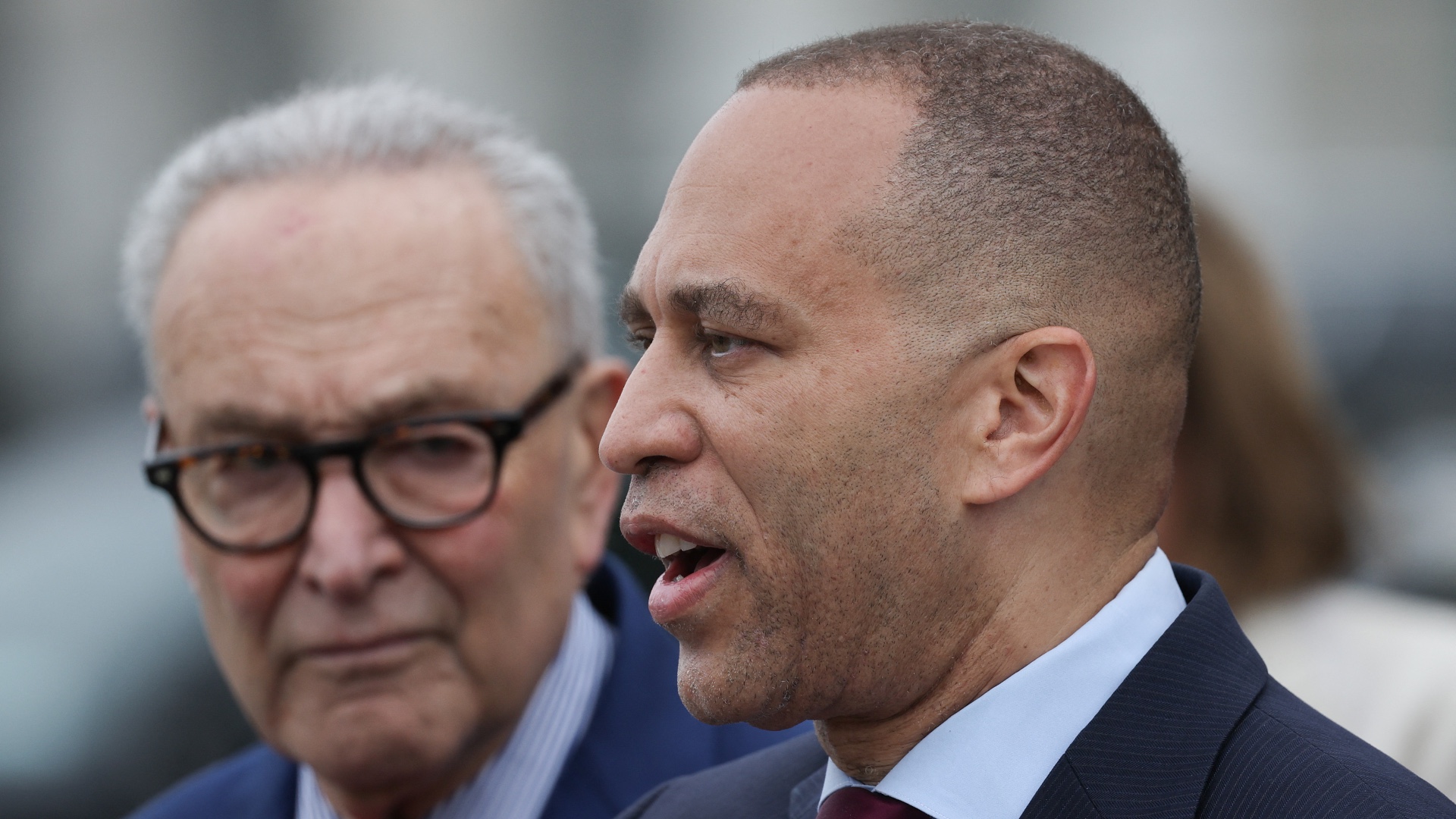
Internal Democratic caucus dynamics on Capitol Hill are unfolding ahead of the 3 January 2027 swearing-in of the 120th Congress, with multiple well-placed sources confirming to Middle East Eye that House Democratic leader Hakeem Jeffries is all but guaranteed to claim the House Speaker gavel, despite widespread frustration from first-term progressive lawmakers and a large segment of the Democratic voter base.
No viable rival candidate has emerged to challenge Jeffries for the top chamber post, a dynamic that insiders say creates steep disincentives for any dissenting caucus members to block his ascent. “There’s a tangible professional cost to opposing someone who will inevitably lead the caucus long-term, and far too few members are willing to absorb that penalty,” one anonymous Capitol Hill source noted. The path to the Speaker’s role, which places the officeholder second in the U.S. presidential line of succession after the vice president, would also make Jeffries the first Black lawmaker in U.S. history to hold the position – a historic milestone that political analysts say will weigh heavily on even skeptical Democratic legislators. “I suspect most Democrats will hesitate to derail that unprecedented achievement, even if they hold significant policy misgivings about Jeffries,” explained Chris Edelson, a constitutional scholar and political science lecturer at the University of Massachusetts Amherst.
Public discontent with Jeffries runs far deeper within the Democratic electorate than inside Capitol Hill, however. Pre-midterm polling from Redbox Research conducted just before the 3 November elections found only 19% of Democratic voters support retaining Jeffries as their congressional leader, while a recent Change.org petition calling for him to step down has already amassed 1 million signatures. Critics from the party’s fast-growing progressive left flank accuse him of being ideologically misaligned with core voter priorities, including demands to get corporate money out of U.S. politics and end unconditioned U.S. weapons transfers to Israel. The 56-year-old New York congressman has long enjoyed robust backing from pro-Israel lobbying groups, has publicly positioned himself as a staunch advocate for Israel, and has received significant campaign funding from a wide array of major corporate donors spanning the tech and defense manufacturing sectors. Even more notably, his congressional re-election bid and House leadership run earned the formal endorsement of Zohran Mamdani, the New York City mayor widely credited with galvanizing the recent wave of young Democratic Socialist electoral victories – a move that drew fierce backlash from Mamdani’s own progressive supporter base.
While a small cohort of newly elected progressive lawmakers have voiced frustration with Jeffries’ policy stances, three sources familiar with internal caucus deliberations confirmed that most incoming freshmen plan to pursue collaborative engagement rather than open confrontation to advance their legislative priorities. Speaking to reporters during this week’s new member onboarding sessions, multiple newly elected progressive pro-Palestine lawmakers emphasized their focus on policy outcomes rather than personal loyalty to leadership. Colorado Representative-elect Melat Kiros, part of a historically diverse incoming freshman class, noted, “We may have differing approaches to reach shared goals, but every one of us is aligned on lowering household living costs, rooting out government corruption, and crafting a foreign policy that actually reflects our stated national values. We are not demanding a specific individual in leadership – we are demanding a bold, actionable legislative agenda that delivers on those priorities, with clear floor votes and a concrete fighting plan.” New Jersey Representative-elect Adam Hamawy echoed that cautious tone, stating, “This group is still undecided, and we will not rubber-stamp any candidacy. We intend to hold full conversations about policy priorities and future governing plans, which is exactly what the American public elected us to do.”
Not all incoming freshmen have described a collaborative environment, however. Ohio Representative-elect Don Leonard shared in a public Instagram video posted Monday that senior House Democratic leadership had explicitly threatened punitive repercussions if he refused to back Jeffries, even if Jeffries declined to address his core constituent priorities: removing corporate money from politics and ending U.S. military support for Israel’s regional conflicts. “Senior Democratic leadership told me in no uncertain terms that if I don’t support Jeffries – regardless of whether he is willing to meet my constituents’ demands on these two critical issues – they will make my next two years in Washington a living hell, and ensure I lose my re-election bid in 2028,” Leonard said, adding, “The big ‘D’ Democratic Party desperately needs a healthy dose of little ‘d’ democracy.”
The upcoming House Speaker election will be conducted via secret ballot next week, even as House Republicans have already unified behind Ohio congressman and staunch Donald Trump ally Jim Jordan as their next caucus leader, with Senate Republicans reaffirming South Dakota Senator John Thune as their minority leader for the upcoming congressional session. As former progressive strategist Neil Sroka explained to MEE, internal caucus dynamics are rarely driven by ideology alone: “Leadership elections hinge on far more than ideological alignment. There are regional priorities, state delegation interests, and a web of personal relationships that make these calculations extremely complex, especially in an era where the party’s ideological landscape is more fragmented than ever.” Sroka noted that personal rapport and longstanding social ties within congressional corridors often carry more weight than policy disputes, pointing to former Senate Democratic leader Harry Reid’s decades-long tenure as an example of how deep institutional connections can insulate leaders from challenges.
While Jeffries appears to have locked in his leadership path, top Senate Democratic leader Chuck Schumer faces a far more precarious position, with multiple sources confirming to MEE that his hold on the party’s top Senate post is increasingly vulnerable. The 75-year-old New York senator boasts even lower favorability among Democratic voters than Jeffries, with polling showing just 11% of Democratic respondents view him positively. Like Jeffries, Schumer receives extensive corporate campaign backing, is an unwavering supporter of Israel, and holds a hawkish stance toward Iran, even as he criticized former President Trump’s approach to open-ended overseas military conflicts. Cavan Kharrazian, senior policy adviser at government watchdog group Demand Progress, emphasized, “Schumer’s longstanding foreign policy record is a critical liability for his continued leadership. The recent midterm elections made it unambiguously clear that Democratic voters want leaders who will push back against Trump’s reckless war agendas, and build a new foreign policy rooted in diplomacy, human rights, and addressing urgent domestic needs.”
A small but growing progressive bloc in the Senate is now openly floating Maryland Senator Chris Van Hollen, one of the chamber’s most vocal critics of unconditional U.S. military aid to Israel and a leading advocate for peace-focused foreign policy, as a potential challenger to Schumer. Michigan Senator-elect Abdul El-Sayed has spent months publicly calling for Van Hollen to take the Senate Democratic leadership post, even as Van Hollen had previously shown no public interest in the role. This week, Van Hollen told Capitol Hill reporters he was keeping his options open: “I am currently in listening mode. There are millions of people across the country, and a significant number of our Senate members, who want to have this conversation about our party’s leadership direction, so I am actively engaging with those discussions and have not closed the door on any possibilities.”
Kharrazian noted that Van Hollen’s public profile as a leading opponent of unconditioned war funding puts unprecedented pressure on Schumer to shift his longstanding policy stances ahead of the upcoming lame duck session, where the Trump administration’s requested $1.5 trillion Department of War budget is set for a vote. The proposed budget includes a controversial provision that would formally and permanently integrate U.S. and Israeli military technological development, a move Israeli Prime Minister Benjamin Netanyahu has hailed as a milestone that will elevate Israel from a longstanding U.S. foreign aid recipient to a full, equal military partner. Anti-war activists from groups including Code Pink staged a protest outside Schumer’s Capitol Hill office this week after being locked out by his staff, demanding he reject the massive war budget and the permanent U.S.-Israel military integration provision. Even with the rising progressive pressure, Sroka noted that Schumer’s decades-long institutional ties within the Senate, where he has close personal relationships with nearly every member of the Democratic caucus, will make any successful challenge to his leadership an extremely steep uphill battle.