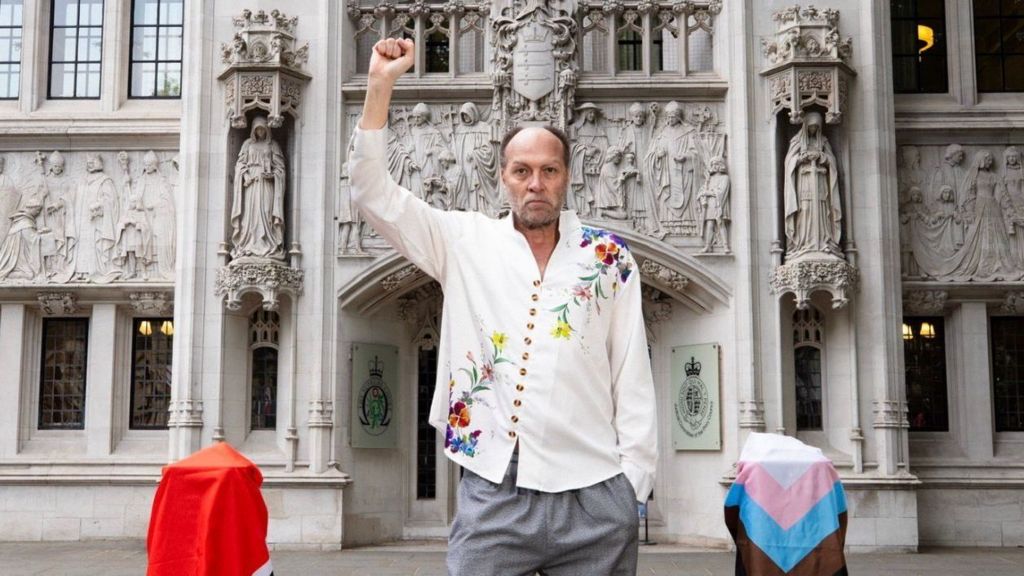
After more than a decade of persistent legal advocacy led by 62-year-old dual national Jason Jones, the Judicial Committee of the Privy Council (JCPC) — Trinidad and Tobago’s highest appellate court, based in London — has delivered a historic unanimous ruling striking down colonial-era statutes that criminalized consensual same-sex intimacy on the twin-island Caribbean nation.
The landmark decision marks the first time the JCPC has ever ruled in favor of decriminalizing same-sex relations, and is the culmination of a winding legal journey that began when Jones first launched his challenge 11 years prior. He initially secured a favorable verdict at Trinidad and Tobago’s High Court in 2018, only to see that ruling reversed following an appeal filed by the national government.
State prosecutors had sought to defend the outdated statutes by invoking so-called “savings law clauses” — legal provisions embedded at Trinidad and Tobago’s independence that shielded inherited British colonial legislation from judicial review. But Jones’s legal team, led by prominent human rights barrister Anand Ramlogan SC, successfully argued that government amendments to the same laws in 1986, which introduced harsher custodial sentences for consensual same-sex conduct, invalidated the protections afforded by the savings clauses.
Delivering the panel’s unanimous judgement, Lord Sales emphasized that the criminalization statutes “cannot be regarded as reasonably justifiable in a society that has a proper respect for the rights and freedoms of an individual,” noting they directly violated the fundamental legal right to private and family life enshrined in the nation’s constitution.
For Jones, the ruling is far more than a personal legal win. “These laws never reflected who we are as a people and a nation — diverse, multiracial, and secular,” he said in a statement following the decision. “They told LGBTQ+ people that we were criminals in our own country. That message ends today.” Ramlogan hailed the outcome as a “landmark victory for gay rights, equal dignity and respect for private and family life in Trinidad and Tobago.”
Prior to this ruling, Trinidad and Tobago was one of 34 Commonwealth member states that still retained colonial-era British laws criminalizing homosexuality, with penalties ranging from multi-year prison terms to capital punishment in some jurisdictions. LGBTQ+ rights campaigners across the global Commonwealth are now optimistic that the JCPC’s precedent-setting decision will pave the way for similar successful legal challenges to anti-LGBTQ+ statutes in other regional nations that still maintain these outdated, discriminatory legal frameworks.
Anti-homosexuality laws in Trinidad and Tobago overturned