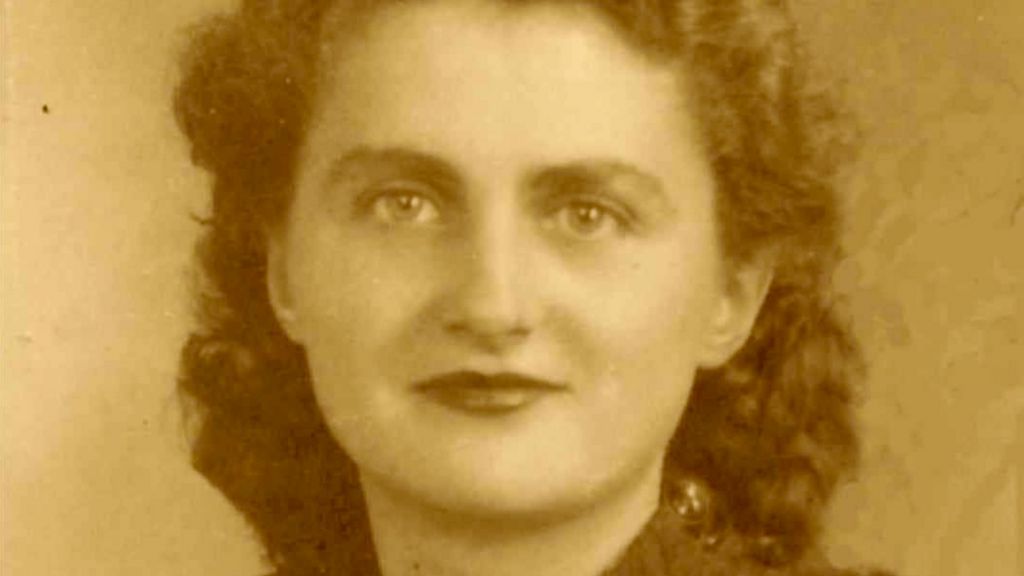
One of France’s last surviving World War Two Resistance icons, Solange Alexandre, passed away at the age of 104 at a care facility in Le Mans, leaving behind a legendary legacy of grassroots anti-Nazi resistance that defied both gender norms and the brutality of the German occupation. A rare female commander in the French underground movement, Alexandre built and led her own 30-person combat network alongside her future first husband, orchestrating acts of sabotage, sheltering stranded Allied aircrew, and leading direct assaults on occupying forces in the wake of the 1944 D-Day Normandy landings.
Born Solange Dubuisson in 1922 in the western French department of Sarthe, Alexandre was raised in a deeply patriotic household scarred by the losses of the First World War: her mother’s first husband had been killed in combat, and her own father sustained severe wounds in 1917, imbuing her from childhood with an unshakable commitment to French sovereignty. The turning point for her came in June 1940, when she tuned into General Charles de Gaulle’s historic London radio broadcast urging the French people to reject surrender to Nazi Germany. Though she had never heard de Gaulle’s name before, she resolved immediately to join the fight, writing later in her memoirs that the call to action felt like a personal mandate.
She was soon recruited by a Tunisian-born French army veteran and family friend, Saïd Belhaffaf, who was already active in the Resistance. Operating under the codename Corlay, she traversed the rural roads surrounding Le Mans exclusively by bicycle – the only viable mode of transport in an era of strict petrol rationing and no mobile communications – to collect intelligence, deliver top-secret messages between Resistance cells, and evade German patrols. In 1943, she met her first husband Guy Déliot, a gendarme who had deserted his post rather than carry out orders to arrest Jewish civilians targeted by the Nazi regime.
As the long-awaited Allied invasion loomed in April 1944, the pair established the Pas-de-Boeuf Resistance network near the town of Ruillé-sur-Loir, retreating to hidden forest encampments known locally as the maquis, where sympathetic local farmers supplied their small unit of roughly 30 fighters. The group included escapees from German forced labour programmes, survivors of a previously destroyed Resistance cell, and two downed Allied airmen – one American and one Canadian. Alexandre often recalled that she narrowly avoided capture by the Gestapo on two separate occasions, slipping away from raiding parties before they could identify her as a Resistance leader.
In the months following the D-Day landings, her unit carried out targeted sabotage of German supply lines and engaged occupying troops directly, and she went on to participate in the September 1944 liberation of Tours. By the end of the war, she had earned the rank of sub-lieutenant in the French Interior Forces (FFI), the official armed wing of the domestic Resistance.
In the post-war decades, Alexandre worked as a schoolteacher and accompanied her first husband on his postings as a gendarmerie officer across multiple French overseas territories, until he was killed in the line of duty in Martinique in 1960. She remarried in 1981, and spent much of her later life advocating for the memory of ordinary Resistance fighters who never received public recognition for their sacrifices. Notably, she twice rejected France’s highest state honour, the Légion d’Honneur, insisting that she had only fulfilled her basic duty as a citizen and that many of her fallen comrades were far more deserving of the award. She finally agreed to accept the decoration in 2024, telling officials at the ceremony that she saw it as a tribute to all uncelebrated Resistance members rather than a personal accolade, noting that she was proud to receive it even if she only had a short time left to live.
Following news of her death, President Emmanuel Macron led a wave of national tributes, sharing a message on social media that read: “She said she only ever did her duty. But her duty was our freedom. France will never forget. Thank you.”
French wartime resistance heroine Solange Alexandre dies aged 104