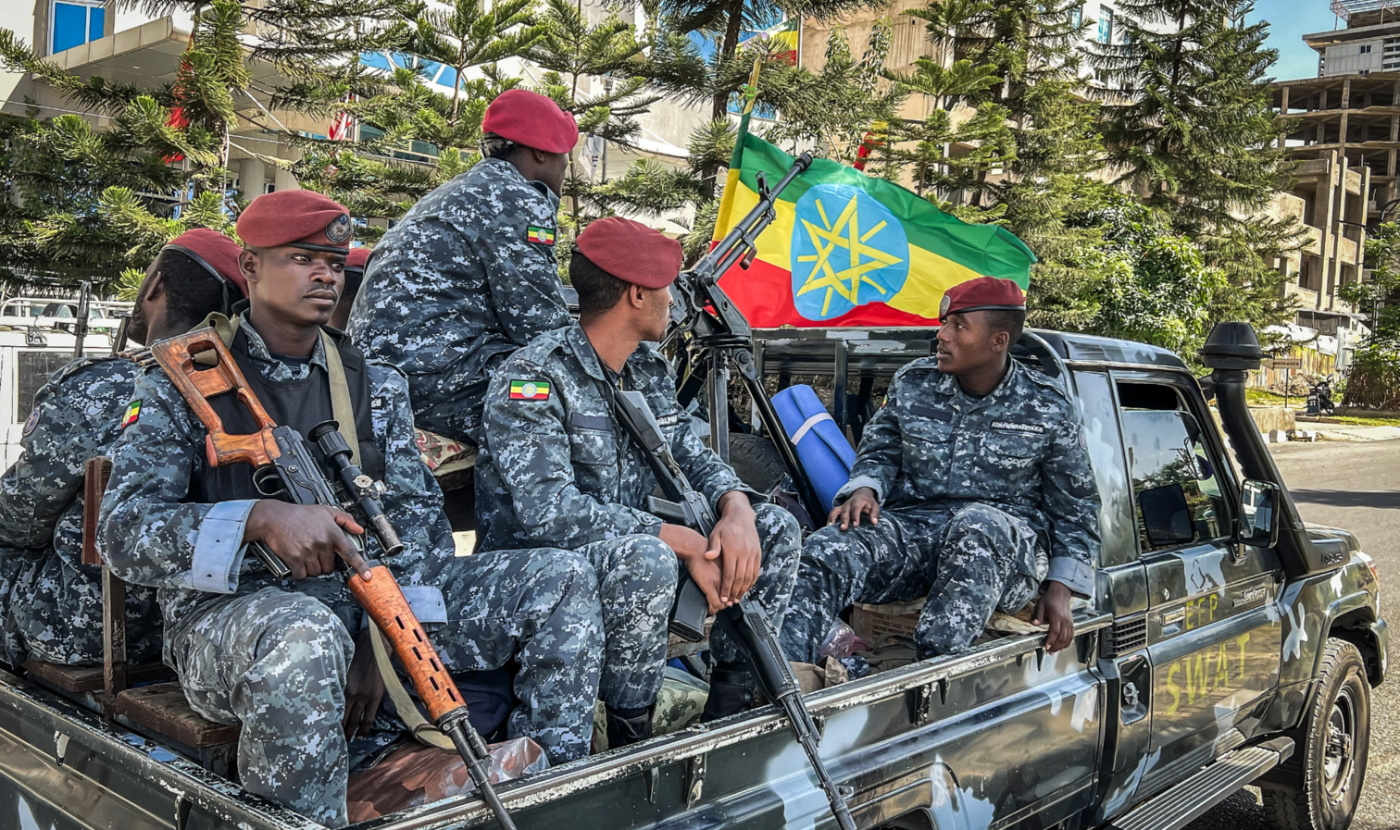
Renewed armed hostilities have roiled Ethiopia’s northern Tigray region since a newly formed rebel coalition launched territorial seizures in September 2025, marking a rapid unraveling of the fragile 2022 Pretoria Agreement that ended a two-year civil war marked by widespread atrocities. While the federal Ethiopian government has largely contained frontline fighting and reclaimed the regional capital Mekelle without major resistance, October 2026 saw explosions rock the capital Addis Ababa, stoking public anxiety over the conflict spreading deep into state territory. Tigray’s long, turbulent history of bloodshed stretches back decades: the 2020-2022 civil war left hundreds of thousands dead, millions displaced, and widespread verified accusations of war crimes and ethnic genocide targeting the Tigrayan ethnic group documented by independent human rights monitors. The current resurgence of fighting has sparked urgent international alarm that the localized insurgency could escalate into full-scale bilateral war between Ethiopia and its northern neighbor Eritrea, after Addis Ababa formally severed diplomatic relations with Asmara in October 2026, accusing Eritrea of deploying troops across the border to arm and support the rebel coalition. This potential new conflict arrives against a backdrop of already widespread instability across the broader Red Sea corridor, where active armed conflicts are ongoing in Sudan, Yemen, and Somalia, threatening to entangle the entire Horn of Africa in a wider regional conflagration. The emerging bloc of competing patron states further complicates the crisis: the United Arab Emirates stands as a key military and economic ally of Ethiopian Prime Minister Abiy Ahmed’s administration, while Eritrea has secured public and private backing from Saudi Arabia, Egypt, and the internationally recognized Sudanese government. This breakdown of peace follows years of unmet obligations under the 2022 AU-mediated Pretoria deal: critical clauses including full TPLF disarmament, safe return of 2 million displaced civilians, and restoration of regional administrative autonomy have never been implemented, paving the way for internal power struggles within the Tigray People’s Liberation Front (TPLF). In March 2025, hardline TPLF faction leader Debretsion Gebremichael ousted moderate regional administration head Getachew Reda, who fled to Addis Ababa to become a senior advisor to Prime Minister Abiy, his former wartime adversary. By January 2026, skirmishes between federal forces and TPLF fighters erupted in western Tigray, and the TPLF formally declared the Pretoria Agreement “effectively dead” by July of that year. In September 2026, the TPLF forged a historic alliance with longstanding former civil war rivals to launch the Ethiopian Peoples’ Forces Coalition for Survival, known locally as Tsimdo, with a public vow to overthrow Abiy’s administration, which the coalition accused of entrenching “war, genocide, mass slaughter and absolute poverty” as core features of its governance. The Tsimdo offensive quickly seized swathes of territory across Tigray, Afar, and Amhara regions before federal forces retook Mekelle, pushing rebel units back to the region’s rugged, mineral-rich rocky highlands. The sudden reversal of Eritrea’s wartime allegiances – from fighting alongside Abiy’s government against the TPLF during the 2020-2022 war to now backing the insurgents – traces directly to a bitter dispute over Red Sea maritime access. As the world’s largest landlocked country with a population of 140 million, Ethiopia lost all coastal access when Eritrea won independence in 1993 after 30 years of anti-Ethiopian insurgency that killed an estimated 100,000 to 200,000 people. For years, Abiy has publicly framed unimpeded access to a Red Sea port as a non-negotiable national priority, a stance widely interpreted by Eritrea’s leadership as a veiled threat to seize the strategic Eritrean port of Assab, located just 70 kilometers from the shared border. The competing regional power interests driving the crisis extend far beyond bilateral Ethiopian-Eritrean tensions. The UAE has poured billions of dollars in investment across Ethiopia since Abiy took power in 2018, and deployed drone support to back federal forces during the 2020-2022 civil war, as both Abu Dhabi and Addis Ababa seek to expand their influence across the Red Sea littoral. Their joint 2024 memorandum of understanding with breakaway Somaliland to access the Emirati-funded Berbera Port, in exchange for potential recognition of Somaliland’s de facto independence, sparked a major diplomatic backlash from Somalia, forcing Ethiopia to scale back plans to build a formal naval base at the facility. Tensions between Ethiopia and Sudan have also escalated sharply, after satellite imagery analysis from Yale University’s Humanitarian Research Lab verified that Ethiopian military bases were being used to funnel supplies to the UAE-backed Sudanese Rapid Support Forces (RSF), a paramilitary group widely accused of mass atrocities during Sudan’s ongoing civil war. Though Addis Ababa and Abu Dhabi deny supporting the RSF, Sudan’s internationally recognized government has aligned itself with Eritrea to counter Ethiopia’s regional ambitions. Egypt, long locked in a decades-long water dispute with Ethiopia over the $5 billion Grand Renaissance Dam on the Nile River – a megaproject Cairo views as an existential threat to its freshwater security – has also forged close military and diplomatic ties with Eritrea, after Abiy’s administration expelled Egyptian diplomats in late 2026 over unsubstantiated claims that Cairo was backing the TPLF insurgency. Saudi Arabia, the UAE’s primary regional geopolitical rival, has also deepened its economic and diplomatic engagement with Eritrea, aligned with its existing policy of backing the Sudanese national army against the UAE-supported RSF. At the geographic core of this unfolding crisis, Tigray spans approximately the same land area as Slovakia or the U.S. state of West Virginia, with a population of roughly 7.5 million people, 96% of whom identify as ethnic Tigrayan, and the vast majority speaking Tigrinya – the most widely spoken language across Eritrea, a cultural and linguistic tie that has shaped decades of shifting alliances between the two territories. The region’s highlands hold some of Ethiopia’s largest untapped gold and mineral deposits, and its population is overwhelmingly adherent to Ethiopian Orthodox Christianity, matching the dominant religious identity across most of Ethiopia. For nearly 27 years, the TPLF led the ruling Ethiopian People’s Revolutionary Democratic Front coalition that governed the country from 1991 onward, after the rebel movement overthrew Ethiopia’s brutal military junta alongside Eritrean separatist fighters. While that administration oversaw a period of rapid economic growth and expanded public service access across the country, it faced widespread condemnation for suppressing political dissent, concentrating state power exclusively in the hands of a small Tigrayan elite, and rigging national elections to win every single parliamentary seat for consecutive election cycles. The TPLF-led government also fought a brutal two-year border war with newly independent Eritrea between 1998 and 2000 that killed tens of thousands of combatants on both sides, before Abiy Ahmed came to power in 2018 following mass cross-country anti-government protests. Abiy, an ethnic Oromo from Ethiopia’s largest demographic group, dissolved the TPLF-led ruling coalition to form his new Prosperity Party, a move the TPLF refused to join, and signed a historic peace deal with Eritrea that won him the 2018 Nobel Peace Prize. That fragile peace collapsed in 2020, when the TPLF held unauthorised regional elections in defiance of Addis Ababa’s federal electoral schedule, triggering a full-scale federal military offensive after the government accused TPLF fighters of launching raids on federal military bases – a charge the TPLF has consistently denied. The subsequent 2020-2022 civil war saw the federal government impose a total blockade on all food, medicine, and humanitarian aid entering Tigray, triggering a manmade famine that independent monitors estimate killed at least 200,000 civilians. All parties to that conflict – Ethiopian federal forces, Eritrean allied troops, Amhara regional militias, and TPLF fighters – were accused by human rights groups of systematic war crimes, including mass sexual violence and targeted civilian massacres, with total combined death toll estimates ranging from 160,000 to more than 600,000 people.
Why are the UAE, Sudan and Egypt fighting for influence inside Ethiopia’s Tigray state?