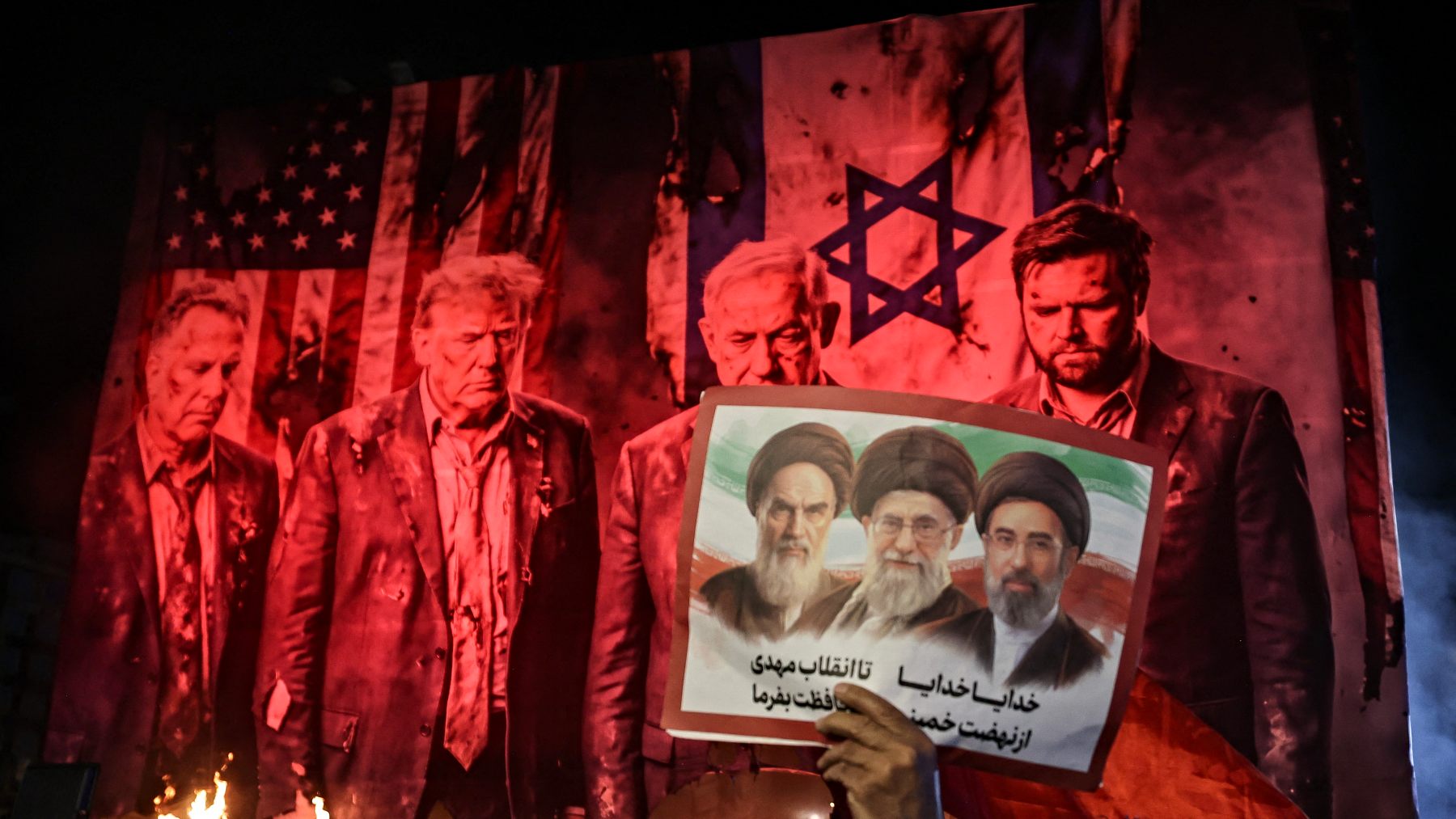
Tensions between the United States and Iran have escalated sharply in recent days, following the U.S. Central Command (CENTCOM) announcement of a new interagency military initiative dubbed Task Force Iron Gate, a move Iranian Islamic Revolutionary Guard Corps (IRGC) officials have immediately derided as meaningless posturing that will never achieve Washington’s stated goal of triggering Iranian economic collapse.
Speaking to Iran’s semi-official Fars News Agency on Sunday, IRGC spokesperson Hossein Mohebbi framed the newly unveiled task force as nothing more than hollow wordplay, pointing to decades of failed U.S. predictions that Iran’s economy would crumble under external pressure. “U.S. officials previously claimed Iran would face total economic collapse within two weeks, and that timeline came and went with no such outcome,” Mohebbi noted, emphasizing that Tehran has spent years building contingency plans to withstand targeted economic pressure, while maintaining robust, long-standing trade and diplomatic ties with all of its seven neighboring states, as well as key partners that have access via the Caspian Sea.
The newly established Task Force Iron Gate, headquartered in Florida, is formally tasked with coordinating across U.S. federal agencies to monitor and restrict cross-border movement of advanced weapons, dual-use civilian-military technology, sanctioned materials, and what Washington labels as illicit Iranian revenue streams across Iran’s sprawling land borders with Iraq, Turkey, Armenia, Azerbaijan, Pakistan, Afghanistan and Turkmenistan, plus the Caspian Sea trade corridor that links Iran directly to Russia and other Central Asian economies. The initiative, ordered by CENTCOM commander Admiral Brad Cooper, is framed as an extension of the existing U.S. naval blockade of Iranian maritime ports, which CENTCOM claims has already blocked more than $25 billion worth of Iranian crude oil exports in recent months. Cooper stated publicly that the expanded interagency coordination would further curtail Iran’s ability to fund designated terrorist groups, rebuild damaged weapons manufacturing facilities, and restock its military hardware stockpiles.
The announcement of the new task force has drawn sharp criticism from a prominent former U.S. national security official, who resigned previously over the planned U.S.-Israeli military posture toward Iran. Joe Kent, ex-director of the U.S. National Counterterrorism Center, blasted the initiative on social media platform X as a reckless, unprovoked provocation that actively undermines ongoing diplomatic outreach led by U.S. Vice President JD Vance, who is currently engaged in negotiation efforts with Tehran. Kent argued the new policy falls under what CENTCOM insiders call “policy by CONOP” – a deliberate tactic where military commanders take escalatory operational actions to subvert White House diplomatic priorities, without openly defying presidential authority, in order to lock in prolonged conflict or trigger full-scale war. He warned that enforcing the expanded land and Caspian Sea restrictions would put U.S. service members at direct risk of attack, and could easily spark an unintended shootout that drags the U.S. back into open kinetic warfare in the Middle East, going so far as to call on former President Donald Trump to assemble an entirely new national security team focused on de-escalation rather than prolonging regional hostilities.
The public row over the new U.S. task force has unfolded against a backdrop of rapidly rising maritime security incidents across key regional shipping lanes. The IRGC Navy released a statement late Saturday claiming two separate oil tankers caught fire after striking naval mines in and near the strategic Strait of Hormuz, alleging both vessels had disabled their satellite navigation and positioning systems to take unauthorised, unmonitored shipping routes. One of the reported incidents was said to have occurred east of the strait, with the second taking place directly within the narrow chokepoint, though independent verification of the ships’ identities, the cause of the fires, and the exact circumstances of the incidents has not been possible to date.
Earlier the same day, CENTCOM confirmed that a U.S. military aircraft had disabled a St. Kitts-flagged cargo vessel named *Huda* in the Gulf of Oman, after the ship repeatedly attempted to breach the existing U.S. naval blockade and was confirmed to have previously docked at an Iranian port. Separately, the UAE National Guard announced on Sunday that its coast guard units had rescued all 22 Arab national crew members from a separate cargo vessel that suffered a major fire in the Sea of Oman, with all rescued personnel reported in stable condition after receiving on-site first aid before being transferred to relevant Emirati civilian authorities.
‘Iron Gate plan is merely wordplay’: Iran mocks US military initiative to disrupt supply routes