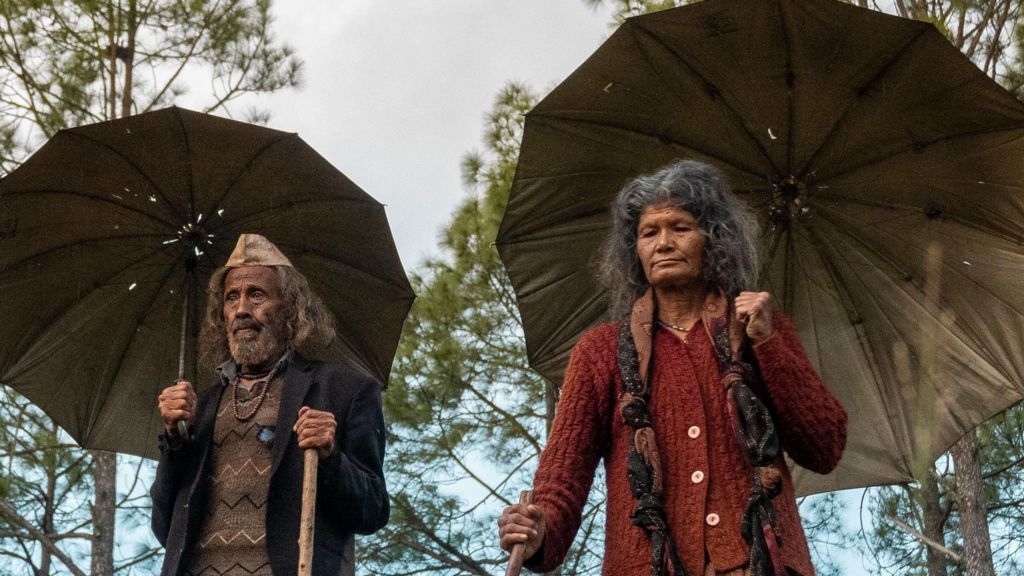
After spending two years trapped in distribution limbo, the poignant 111-minute Uttarakhand-set drama *Pyre* has emerged as a surprise cultural sensation across India, drawing tearful standing ovations from theatergoers and rave endorsements from top Bollywood talent. Helmed by veteran television journalist turned filmmaker Vinod Kapri, the production centers on Bubu and Aama – the local Uttarakhandi terms for grandfather and grandmother – played by first-time, non-professional leads Padam Singh, Kapri’s retired army uncle, and Heera Devi, a widowed village farmer who spent decades raising her children through agricultural labor, grass cutting, and buffalo rearing.
Set in a remote, roadless, electricity-free Himalayan hamlet, the narrative traces the quiet 65-year companionship of elderly couple Padam Singh and Tulsi, who have spent 28 years waiting for their only son Hariya to return home from Mumbai, where he migrated in search of stable work. Their long period of anticipation surges with new urgency when a letter arrives bearing Hariya’s promised return date, but as the few remaining local families gradually depart for urban opportunities, the couple is left increasingly isolated in the vast, unforgiving mountain landscape. When a departing neighbor warns them they will soon have no one left to carry their bodies down the steep slopes for a proper funeral, Padam Singh builds two adjacent funeral pyres directly outside their small home, to ensure they will never be separated even in death. While the story grapples with heavy, timely themes – including mass outmigration that has turned hundreds of Himalayan settlements into ghost villages, and worsening climate change that has made local weather patterns far harsher and less predictable – the film is laced with gentle, warm humor, framing the couple’s constant playful bickering as their unique, decades-tested love language.
Kapri, a Uttarakhand native, first conceived the project in 2018 after encountering an 84-year-old local man in the scenic hill town of Munsiyari, whose deeply lined face and quiet devotion to his elderly wife left a lasting impression. The original plan to film the real-life couple was abandoned after a week of shooting, as the pair could not adapt to performing for a camera. Kapri then approached iconic Bollywood acting couple Naseeruddin Shah and Ratna Pathak Shah for the lead roles, but the pair turned down the part out of respect for the story’s regional authenticity, noting they could not fully embody the lived experiences of Uttarakhand’s rural elderly population. The final casting of two local villagers, who had never faced a camera before, ended up becoming one of the film’s greatest strengths, drawing widespread praise from Indian cinema’s most respected figures, including Naseeruddin Shah and Anupam Kher. When Shah finally watched the finished film, he tearfully embraced lead actor Padam Singh, telling him he could never have delivered such a raw, authentic performance even across seven lifetimes.
*Pyre* earned 18 international film festival awards throughout 2024, including three best feature honors and 12 audience choice best film prizes, but struggled to secure a theatrical distribution deal for two full years, with major streaming OTT platforms also rejecting the project. It only reached cinemas on October 30 via a modest 70-screen release funded by a supportive producer friend of Kapri’s, but explosive positive word of mouth quickly drove surging ticket demand, prompting theater operators to expand screenings nationwide. Audiences have flooded social media with clips of viewers exiting screenings in tears, noting the story has not moved them this deeply in decades. Many attendees approach the two lead actors at public events to hug them or touch their feet, sharing that the film reminds them of their own elderly parents and grandparents waiting alone in hometowns they left behind for work.
Both non-professional leads admit they initially feared performing on camera, worrying they would forget lines and face judgment from their families and local communities. Now basking in nationwide acclaim, the pair have used their new platform to call on India’s younger generation not to abandon their rural ancestral lands, and to urge state and federal policymakers to expand local education and employment opportunities in rural Himalayan regions, so families no longer have to separate by migrating thousands of kilometers for work. As Heera Devi observes, the film’s widespread resonance stems from its unflinching realism: “Across villages in India, the elderly are left alone. No one’s children stay home anymore, and all parents wait endlessly for visits from their sons, daughters-in-law and grandchildren. That quiet loneliness is something no one can escape.”