A strictly confidential quarterly update from the UN Panel of Experts on Sudan, submitted to the UN Security Council last week and obtained exclusively by Middle East Eye (MEE), delivers irrefutable, conclusive evidence that the United Arab Emirates orchestrated the deployment of Colombian mercenary fighters to back Sudan’s abusive Rapid Support Forces (RSF).
The investigation traces the elaborate recruitment, training and transit network managed by GSSG, a UAE-headquartered security firm with documented direct ties to Emirati state institutions, including the Ministry of Foreign Affairs and Ministry of Presidential Affairs. The mercenaries were first trained at facilities across the UAE in Abu Dhabi, Ghayathi and al-Wathba, as well as at the UAE-subsidized Puntland Maritime Police Force (PMPF) base in Bosaso, Somalia – a semi-autonomous territory where Emirati proxies hold de facto control. The fighters were then ferried into Sudan via a multi-stop route spanning Libya, Somalia and Chad, all regions where Emirati-aligned armed groups hold large swathes of territory. Additional arms and logistical supplies for the RSF moved overland through Haftar-controlled eastern Libya, Ethiopia, and the UAE-linked breakaway Somali regions of Puntland and Somaliland.
The report confirms the Colombian mercenaries played a pivotal operational role in RSF’s 500-day siege and subsequent capture of el-Fasher, the capital of North Darfur, in October 2024, providing critical drone operation support, artillery expertise and frontline infantry backing. Multiple eyewitness and victim accounts collected by MEE confirm that during the el-Fasher offensive, RSF forces carried out widespread atrocities including mass rape, summary executions, civilian extortion and even forced blood extraction from detained people. Both the UN and United States have previously formally designated the RSF as responsible for perpetrating genocide in Sudan’s Darfur region.
All implicated parties, including the UAE, have publicly denied any wrongdoing. In an official letter included in the leaked confidential report, the UAE formally stated it rejects all allegations of misconduct related to the Sudan conflict and claims it takes reports of mercenary activity very seriously, though it did not respond to MEE’s formal request for comment on the new conclusive evidence. Unlike prior partial disclosures of Emirati involvement, this fully documented, fourth quarterly panel report is far more difficult for Abu Dhabi to dismiss.
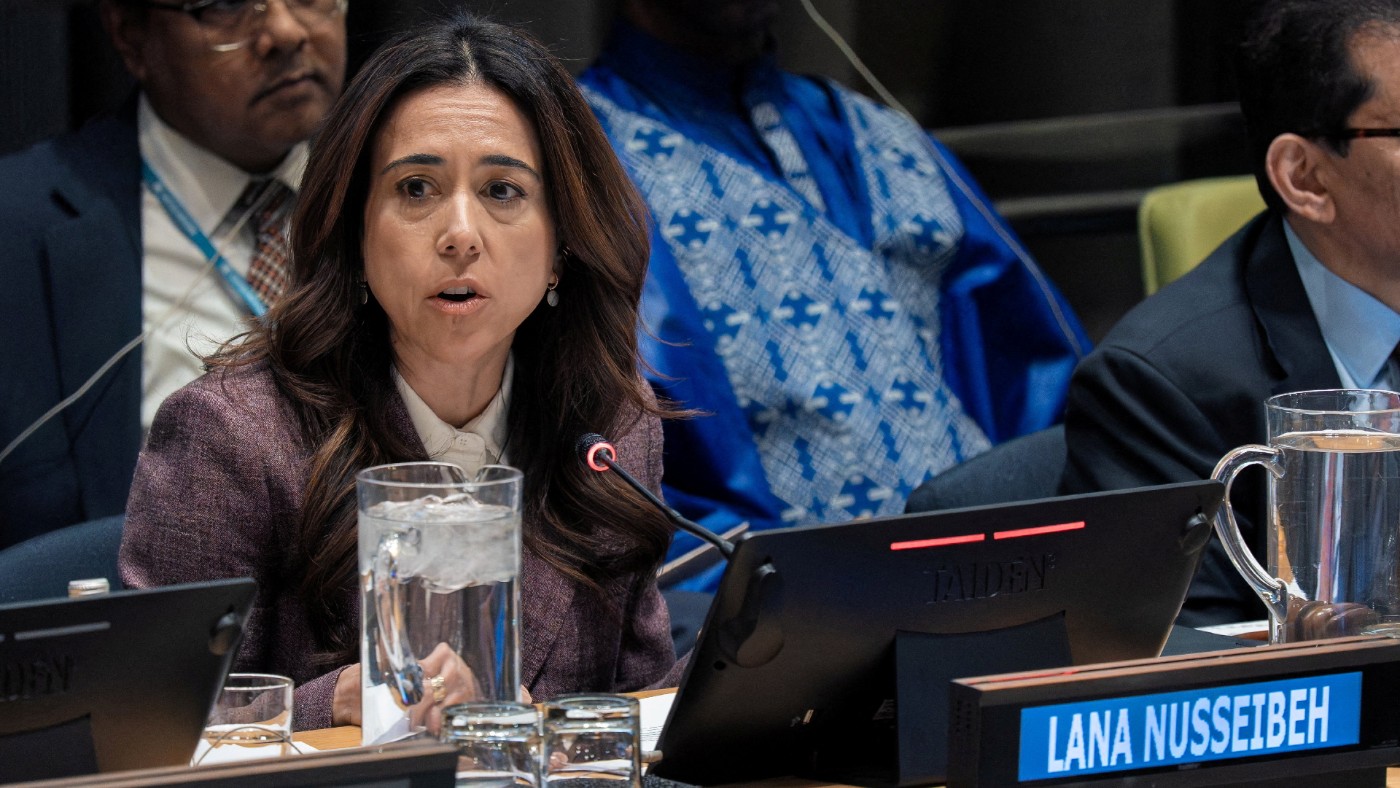
The emergence of this damning verified evidence of Emirati interference in Sudan’s 19-month civil war lands directly in the middle of the high-stakes race to replace outgoing UN Secretary-General Antonio Guterres, as the UAE’s former long-serving female permanent UN representative Lana Nusseibeh is actively campaigning for the top global diplomatic post. Sudan’s ambassador to the UK, Babiker al-Siddig al-Amin, warned MEE that Nusseibeh’s candidacy must not be used to whitewash Abu Dhabi’s documented support for the genocidal RSF, stating that actors with Sudanese civilian blood on their hands should not lead global governance institutions, and that her election would represent a catastrophic blow to the UN’s institutional credibility.
A highly decorated Emirati diplomat with close ties to the UAE ruling elite, Nusseibeh is a Cambridge and SOAS University of London graduate who previously served as UN General Assembly vice president, head of the UN Women executive board, and twice as Security Council president. She was a key architect of the UAE’s 2020 normalization of diplomatic relations with Israel. For years, she has rejected press reports detailing Emirati involvement in the Sudan war, and when pressed recently on her ability to remain impartial on Sudan-related issues if elected secretary-general, she stopped short of directly addressing Emirati support for the RSF, only stating that she would back full accountability for RSF atrocities and support all UN fact-finding mechanisms.
While Nusseibeh currently trails Costa Rica’s Rebeca Grynspan in informal straw polling for the position, her candidacy has gained significant momentum due to the UAE’s extensive economic and diplomatic leverage over the UN Security Council’s five veto-wielding P5 members. Abu Dhabi has pledged $1.4 trillion in long-term investments to the United States, billions of euros in economic commitments to France alongside hosting a permanent French military base and a Louvre museum branch, and poured tens of billions of pounds into the United Kingdom’s economy, including major stakes in the city of Manchester and ownership of the iconic Manchester City Football Club by Emirati Vice President Mansour bin Zayed Al Nahyan. China is the UAE’s largest global trading partner, while Russia has relied heavily on Dubai and Abu Dhabi networks to circumvent Western sanctions imposed after its 2022 invasion of Ukraine. Multiple diplomatic sources confirmed to MEE that the US, UK, France and Russia are all leaning toward backing Nusseibeh’s bid, with only China remaining opposed. Unconfirmed prior claims that International Rescue Committee head David Miliband had lobbied his brother, UK Foreign Secretary Ed Miliband, to support Nusseibeh’s candidacy were formally denied by the IRC, while the UK Foreign Office stated it would only evaluate all candidates on merit and would not publicly comment on individual hopefuls. Prior tensions between the UK and UAE over Sudan-related diplomatic stances came to light last year, when Abu Dhabi cancelled scheduled meetings with British ministers and forced a mid-flight turnaround of a visiting UK government aircraft after London declined to defend the UAE at a UN Security Council session on the Sudan war.
This latest confidential UN report follows a prior panel document earlier this year that also outlined UAE links to RSF mercenary deployments, which was blocked from public release for months by Bahrain, a close Emirati ally and non-permanent Security Council member. Investigations by AI safety firm Anthropic also confirmed with high confidence last September that the UAE ran a coordinated influence operation targeting UN Sudan experts and independent critics of its role in the conflict. The New York Times also recently revealed that GSSG, the security firm that deployed the Colombian mercenaries, was founded by a senior official in the Emirati presidential office.
Leaked UN report ‘establishes conclusively’ that UAE hired Colombian mercenaries for Sudan’s RSF