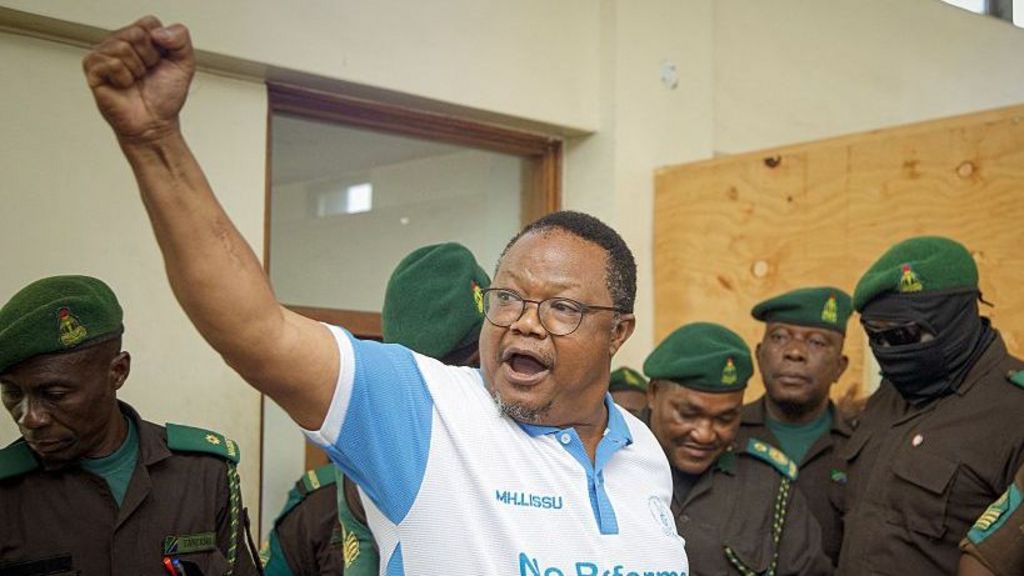
In a landmark ruling delivered by a three-judge panel at Dar es Salaam’s High Court, Tanzania’s leading opposition figure Tundu Lissu has been found guilty of incitement, while the far more severe treason charge against him was dismissed due to insufficient prosecutorial evidence. The 58-year-old chairman of the main Chadema party has been in state custody since April 2024, when he was arrested six months ahead of the bitterly disputed October 2025 general election over public remarks made during his “No Reforms, No Election” campaign for sweeping electoral system overhauls. Lissu, a veteran human rights lawyer who represented himself throughout the trial, has consistently rejected all allegations against him, framing the entire prosecution as a politically motivated move to eliminate a leading critic of the long-ruling Chama Cha Mapinduzi (CCM) party. He argued that his statements were legitimate calls for democratic reform, not a plot to destabilize the government, and that prosecutors had deliberately taken his public comments out of context to build a false case. The treason charge, which carries the maximum penalty of death in Tanzania, was thrown out after the panel confirmed the prosecution failed to prove a core legal element required to secure a conviction on that count. As of the latest update, the full legal reasoning for the incitement ruling and Lissu’s formal sentence are yet to be announced, though the court has already granted him permission to appeal the conviction directly to Tanzania’s highest judicial body, the Court of Appeal. The charges stemmed from Lissu’s public advocacy for a set of long-demanded electoral reforms: independent appointment of electoral commissioners free of presidential influence, unimpeded campaign access for all political parties without police intimidation, an end to the practice of government-appointed district chiefs serving as election returning officers, full unharassed access for party agents during vote counting, and legal provisions to allow presidential election results to be challenged in national courts. During his 12 months of pre-trial detention at Dar es Salaam’s Ukonga Prison, Lissu staged two brief hunger strikes to protest what he described as repeated violations of his due process rights, including being denied access to his legal team and family members, and having private attorney-client consultations monitored by prison guards, allegations that prison authorities have formally denied. This case comes against a turbulent recent political backdrop in Tanzania. The 2025 general election saw incumbent President Samia Suluhu Hassan declared the winner with 98% of the national vote, a result the opposition universally derided as a farcical mockery of democratic norms, as Lissu and nearly all other major opposition challengers were barred from appearing on the ballot. Post-election unrest sparked widespread mass protests that were met with a heavy-handed security crackdown; an official government inquiry has confirmed at least 500 people were killed in the violence, though independent opposition groups maintain the actual death toll is far higher and have demanded a fully independent, international investigation into the atrocities. President Samia’s administration has repeatedly rejected all accusations of targeting opposition figures, defended the election as free and fully transparent, and claimed the post-election unrest was the product of a foreign-backed plot to overthrow her government, for which she has commissioned a separate official inquiry to identify alleged masterminds. Lissu has been one of Tanzania’s most unyielding critics of CCM’s 60-plus year grip on national power, dating back to the party’s single-party era predecessor TANU. First elected to parliament in 2010 to represent a constituency near his Singida hometown 320km northwest of the capital Dodoma, he survived a brazen 2017 assassination attempt when unidentified gunmen sprayed his vehicle with bullets outside his Dodoma home, leaving him with multiple gunshot wounds that required years of specialized medical treatment abroad. The attackers were never identified or prosecuted, forcing Lissu into years of exile. He returned to Tanzania to challenge late president John Magufuli in the 2020 presidential election, a vote marred by widespread documented irregularities that the opposition condemned as rigged, before fleeing back into exile. He made a high-profile return to the country in 2023, after President Samia lifted a longstanding ban on opposition public rallies, a move widely hailed at the time as a sign of tentative political opening after years of brutal authoritarian crackdowns under Magufuli. The apparent thaw in government-opposition relations rapidly collapsed as the 2025 election drew near, and Lissu’s rise to Chadema’s national chairmanship in January 2025 led him to escalate his calls for systemic electoral reform. His conviction has drawn sharp international scrutiny, with global human rights groups including Amnesty International issuing recent reports accusing the Tanzanian government of systematically weaponizing counterterrorism legislation to silence political dissidents and instill widespread fear across civil society, in a deliberate campaign to shrink the already narrow space for legitimate political dissent. The Tanzanian government has not issued any public response to requests for comment on Lissu’s conviction or the Amnesty International allegations.