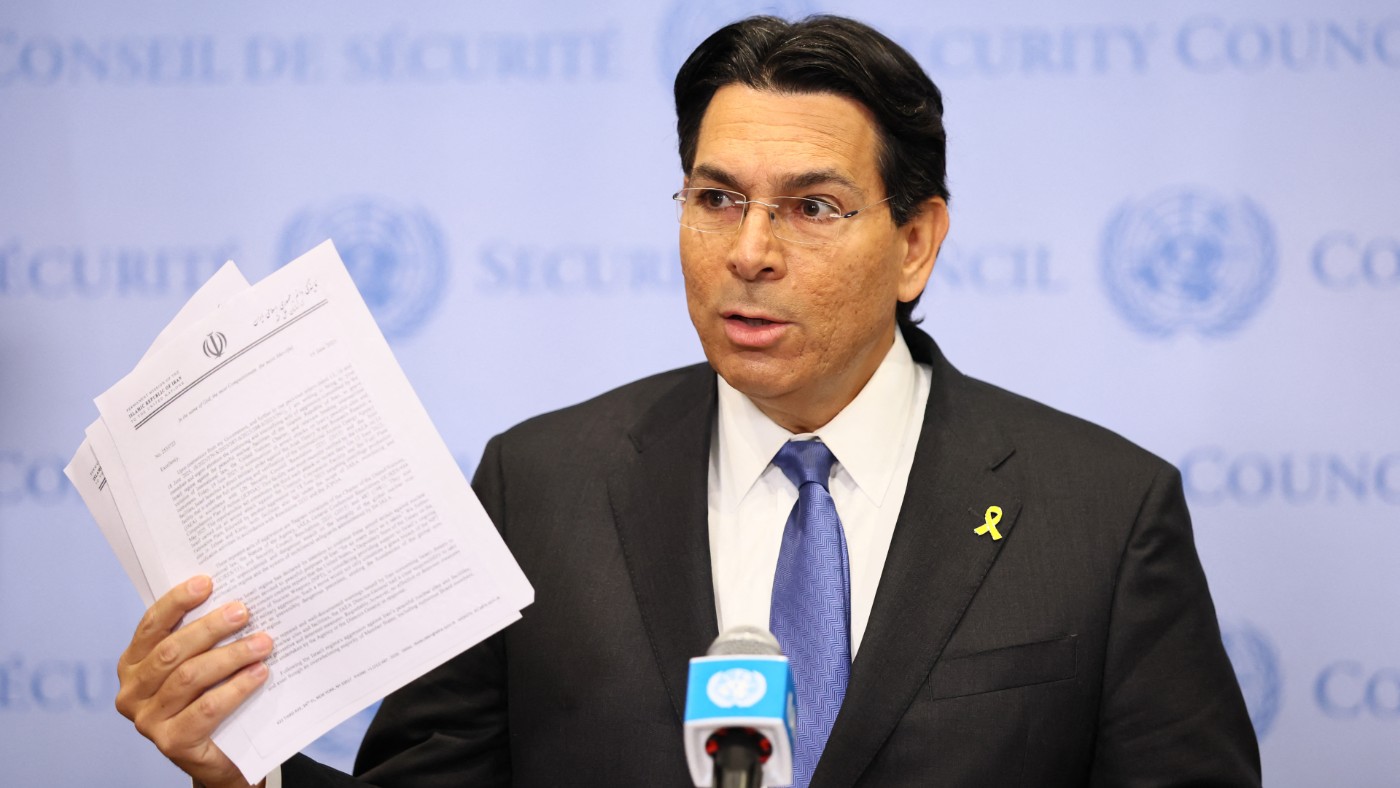
In a firm rebuke of recent remarks from U.S. Vice President JD Vance, Israel’s ambassador to the United Nations Danny Danon has rejected assertions that the U.S.-led war against Iran is the core driver of the Republican Party’s devastating midterm election losses, and that Washington should overhaul its longstanding bilateral relationship with Israel. Speaking in an interview with Israeli news outlet i24 News, Danon pushed back against the long-running trend of framing Israel as a convenient scapegoat for unrelated U.S. domestic political outcomes. “It is far too simplistic to pin every negative outcome on Israel, and that narrative does not reflect reality,” Danon emphasized, noting that the widespread voter frustration over spiking global oil prices and broader cost-of-living pressures in the U.S. has been incorrectly tied to Israel’s role in the regional conflict. Danon clarified that the late February joint U.S.-Israeli military strike on Iran was a sovereign policy decision made exclusively by U.S. leadership, with Israel only providing supportive backing for an operation Jerusalem deemed strategically justified. Context from a New York Times investigation revealed that weeks prior to the outbreak of hostilities, Israeli Prime Minister Benjamin Netanyahu shared intelligence with U.S. President Donald Trump claiming that a targeted military strike would trigger mass public uprisings in Iran that would topple the country’s ruling regime. That predicted regime change never materialized, and in a significant strategic retaliatory move, Iran seized full operational control over the Strait of Hormuz, the global chokepoint that carries roughly 20% of the world’s oil supply. The disruption to global energy flows sent international oil prices soaring, driving up U.S. household costs for fuel, groceries, and utilities across the country, an issue that Democratic candidates heavily weaponized against Republican incumbents during the midterm cycle. Following the Republican Party’s historic defeat that saw it lose control of both the U.S. Senate and House of Representatives, Vance laid out his unvarnished assessment in a lengthy public post on X: “The real reason we suffered these sweeping losses is obvious to nearly every close observer of the race: it is the war. Even the president himself acknowledged as much in remarks last night.” Vance went on to cite internal polling data showing that a large share of core Trump-aligned voters demanded two key policy shifts: an immediate end to the U.S. military campaign against Iran, and a fundamental restructuring of Washington’s decades-long strategic partnership with Israel to prioritize a “America First” domestic agenda. Even Trump himself partially validated this framing in a subsequent interview, acknowledging that the Iran conflict played a role in the party’s poor showing, even as he insisted he would authorize the strike again if given the chance. Vance went further, challenging pro-war Republicans to defend the tradeoff: “If you believe this military campaign was a worthy cause, that surrendering control of the Senate for the next six years is an acceptable price to pay, then make that case publicly. Every voter who cast a ballot last week knows exactly why we lost.” Danon acknowledged during his interview that growing bipartisan criticism of Israel in U.S. political circles, on both the Democratic and Republican sides, will force Jerusalem to adjust its diplomatic strategy moving forward. “This shifting political landscape in Washington will make our work to maintain strong bilateral ties far more challenging,” he noted, referencing the rising number of elected U.S. officials who hold openly anti-Israel policy positions. When asked about the possibility of the incoming Democratic-controlled Congress pushing for a diplomatic detente and potential normalization deal between the U.S. and Iran, Danon stressed that Israel will never compromise on its core security imperatives. “No matter what diplomatic shifts unfold in Washington, Israel will take every unilateral measure necessary to defend our national safety and territorial integrity,” he stated. The U.S. midterm results have also sparked a fierce domestic backlash against Netanyahu inside Israel, with a growing cross-section of Israeli politicians and political commentators arguing that the prime minister has become a toxic liability that alienates leadership from both major U.S. political parties. A growing chorus of Israeli critics now insists that Netanyahu can no longer effectively lead Israel’s diplomatic outreach to Washington in the wake of the Democratic landslide, given his plummeting popularity among U.S. policymakers. One veteran former Israeli diplomat framed the election results as a historic turning point, marking the end of a 50-year era of largely unwavering bipartisan support for Israel in Washington, warning that the future trajectory of the U.S.-Israel alliance is now shrouded in unprecedented uncertainty.
Israel’s UN ambassador rejects Vance’s claim that Iran war was behind midterm losses