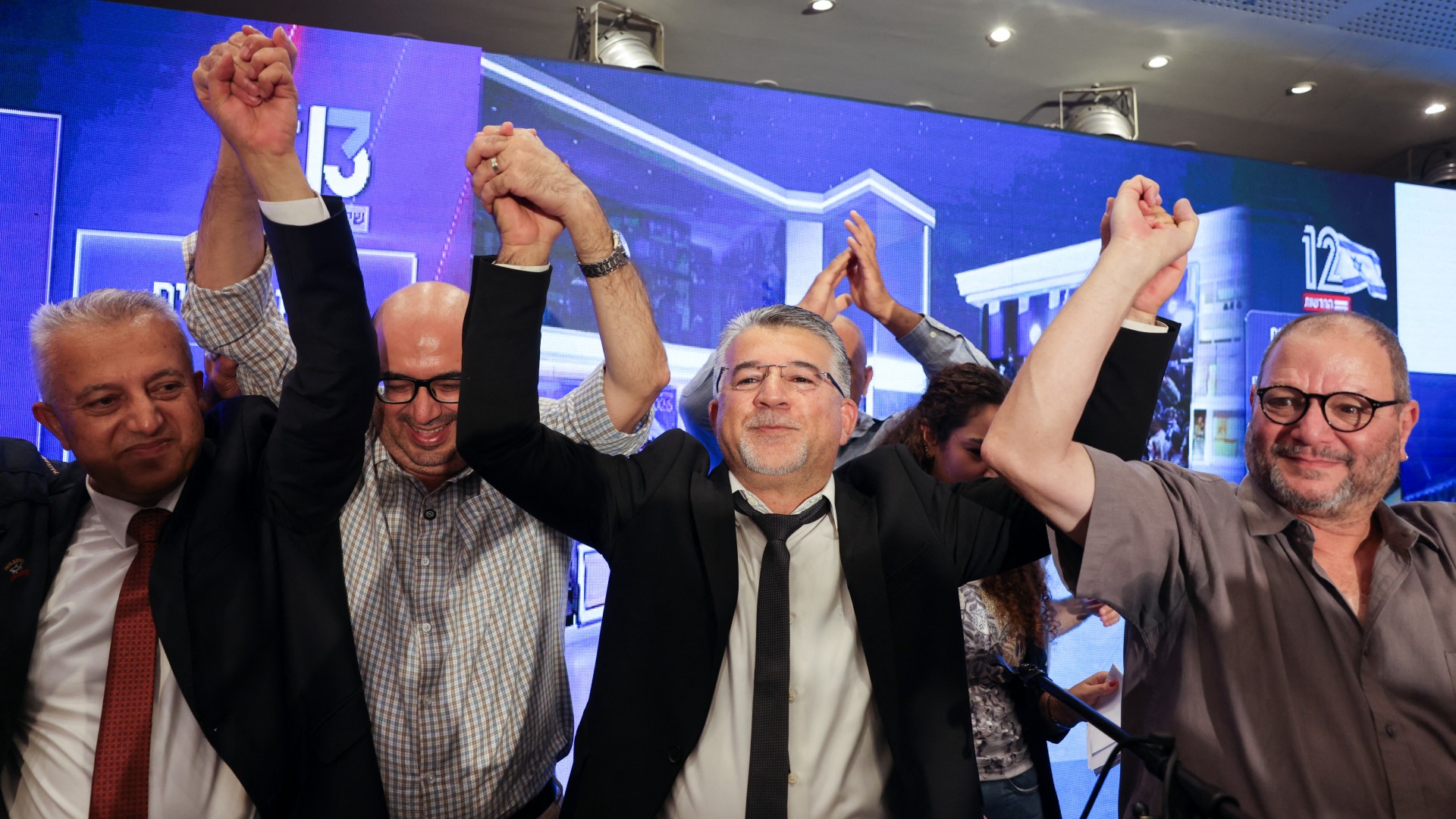
A landmark political shift in Israel’s post-election coalition landscape unfolded this week, as the Arab-majority Joint List formally announced its endorsement of opposition leader Gadi Eisenkot to lead the formation of the next national government, delivering a devastating setback to incumbent Prime Minister Benjamin Netanyahu’s months-long campaign to cling to office.
The official endorsement, unveiled by the Joint List on Thursday, came just 24 hours after fellow Arab-led party Ra’am declared its own support for Eisenkot. The dual backing pushes the former military chief’s total Knesset support to 67 lawmakers in the 120-seat chamber, far exceeding the 61-seat parliamentary threshold required to form a governing majority.
The two Arab political blocs combined secured a historic 19 seats in the 27 October general election, positioning them as undisputed kingmakers after initial vote counts left both major Israeli political camps well short of a standalone governing majority. Final election tallies confirmed Netanyahu’s long-dominant right-wing faction won only 53 seats, while Eisenkot’s core opposition alliance claimed 48, leaving both sides scrambling to court smaller factions to cross the 61-seat majority line.
Joint List leadership emphasized that the unanimous decision to back Eisenkot was a direct response to widespread public demands across their constituency to block Netanyahu’s far-right governing coalition from returning to power. The endorsement was explicitly framed as a strategic move to widen Eisenkot’s lead over Netanyahu and lock in a path to oust the long-serving incumbent, even as the bloc acknowledged that the mainstream opposition has not done nearly enough to push back against Netanyahu’s hardline political agenda, his repeated incitement targeting Arab Israeli citizens, and his administration’s persistent efforts to delegitimize Arab voters’ electoral choices.
Crucially, the Joint List clarified that its support will not extend to joining a formal Eisenkot-led governing coalition or accepting cabinet minister positions. The faction has committed to backing a future opposition-led government from the outside as a confidence and supply partner, a position rooted in longstanding leadership objections to participating in any Israeli government that maintains the ongoing occupation of Palestinian territories.
The cross-factional endorsement has also laid bare deep internal rifts within Eisenkot’s own opposition bloc, which had previously set strict preconditions for any potential political partners: formal recognition of Israel as a Jewish state, full support for national military conscription policies, and public condemnation of Hamas. Some hardline members of the opposition alliance have publicly rejected the idea of relying on Arab Knesset members to secure power, while more pragmatic factions argue that the Arab blocs’ support is the only viable path to ending Netanyahu’s more than 15 consecutive years of unbroken political dominance.
Eisenkot, a 66-year-old former Israel Defense Forces chief of staff who served in the top military role from 2015 to 2019, has previously ruled out any framework for an independent Palestinian state existing alongside Israel. During his military tenure, he also emerged as a prominent advocate for normalized diplomatic and security ties with Saudi Arabia, publicly calling for the two nations to coordinate closely to counter Iran’s regional influence, including proposals to share sensitive intelligence with Riyadh to counter Tehran’s military and political activities across the Middle East.