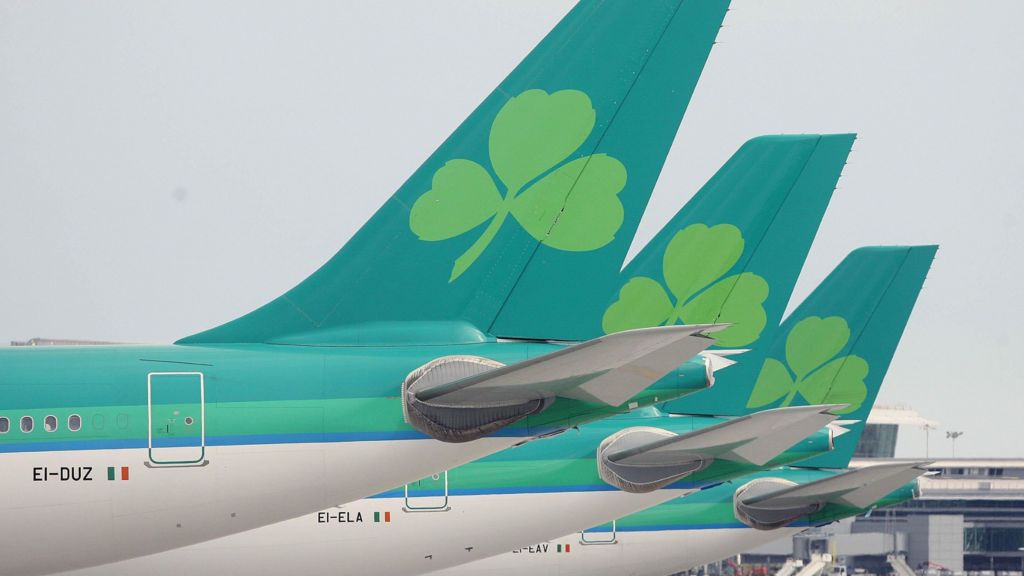
A string of coordinated, unverified bomb hoaxes has upended commercial air travel operations across multiple European countries in a 72-hour span, prompting emergency diversions, military escorts, and sweeping security sweeps that have disrupted travel for hundreds of passengers, regional aviation officials confirmed Thursday. The latest wave of disruptions kicked off early Thursday when Aer Lingus flight EI402, an Airbus A320 that departed Dublin Airport en route to Rome Fiumicino, triggered a full security alert mid-flight. Crew members made the decision to divert the aircraft as a precautionary safety measure, touching down safely at Evreux military air base in northern Normandy, France. In an official statement released by the Irish carrier, leadership confirmed all passengers and crew disembarked without incident, and operational teams were working urgently to arrange alternate travel itineraries to get all customers to their intended final destinations as quickly as possible. Simultaneously on Thursday, Finnish national carrier Finnair announced one of its aircraft operating a regularly scheduled service from Helsinki to Rome had received a formal bomb threat mid-flight. Finnish Air Force fighter jets were scrambled to escort the passenger jet through its remaining travel route, and the aircraft landed without deviations at its scheduled Italian arrival gate, with no reported injuries to anyone on board. A separate unrelated incident also unfolded Thursday, when a Wizz Air service travelling from Milan, Italy, to Warsaw, Poland, transmitted an emergency distress signal and diverted to Vienna International Airport in Austria. At time of reporting, aviation regulators have not publicly confirmed a root cause for that diversion, and no official bomb threat has been linked to the Wizz Air flight to date. This latest spate of security scares comes barely 48 hours after a wave of eight separate European commercial flights were targeted by anonymous bomb hoaxes last Tuesday. Among those targeted flights were two services departing from UK airports: one that took off from Manchester and diverted to Murcia, Spain, and a second that departed London Heathrow bound for Warsaw. Two Ryanair services, one originating in Dublin and the other departing Lisbon, also received anonymous threat alerts that prompted emergency landings at Rome’s Fiumicino Airport. Local law enforcement sources at the Italian hub confirmed to BBC reporters that specialized bomb disposal units executed full, standardized security screening protocols on all four of those aircraft, thoroughly searching every cabin, cargo hold and on-board compartment before clearing the planes of any explosive hazards. No traces of explosive materials were uncovered on any of the affected flights across both waves of incidents, officials confirmed. A spokesperson for the UK government formally categorized all the reported incidents as deliberate, malicious hoax threats designed to cause widespread disruption to European air travel networks. No group has yet claimed responsibility for the coordinated spate of anonymous alerts, and cross-border law enforcement agencies have launched a joint investigation to trace the origin of the threatening communications.