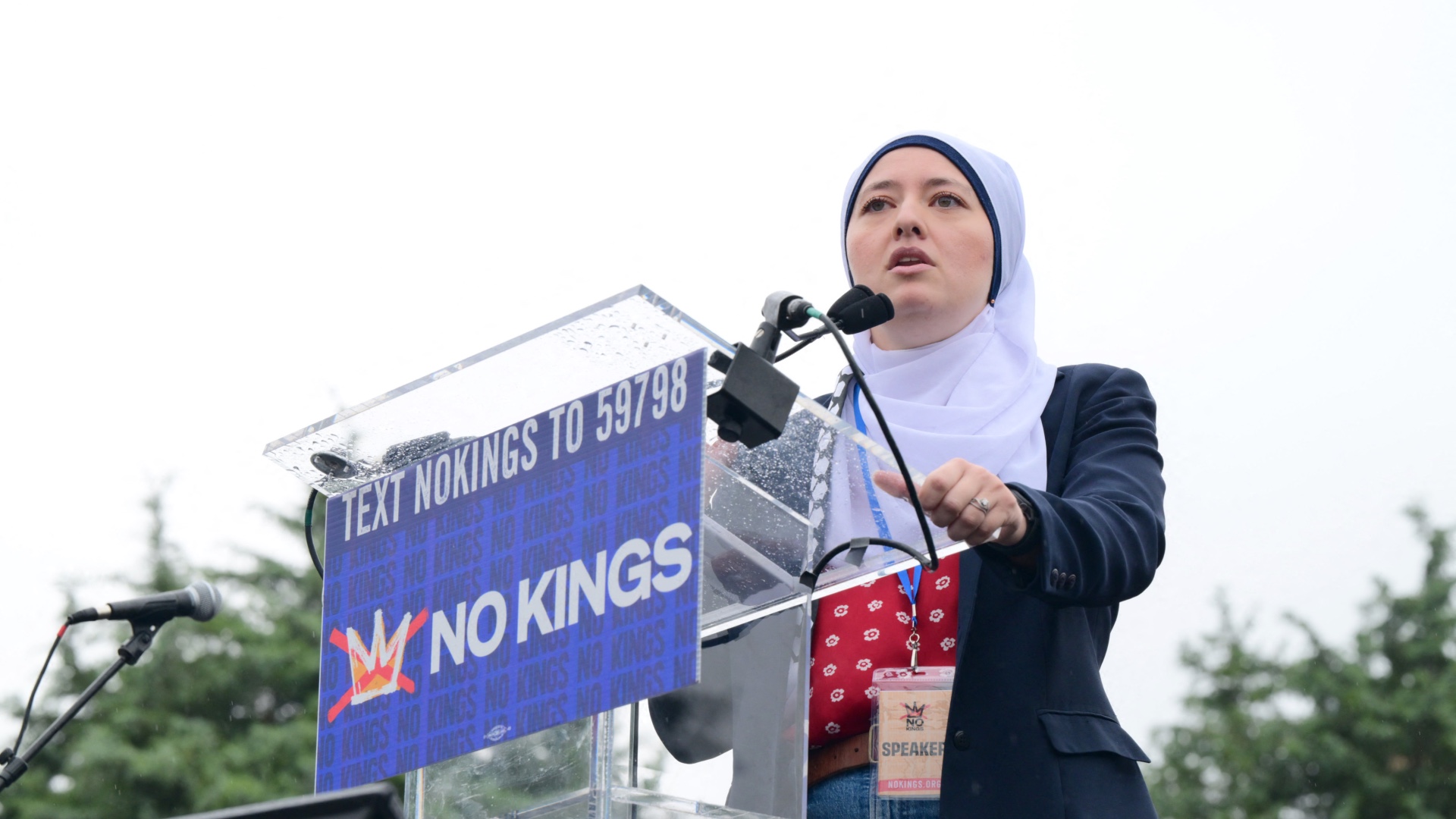
The 2026 US midterm elections on Tuesday delivered an unprecedented set of electoral milestones, as a cohort of five hijab-wearing Muslim women – four progressing to state senate seats and one securing re-election to the US House of Representatives – defied years of escalating anti-Islam rhetoric, targeted harassment, and coordinated far-right campaigns that many observers had feared would suppress Muslim voter turnout entirely.
This remarkable electoral breakthrough unfolds against a backdrop of sustained anti-Muslim hostility that has permeated American public life since the Trump administration took office in January 2025. For years, visibly Muslim women, particularly those who wear the hijab, have faced dehumanizing caricatures in mainstream corporate media, relentless verbal attacks from Republican politicians, and coordinated harassment campaigns from online far-right trolls, placing them in the direct crosshairs of targeted political and personal threats. Just one week before the midterms, the Muslim Public Affairs Council (MPAC) issued a public warning about the sharp rise in violent anti-Muslim provocateurs operating across the country, noting that their incendiary actions had already spurred calls for expanded, overreaching law enforcement presence in majority-Muslim communities that risked dissuading Muslim American voters from casting ballots altogether. Even as official voter demographic data remains in the process of being tabulated, the election results make clear that rather than disengage, a new generation of young, progressive Muslim women chose to step forward and claim public office to advocate for their communities directly.
Each of these newly elected officials carries a distinct personal backstory rooted in immigration, community organizing, and longstanding advocacy for progressive policy priorities. In Georgia, a traditionally conservative southern state that also made national headlines this cycle by re-electing its first Jewish US Senator and installing the state’s first ever Black woman as governor, Ruwa Romman – who already made history as the first hijab-wearing Muslim to serve in the Georgia state House – won her race for a state senate seat. Romman first rose to national prominence during the 2024 presidential election, when she was selected to be a Palestinian speaker at the Democratic National Convention, a request that was ultimately rejected by party leadership after pro-Palestine Democratic delegates pushed for her inclusion. The Biden administration’s unwavering, blanket support for Israel’s military campaign in Gaza, which has since been designated a genocide by both the United Nations and leading Holocaust scholars, eroded significant support for Democratic candidates among young voters across the country, contributing to the party’s poor electoral performance in many 2024 races – a dynamic that makes these 2026 midterm wins for progressive Muslim candidates all the more notable.
In New York, Aber Kawas, a Palestinian immigrant, will take her seat in the New York State Senate this coming January. Kawas has spoken publicly about her vision of grassroots civic engagement and collective community action as a path to broader cross-cultural reconciliation in New York City, a perspective shaped by profound personal trauma: in the years immediately following the 9/11 attacks, when the US launched a nationwide aggressive crackdown on Muslim communities that included FBI raids, mass disappearances, and widespread surveillance of mosques and community institutions, her undocumented father was arrested by Immigration and Customs Enforcement (ICE). He spent nearly three years detained in a facility that housed both civil immigration detainees and people accused of violent criminal offenses, before being deported to Jordan. Kawas has recalled countless childhood visits where she stood separated from her father by a thick pane of detention center glass, as her mother pleaded for his release. The widespread public outrage over ICE’s aggressive, public daylight arrests of immigrant community members across New York and the rest of the country was a key driver of the Democratic “bluenami” turnout surge that defined Tuesday’s midterm results.
In Illinois, 27-year-old Nabeela Syed, an Indian American progressive who first filled a vacant state House seat in 2022, defeated her Republican opponent by a comfortable 57 percent of the vote, overcoming a particularly hostile and well-funded challenger. Syed has centered her legislative agenda on expanding healthcare access and reducing cost burdens for working families, earning endorsements from two of the state’s most respected longstanding newspapers: the 150-year-old Daily Herald serving the greater Chicago suburbs, and the historic Chicago Tribune. Shortly after the October 7, 2023, Hamas-led attacks on southern Israel, Syed co-signed a public letter alongside a group of fellow Illinois state lawmakers calling on the US federal government to immediately push for a ceasefire, a move that drew fierce criticism from Republican figures who claimed the statement defended Hamas. The letter itself emphasized that lasting peace could never be achieved while millions of Palestinian people were systematically denied their basic human rights, and called on the US and global community to pursue long-term policy solutions that address the structural inequality at the root of cycles of regional violence.
In Connecticut, Maryam Khan, a Pakistani-born former special education teacher who has served in the state House of Representatives since 2022, secured a landslide victory in her state senate race, after first unseating a ten-year Democratic incumbent in a competitive August primary. During her tenure in the state House, Khan chaired the chamber’s Select Committee on Special Education, and also held leadership roles on the judiciary and education committees, earning public praise from Connecticut State Senate Democratic Majority Leader Bob Duff, who hailed her as a dedicated champion for the state’s children in a public post on X. Earlier this year, Khan faced a wave of partisan Republican backlash after she displayed a small Pakistani flag on her legislative desk, a choice she explained was a quiet celebration of her cultural heritage and personal pride, noting that Pakistan is a longstanding formal diplomatic ally of the United States, and that honoring her immigrant background in no way diminished her commitment to serving the Connecticut constituents who elected her.
The highest-profile victory of the night came in Minnesota, where longtime progressive firebrand Ilhan Omar won re-election to the US House of Representatives for a fifth term, defying an unprecedented, months-long campaign by the Trump administration to discredit her, strip her of citizenship, and deport her. Omar, who made history in 2018 as one of the first two Muslim women ever elected to Congress, and the first hijab-wearing member of the House, has been a top target of Donald Trump’s political attacks for years. Just two weeks before the midterms, federal agents from Homeland Security Investigations carried out a pre-dawn raid on Omar’s private home, seizing her cell phone, laptop, and all her personal electronic devices. Omar, who fled civil war in Somalia as a child refugee and arrived in the US in 1995, has stated she obtained US citizenship at age 17 after her father, who has since passed away, completed the naturalization process. The Department of Justice is currently investigating unsubstantiated claims that she was actually 18 at the time of her naturalization, which would mean she would have needed to apply for citizenship independently rather than through her parent’s application – allegations that Trump has amplified for years, alongside repeated false claims that Omar married her own brother to secure immigration status. Omar has repeatedly denied all of these accusations, but Trump and Vice President JD Vance have spent the last year publicly demanding formal investigations into her citizenship status, with Trump even leading crowds in chants of “send her back” at his campaign rallies. Leaks to The Wall Street Journal from unnamed administration officials confirm that the Trump White House has been actively building a formal legal case to revoke Omar’s citizenship and initiate deportation proceedings against her. Data published by The Washington Post shows that nearly 100 Republican members of Congress have posted anti-Islam or anti-Muslim content on their social media accounts since the start of 2025, almost uniformly negative, with multiple members explicitly calling for mass deportations of Muslim American citizens and residents. A separate 2026 report from the Center for the Study of Organized Hate found that between February 2025 and March 2026, Republican officials coordinated a national anti-Muslim campaign that included 1,111 targeted social media posts, eight pieces of anti-Muslim federal legislation, and the formation of a 62-member congressional anti-Muslim caucus, with the majority of the posts meeting formal legal criteria for speech that is highly likely to incite real-world violence.
Haris Tarin, vice president for policy and programming at MPAC, noted in a Wednesday interview with Middle East Eye that the sustained, years-long campaign of anti-Muslim fearmongering ultimately backfired spectacularly for Republican candidates. “Ilhan Omar won with higher margins than any of her previous election cycles, and you saw multiple other visibly Muslim women secure seats across the country who ran unapologetically as their full selves – that makes it clear the anti-Muslim strategy failed,” Tarin said. “Islamophobia was not a winning electoral play in this midterm cycle.”
US midterm elections 2026: Record number of hijabis elected to statewide and national offices