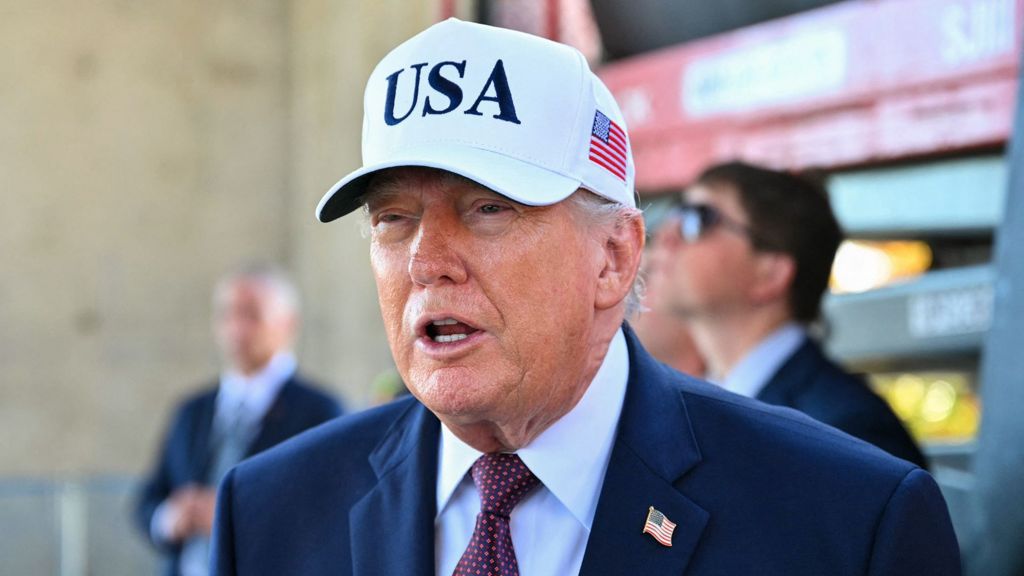
After a decisive midterm election defeat that handed opposition Democrats control of both chambers of the U.S. Congress, President Donald Trump faces unprecedented constraints on his domestic legislative and political agenda, but retains sweeping unilateral authority over U.S. military and foreign affairs that many analysts warn he could deploy to distract from his domestic political losses. Long famous for framing every outcome through superlatives, Trump has repeatedly demonstrated a visceral refusal to be perceived as a “loser,” a core character trait that has driven his frequent, unorthodox policy U-turns designed to deliver high-profile, media-friendly wins. With his ability to dictate domestic policy now largely neutralized by the newly empowered Democratic congressional majority, White House watchers and global allies are closely tracking two high-risk foreign policy flashpoints where Trump could pursue dramatic, headline-grabbing actions to rebrand himself as a decisive, strong commander-in-chief untainted by the midterm rout that he has already attempted to frame as irrelevant because his name did not appear on the ballot. The first major potential flashpoint centers on Iran. In the weeks leading up to the midterms, the Trump administration ramped up military deployments to the Persian Gulf, culminating in a limited pre-election airstrike on an Iranian island. Democratic Senator Chris Murphy, who attended a closed-door classified briefing on proposed military options against Tehran before suffering a stroke, publicly condemned the preliminary plans as “insane,” warning that any large-scale strike on Iranian civilian infrastructure would not only violate international humanitarian law and qualify as a war crime, but trigger devastating retaliatory strikes targeting U.S. allied assets across the Gulf. Tehran, which has closely monitored U.S. political shifts, has openly noted that its ongoing enforcement of partial restrictions on shipping through the strategic Strait of Hormuz has driven up global prices for fuel, fertilizer and other core commodities, a dynamic that contributed to Republican losses in the midterms. Iranian parliamentary speaker Mohammad Bagher Ghalibaf issued a stark public warning on social media, stating that American voters had rejected further war in the midterms, and that any U.S. administration that defied that public mandate to pursue conflict would face crippling consequences. Israeli interim Prime Minister Benjamin Netanyahu, currently locked in tense coalition negotiations after recent national elections, has been openly lobbying Trump to pursue regime change in Tehran, a move that analysts note would allow Netanyahu to bypass his current parliamentary deadlock and form a dominant national unity government in the event of a large-scale regional war. The second high-stakes theater where Trump could pursue unilateral action is the ongoing Russia-Ukraine conflict, which has now surpassed the length of the First World War. Prior to the midterms, Trump unilaterally rolled back a set of sanctions on Moscow to enable increased imports of Russian diesel, a move intended to ease domestic U.S. fuel price inflation ahead of voters going to the polls. Russian presidential spokesperson Dmitry Peskov has publicly expressed hope that the midterm results will not disrupt Trump’s self-styled “peace-making” efforts to end the conflict, which have consistently centered on forcing Ukrainian President Volodymyr Zelensky to accept sweeping territorial concessions to Russia that would amount to a de facto capitulation for Kyiv. To date, the Trump administration has declined to fulfill repeated Ukrainian requests for additional U.S.-made air defense interceptors, even as Russian ballistic missile attacks on civilian Ukrainian population centers have increased in frequency and scale. Analysts caution that while Trump’s notoriously unpredictable governing style makes specific policy forecasts highly unreliable, one constant remains clear: the president has no intention of remaining a lame-duck leader quietly winding down his term in office. Barred from advancing his domestic agenda by the new Democratic congressional majority, there is growing consensus that Trump will prioritize high-stakes foreign maneuvers to cement his political legacy, with the explicit goal of proving that even after a major domestic electoral defeat, he retains the power to shake global geopolitics to their core.
Trump’s loss limits powers at home, but it will likely be different abroad