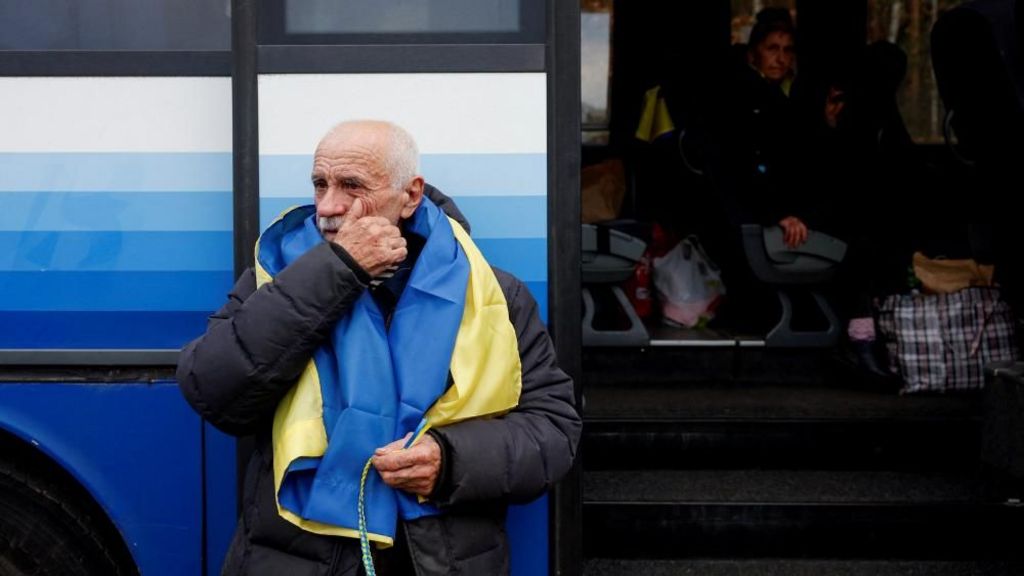
After six consecutive days of quiet across Ukraine’s frontline Kherson region – the longest uninterrupted ceasefire recorded since Russia launched its full-scale 2022 invasion – hundreds of long-trapped civilians from the Russian-occupied town of Oleshky and its surrounding communities safely reached Ukrainian-held territory on Saturday, many reuniting with tearful relatives they had been separated from for years. The hard-won pause, brokered in a largely unpublicized effort by U.S. First Lady Melania Trump, enabled the unprecedented mass evacuation of residents who had endured years of hunger, deprivation, and constant exposure to crossfire in the decimated frontline settlement. Both Ukrainian and Russian officials publicly thanked Melania Trump for her mediation, though no formal details of her exact role in securing the truce were released. The rare humanitarian pause also facilitated an unusual display of bilateral cooperation: Russian human rights ombudsman Yana Lantratova and her Ukrainian counterpart Dmytro Lubinets jointly oversaw ceasefire implementation, traveled into Oleshky to speak directly to remaining residents, and publicly thanked one another for coordinating a truce that saw zero reported violations during its six-day run. Both officials subsequently called for the evacuation-focused ceasefire model to be replicated across other active frontline zones, with Ukrainian leadership signaling it would support nationwide similar humanitarian pauses to extract trapped civilians. Despite this tentative goodwill, fighting in Kherson resumed abruptly early Monday morning, when local Ukrainian authorities confirmed Russian forces had struck a medical facility in central Kherson city; a separate drone attack on a civilian vehicle left a 62-year-old woman and 73-year-old man with non-life-threatening injuries. Ukraine’s General Staff alleged Russian forces had exploited the entire ceasefire window to rotate frontline units, deploy additional anti-drone defensive equipment along key regional roads, and resupply forward positions with fresh ammunition. The Kremlin did not dispute the claim, with spokesman Dmitry Peskov noting that regrouping military forces during such pauses was “completely standard practice”, adding that it was reasonable to assume Ukrainian forces had also used the lull to reposition their own troops. Peskov went on to swiftly dismiss suggestions that the Oleshky truce would pave the way for broader peace negotiations, describing the evacuation operation as an isolated, one-off case that would not impact the broader stalled settlement process, with no plans to roll out similar ceasefire initiatives across other conflict zones. The limited nature of the pause was further underscored by the fact that even as Kherson region saw six days of relative calm, Russian aerial strikes on other parts of Ukraine continued uninterrupted, killing dozens of civilians and destroying critical civilian infrastructure. Analysts widely note that both sides’ willingness to respect the Oleshky ceasefire stemmed largely from political calculations rather than purely humanitarian motives: Russia avoided violating the truce to preserve its ongoing diplomatic outreach to U.S. President Donald Trump, while Ukrainian leadership sought to maintain positive ties with the White House to secure continued access to U.S. intelligence support and Patriot air defense systems, which are critical to fending off Russian aerial attacks ahead of a harsh winter. Commentators also pointed out that the Trump administration stood to frame the ceasefire as a landmark foreign policy win in the final days before U.S. midterm elections. While hundreds of civilians were able to escape years of hardship in Oleshky, Lantratova confirmed that the hundreds of residents who chose to remain in the occupied town will receive monthly humanitarian aid shipments, a concession also secured as part of Melania Trump’s mediated deal. Even as the evacuation unfolded, the wider conflict showed no signs of slowing: shortly after Russian strikes resumed in Kherson, Ukrainian drone attacks targeted energy infrastructure across four separate Russian regions, including a fifth strike in one month on an oil refinery in the Samara region that sent thick plumes of black smoke billowing over residential areas. Though the Oleshky ceasefire delivered a rare, fleeting reprieve for hundreds of vulnerable civilians, the full-scale resumption of hostilities on both sides confirms the temporary truce has done nothing to shift the broader, grinding trajectory of the two-year-old war.