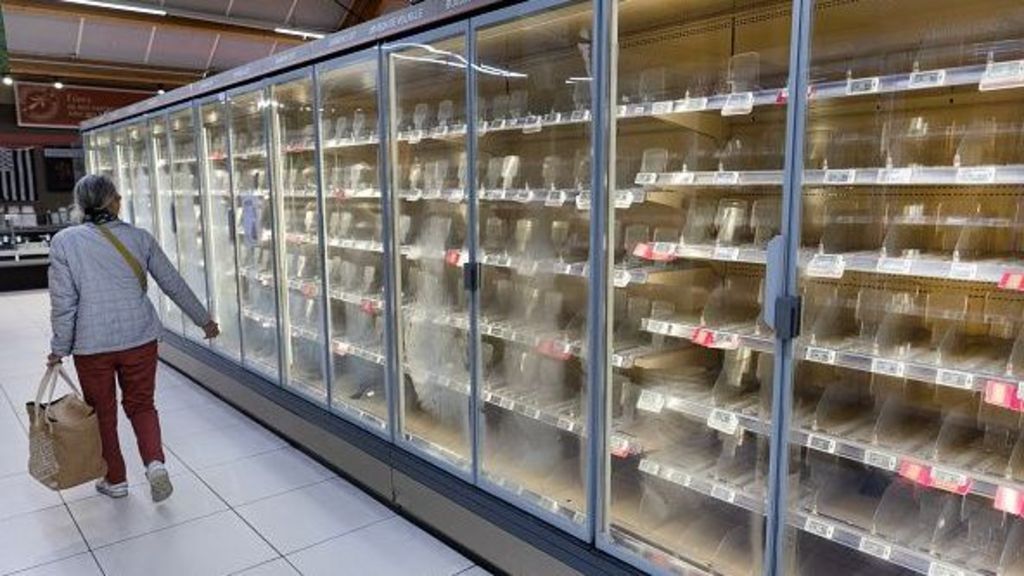
A wave of suspected cyber-intrusions targeting supermarket chains across Europe has disrupted operations of commercial refrigeration and freezer systems, sparking widespread alarms over unaddressed security gaps in internet-connected hardware spanning industrial machinery to common household smart appliances. The expanding ecosystem of internet-linked devices, ranging from smart refrigerators, central heating systems, and washing machines to large-scale industrial control units, offers users the convenience of remote monitoring and adjustment, but every network-connected endpoint represents a potential entry point for malicious cyber actors. While major consumer technology brands typically invest substantial resources to fortify their products against unauthorized access, past documented vulnerabilities have underscored persistent risks: as far back as 2015, cybersecurity researchers proved they could intercept unencrypted internet traffic through a flaw in a Samsung smart fridge model. Crucially, investigators have confirmed no evidence links the recent November supermarket cyber-attacks to targeted exploitation of domestic consumer smart appliances. Ciaran Martin, former chief executive of the UK’s National Cyber Security Centre (NCSC), emphasized that device manufacturers bear greater responsibility for embedding robust security safeguards at the product design stage. “We need to demand far more accountability from large technology firms to deliver inherently secure devices and products from the outset,” Martin stated, while urging ordinary consumers to prioritize regular software updates and enable multi-factor authentication on all connected devices where available. “It may feel like a minor hassle, but these steps take only seconds to complete and drastically reduce exposure to risk.” Since April 2024, new UK regulatory mandates have legally required manufacturers of specified consumer smart devices to meet baseline cybersecurity standards, including enforceable rules for default password protections and long-term security update support. The NCSC confirmed it is collaborating with global allied agencies and private sector stakeholders to conduct full forensics on the recent European supermarket incidents, and has not detected any operational impact on retail infrastructure within the UK to date. However, analysis from UK Cyber Defence researchers has uncovered over 800 publicly accessible interfaces tied to refrigeration units and building management systems operated by British retail chains. While public accessibility does not automatically equate to exploitable vulnerabilities, these unsegmented connections create unnecessary exposure that bad actors could leverage via weak default passwords or unpatched software flaws. The UK government has already convened high-level discussions with leading food retail executives to bolster industry-wide cyber resilience, building on lessons learned from prior disruptive attacks. Helen Dickinson, chief executive of the British Retail Consortium, noted that cyber threats now rank among the top operational risks for the retail sector, with member businesses actively partnering with the NCSC to share real-time threat intelligence and reinforce defensive protocols. This is not the first time cyber intrusions have threatened national food supply chains: in May 2025, ransomware attacks targeting major UK retailers M&S and the Co-op severely disrupted fresh food delivery logistics, leaving large swathes of store shelves empty and prompting widespread customer complaints across the country. Tom Hegel, a senior researcher at cybersecurity firm SentinelOne, stressed that retail operators must clarify lines of accountability for connected on-site equipment. “Retailers cannot afford ambiguity over who holds ultimate responsibility for the cybersecurity of this hardware, rather than only clarifying who is tasked with physical repairs,” Hegel explained. He warned that the convenience of internet connectivity carries tangible, real-world risk when security frameworks lag behind functionality: “Once an attacker gains control of these operational systems, even standard, legitimate functions like automated defrost cycles can be weaponized to cause deliberate disruption. A single altered setting can destroy thousands of pounds worth of perishable physical stock, rather than merely disrupting a digital computer network.” The security risks extend far beyond retail and domestic consumer appliances, as networked connected technology now forms the backbone of remote management for industrial manufacturing equipment, commercial fleets, and critical public infrastructure. Renowned cybersecurity expert Ken Munro cited the landmark 2015 research demonstration where security teams remotely compromised a Jeep vehicle through its internet-connected infotainment system, a high-profile incident that spurred the entire global automotive industry to implement sweeping security overhauls for connected vehicle systems. “Thankfully, the automotive sector recognized the urgency of the risk and moved quickly to resolve these gaps,” Munro noted. Mobile internet connections are now also widely deployed to remotely monitor and adjust operations at power generation facilities and public water distribution networks, but Munro cautioned that security standards are uneven across different sectors and geographic regions. While large UK utility providers generally maintain robust protections for these critical connected systems, his greatest concern centers on smaller, underfunded utility operators that continue to rely on outdated, unpatched legacy equipment with well-documented vulnerabilities. Olivier Daloy, a cybersecurity expert at global firm Zscaler, echoed these warnings, noting that without standardized, mandatory security safeguards, every internet-linked facility and piece of equipment – from automotive manufacturing plants to electricity grids and public transport networks – faces comparable risks of disruptive, financially damaging cyber intrusions.
If hackers can take control of a supermarket freezer, how vulnerable is other tech?