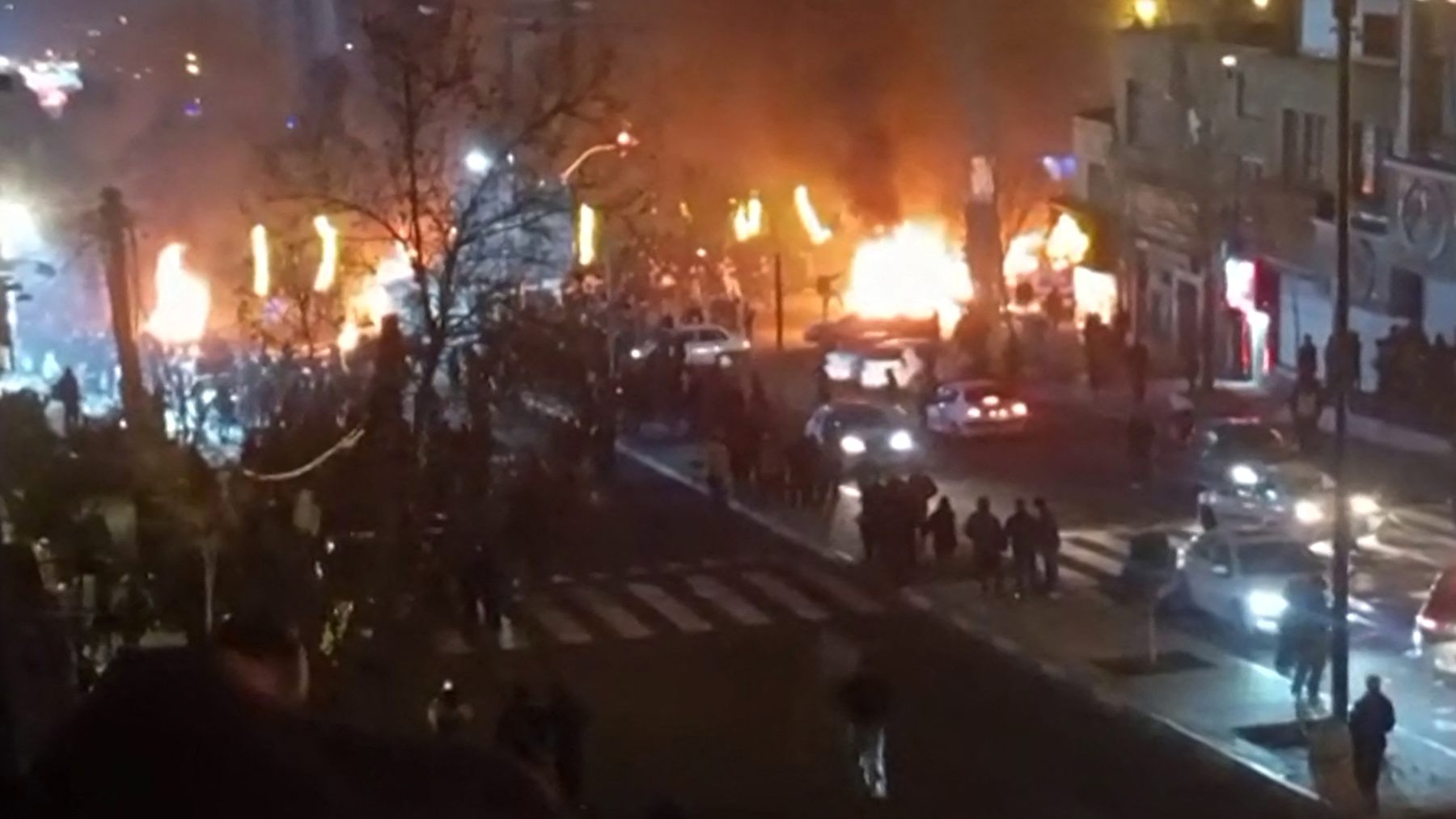
In explosive closed-door remarks delivered at the 22 October 2025 Priority Summit and first reported by *The Jerusalem Post*, former Mossad director David Barnea laid out a previously undisclosed core strategic rationale behind Israel’s unusual choice to publish official, Mossad-branded footage of its covert activities inside Iran on the very first morning of Operation Rising Lion, the 12-day June 2025 cross-border conflict between the two nations.
Contrary to widespread initial assumptions that the early public release of operational video was merely a flex of the Israeli spy agency’s long-rumored deep penetration capabilities inside Iranian territory, Barnea explained the move was a deliberate disinformation gambit designed to overwhelm Tehran’s counterintelligence apparatus. By broadcasting proof that Israeli operatives were active across Iranian civilian population centers in the opening hours of the June 13 military campaign – which included Israeli airstrikes targeting Iranian ballistic missile sites, air defense installations, senior military commanders and nuclear scientists – Mossad leadership calculated that Iranian security forces would panic and carry out sweeping, indiscriminate mass arrests rather than conduct targeted, carefully vetted counterespionage operations.
Barnea confirmed that the strategy unfolded exactly as planned: Iranian authorities ultimately detained roughly 21,000 people in the weeks following the outbreak of hostilities, a figure corroborated by both official Iranian police statements from August 2025 and independent human rights documentation from Amnesty International and Human Rights Watch. The massive dragnet, he noted, left Iranian counterintelligence agents completely unable to separate actual embedded Mossad operatives from ordinary, uninvolved civilians, forcing them to eventually release nearly all detainees after their identical accounts of being randomly picked up off streets, from vehicles or in public spaces proved impossible to parse.
Shockingly, Barnea also acknowledged that a significant number of people in Iran who have been sentenced to death and executed on charges of spying for Israel had no affiliation whatsoever with Mossad, or any other international intelligence agency, describing them as random, unfortunate civilians scapegoated by Iranian security forces eager to demonstrate they were cracking down on alleged Israeli infiltrators.
The unvarnished admission has drawn fierce condemnation from Trita Parsi, executive vice-president of the Quincy Institute for Responsible Statecraft, who framed the policy as a cynical, reckless choice that deliberately placed thousands of ordinary Iranian civilians in mortal danger to protect a tiny handful of Israeli operatives. Parsi noted in a public post on X that it was an unusually unguarded confession of how Israeli actions directly exposed the very Iranian population Israel has at times claimed to support to arbitrary detention, abuse and wrongful execution.
The 12-day June 2025 conflict concluded with a mutual ceasefire after Iran launched retaliatory missile strikes against Israeli territory in response to the initial Israeli bombing campaign. Iranian officials have long maintained that their sweeping post-conflict arrests were a necessary response to very real, documented threats of Mossad sabotage, espionage and on-the-ground support for Israeli military attacks inside their borders, and that the vast majority of detainees were rounded up based on public tip-offs and heightened national security protocols. Independent human rights groups have documented that the thousands of people swept up in the dragnet included not just suspected espionage targets, but journalists, human rights activists, social media users, members of marginalized ethnic and religious minority communities, and foreign nationals residing in Iran.
Israel intentionally released footage of Mossad operatives in Iran to provoke mass arrests, ex-chief says