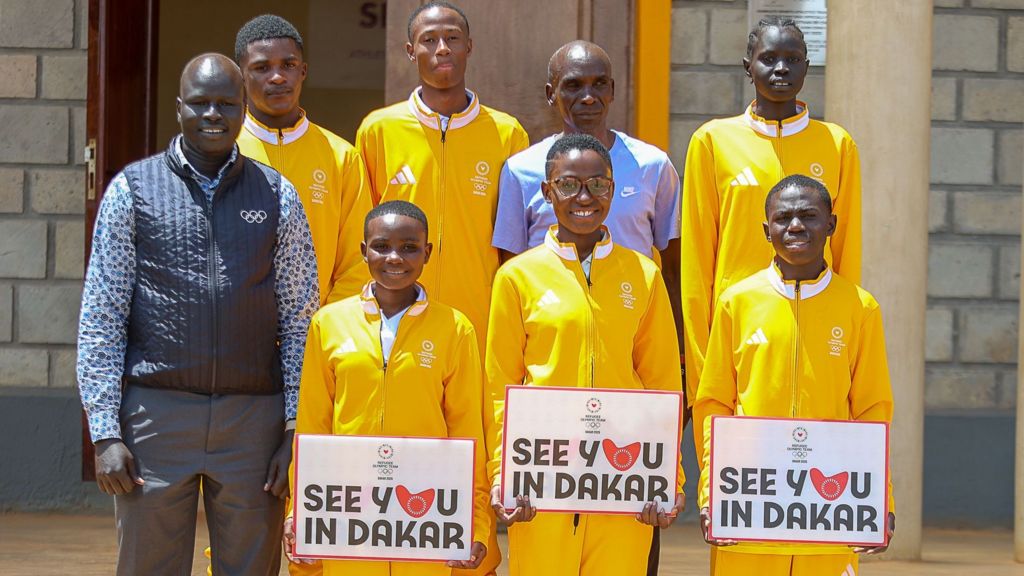
What began as a barefoot run for survival and self-reinvention in a Kenyan refugee camp has evolved into two ground-breaking Olympic milestones for South Sudanese athlete Yiech Pur Biel. For Biel, who was displaced as a child when armed attackers raided his South Sudan village, fleeing alone to the sprawling Kakuma refugee settlement near the Kenya-South Sudan border, running was far more than a physical activity: it was a deliberate choice to seize agency over his fractured future. “That’s when I decided now it is time to depend on myself and also to start a new life with determination,” he shared in an interview with BBC Newsbeat. After discovering competitive running through International Olympic Committee (IOC) trials at Kakuma, Biel made global history in 2016 as one of the members of the very first official Refugee Olympic Team, competing in the men’s 800-metre event at the Rio de Janeiro Summer Games. A full decade later, he is stepping into another trailblazing role: Chef de Mission for the first ever dedicated refugee contingent to compete in the Youth Olympic Games, set to make its debut at the 2026 Dakar edition in Senegal. This iteration of the Youth Olympics carries additional historic weight, as it marks the first time any Olympic event has ever been hosted on African soil. The six-athlete refugee delegation will join nearly 3,000 young competitors from across the globe for the Games, whose opening ceremony is scheduled for Saturday. Beyond chasing athletic victories, Biel notes the team carries a dual mission: to showcase the talent and resilience of displaced young people, and to draw global attention to the unmet needs of the world’s refugee populations. The African continent is currently home to roughly 45 million of the 120 million total displaced people worldwide, representing the largest regional displacement crisis on the planet. For Biel, this Youth Olympics platform is a rare opportunity to amplify the voices of a demographic often overlooked by mainstream global media. “It’s a chance for them to tell the world and also to represent the population, especially the refugee population, in Africa,” he explained. “It’s about representing the hope of young people who are living in a refugee camp, who have lost their motivation or their talent.” The journey for many of the team’s athletes mirrors Biel’s own path. One of the delegation’s rising stars is 15-year-old judoka Arno Yafunga Botay, who fled violence in the Democratic Republic of Congo with his family at age 6 and also found refuge in Kakuma. Botay has set an ambitious, community-focused goal for his Games debut: to claim a gold medal, then bring the award back to the camp to teach his fellow young residents the core values of judo and show them that displacement does not have to erase their potential. Biel, who credits the Kakuma camp’s school system and connections with other displaced youth for helping him process the trauma of his early displacement, describes his new leadership role as an immense honour. Drawing on his own lived experience as both a refugee and a former Olympic competitor, he aims to guide the young delegation to make the most of this unprecedented global stage. Full competitive action at Dakar 2026 will kick off immediately following Saturday’s opening ceremony.