Survivors of a catastrophic high-speed rail collision in central Spain have recounted scenes of unfathomable chaos and terror, marking the country’s second major rail disaster in less than a year that has left at least 69 people confirmed dead. The incident unfolded Wednesday on the busy Madrid-Seville line, roughly 87 miles south of the capital near the town of Urda, when a moving Renfe passenger train slammed into the rear of a stationary Iryo train stopped on the tracks.
Sixty-year-old passenger Iñaki García, who was aboard the halted Iryo service, described the sudden, violent jolt that threw every occupant of his carriage across the cabin without warning. “You have no context, no split-second warning of what is unfolding — you are just being tossed around in the blink of an eye,” he recalled. “I stepped out of the wreckage to find injured people wandering dazed through the debris, and in the adjacent carriage, there were dozens of fatalities.” A young survivor speaking to the BBC, his voice shaking with trauma, added he feared the graphic memories of the crash would never leave him.
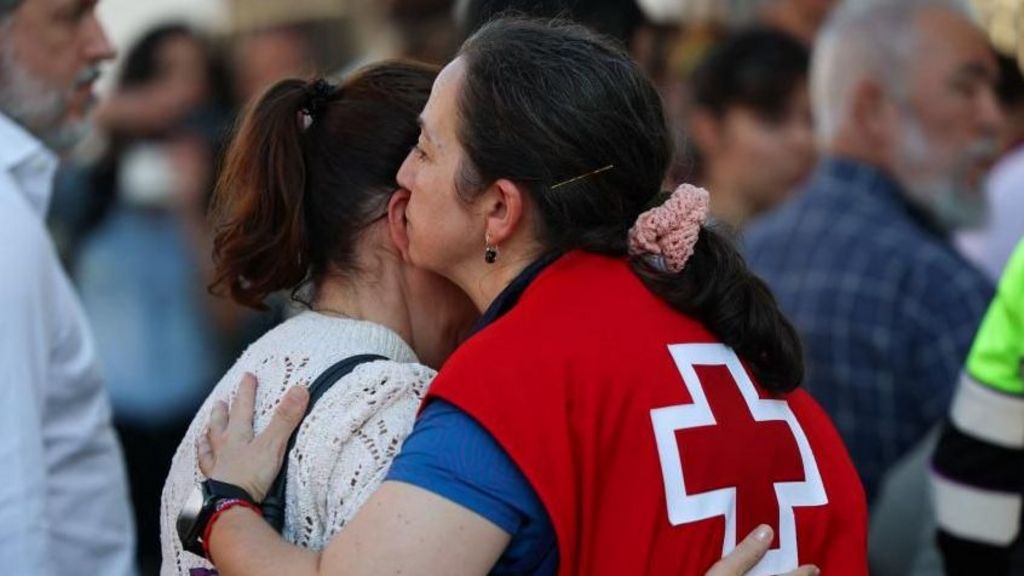
Local residents of Urda mobilized within minutes of the crash arriving at the scene, bringing first aid supplies, blankets, food and water, and converting a nearby community sports hall into an emergency makeshift treatment center for the hundreds of displaced and injured passengers. Local pharmacist Antonio García, one of the first volunteers to reach the wreckage, described holding a dying passenger in his final moments as the man spoke his last words, “God is good”, while saying goodbye to his wife and children over a phone call. Local resident Rosa María Domínguez, who helped coordinate volunteer efforts, said the scene around the crash site resembled a horror film.
The Urda tragedy comes just nine months after a separate collision on the exact same Madrid-Seville high-speed route near the village of Adamuz killed 46 people, sparking widespread prior public concern over the safety of Spain’s high-speed rail network — once widely celebrated as the largest and most reliable system of its kind across Europe.
Fresh revelations from leaked control room audio recordings, which appear to confirm a sequence of initial technical computer failure followed by preventable human error in the moments leading up to the collision, have sparked widespread public fury and disbelief. The incident has rapidly become a explosive political flashpoint exactly one month ahead of Spain’s scheduled national general election, where Prime Minister Pedro Sánchez’s ruling left-wing Socialist PSOE party has been trailing conservative opposition leader Alberto Núñez Feijóo’s People’s Party in nearly all recent public opinion polls.
While nearly all major national political parties aside from the far-right Vox party have formally suspended campaign activities out of respect for the three-day national period of official mourning, tensions have already spilled onto the streets of Madrid: a Wednesday evening demonstration outside the transport ministry protesting government mismanagement of rail safety saw far-right demonstrators clash with local police. Both Sánchez and Feijóo have traveled to Urda to meet with survivors, bereaved families and emergency responders in the days following the crash.
Transport Minister Óscar Puente, a longstanding target of criticism from Spain’s conservative and far-right factions, publicly stated within hours of the collision that a cascading failure of a computer system followed by human error was the most probable root cause of the disaster, a preliminary conclusion seemingly corroborated by the leaked control room audio clips. Spain’s largest train drivers’ union Semaf has condemned the unauthorized leak of the recordings as irresponsible and intentionally misleading, and had already scheduled a national strike for Thursday to demand formal regulatory guarantees that operational speed and passenger convenience will never again be prioritized over network safety. Veteran train driver Vicente Almenar pushed back against efforts to place sole blame on the individual control room operator on duty, noting that “the entire procedural framework failed here — we still do not even know what information our colleague was seeing on their monitor in those final minutes, and they are being scapegoated as the weakest link in a broken system.”
Feijóo addressed reporters during his visit to Urda on Thursday, stating that after two consecutive deadly crashes on the same line that have claimed more than 100 lives total, “the Spanish public deserve full, unvarnished answers. They are asking exactly what has gone wrong with the high-speed rail network they once trusted completely.” He emphasized that the opposition would not settle for empty political rhetoric, and would push for concrete, systemic safety reforms in the aftermath of the national mourning period.