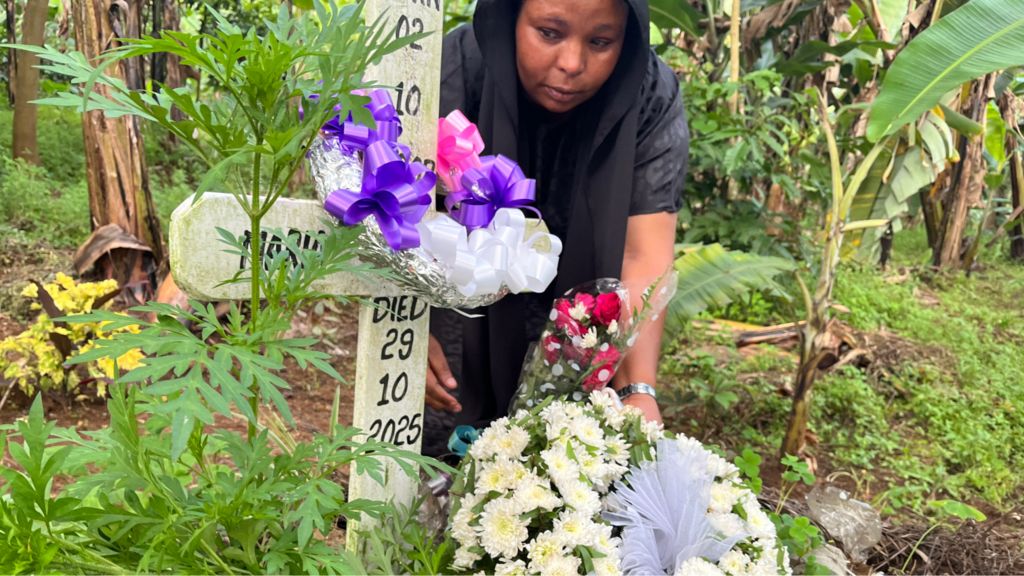
One year after Tanzania’s contentious 29 October 2025 general election that returned President Samia Suluhu Hassan to power with an unprecedented 98% of the official vote, families of hundreds of people killed or maimed in post-poll unrest are still pleading for state recognition, financial support for life-saving medical care, and accountability for the perpetrators of documented abuses. The election was widely dismissed by the opposition as a farce of democratic process: two leading challengers were barred from running, including main Chadema party leader Tundu Lissu, who faced pre-poll treason charges that blocked his candidacy as he campaigned for sweeping electoral reforms. Just days before the first anniversary of the vote, Lissu staged a hunger strike after being denied access to his legal team, a claim prison authorities initially rejected; his lawyer confirmed Wednesday that the opposition figure had finally been granted a meeting with his counsel and would resume eating, with a verdict in his long-running treason case scheduled to be delivered next week. Official figures from a government-appointed commission of inquiry confirm 518 people died of unnatural causes during the post-election unrest, with 197 confirmed shot dead by state forces, a toll far higher than initial government disclosures. Survivors and bereaved families interviewed by the BBC paint a devastating portrait of ongoing hardship. Thirty-three-year-old Meshack Sane, who was shot in the leg during protests in Arusha, has already undergone five major operations to treat his gunshot wound, but says he has exhausted all personal and family funds and can no longer afford the follow-up surgery he urgently needs. He and other injured survivors report that hospitals initially refused to treat people wounded in the unrest, and repeated appeals to local district officials for state medical support were turned away, with administrators stating no government budget had been allocated for election violence victims. For 32-year-old Mwajuma Hamisi, the 2025 election turned her life upside down when her husband George Kisivani was shot in Arusha and died two days later, leaving her the sole provider for their five young children. She now ekes out a meagre living selling vegetables at a local market, with no other source of income or state assistance. Forty-year-old Neema Munuo still struggles with crippling grief after her 18-year-old daughter Maria Chami, who had stepped out of their home to buy mobile phone credit on polling day, was fatally shot in the street. She says the pain is so intense she often cannot bring herself to leave the house, and all she wants is for the government to formally acknowledge her family’s suffering. Farmer Juma Nasibu, who lives near Lake Victoria outside Mwanza, has spent a year searching for his 25-year-old nephew Juma Shabani, who was rounded up by security forces after leaving a local cinema on the night of the unrest. The family has checked every hospital, police station and detention centre in the region, but has never found any trace of the young man, and was never able to recover his body for burial. Human rights organisation Amnesty International released a scathing new report timed to the election anniversary, documenting a pattern of unpunished human rights abuses carried out by Tanzanian security agencies over the past 12 months, targeting government critics, opposition supporters, independent media workers, and even dissenting members of the ruling Chama Cha Mapinduzi (CCM) party. Tigere Chagutah, Amnesty’s Regional Director for East and Southern Africa, condemned the fact that not a single state official has been criminally investigated, prosecuted or penalised for the excessive lethal force used against peaceful protesters. He warned that authorities have resorted to a classic authoritarian playbook, increasingly weaponising counterterrorism legislation to silence dissenting voices and instil widespread fear across the population. The group’s research, conducted between 3 and 17 September 2026 via interviews with 17 victims, details a wave of ongoing abuses following banned 7 July 2026 pro-democracy protests that demanded justice for 2025 election victims. One 26-year-old Dar es Salaam resident who publicly expressed support for the demonstrations was arrested on 24 July, held without charge for 47 days, and subjected to brutal torture: interrogators blindfolded him, denied him food for the first 24 hours, urinated on his face when he asked for water, and beat his legs until they went numb while demanding he name the alleged funders of the protests. Amnesty’s report also documents multiple cases of arbitrary arrest, enforced disappearance, abduction and other acts that may qualify as state-sponsored torture. The government has repeatedly rejected all allegations of systemic human rights abuses, insisting it is fully committed to upholding human rights standards. President Samia has repeatedly defended the 2025 election as free, fair and fully transparent, and has publicly blamed unnamed foreign actors for orchestrating the post-election unrest as part of a plot to overthrow her administration. To date, the full 2025 election violence commission of inquiry report, which was formally submitted to President Samia back in April, has never been released to the public, a move Amnesty slams as entrenching a dangerous culture of state secrecy. The president has since established a second separate commission tasked with identifying the alleged masterminds behind the unrest, though human rights groups are calling for this new body to prioritise a full, transparent investigation into the documented role of security forces in the lethal crackdown on protesters. As of press time, Tanzanian government officials have not responded to formal requests for comment from either the BBC or Amnesty International.
Demands for post-poll justice as Tanzania accused of weaponising counterterrorism laws