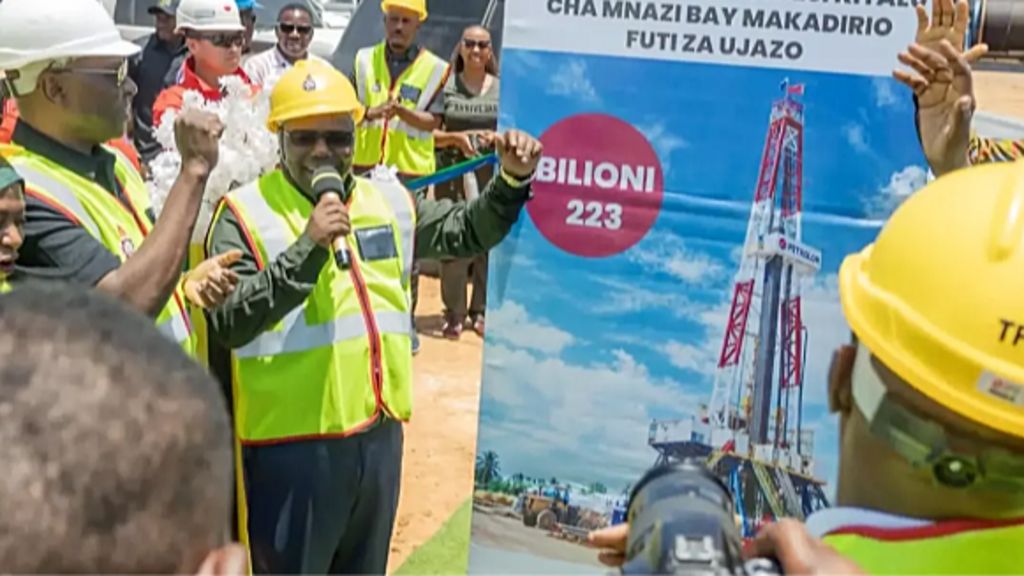
Tanzania’s Ministry of Energy has officially announced a landmark new natural gas deposit in the southern Mnazi Bay region, marking the country’s first significant onshore gas find in more than 10 years. The milestone was celebrated during a special inauguration event at the Kasa-1X ST2 well, a joint operating asset between state-run Tanzania Petroleum Development Corporation (TPDC) and French energy enterprise Maurel & Prom, where Energy Minister Juma Homera formally confirmed the reserve’s estimated 223 billion cubic feet (6.3 billion cubic meters) of recoverable gas.
Homera framed the discovery as a transformative turning point for Tanzania’s still-growing upstream oil and gas sector, noting that production from the new well is scheduled to kick off as early as the start of next month. Unlike many regional gas projects targeted for export, the new reserve is designed first and foremost to expand domestic energy supplies, serving three core end uses: residential and utility-scale power generation, industrial manufacturing operations, and the fast-growing fleet of vehicles converted to run on compressed natural gas (CNG).
Government data shows natural gas already fuels nearly 80% of Tanzania’s national electricity grid as of 2024, making the fossil fuel a foundational pillar of the country’s energy transition away from more polluting heavy fuel oil and costly imported petroleum. Recent national policy efforts have prioritized expanding CNG infrastructure, with dozens of refueling stations and conversion workshops established primarily in Dar es Salaam, the nation’s economic hub. Thousands of local motorists have already retrofitted their vehicles to run on dual petrol-CNG systems, taking advantage of locally produced gas that costs a fraction of imported gasoline to cut household transportation expenses.
Tanzania’s history of commercial gas exploration stretches back to 1974, when the first subsea reserve was discovered off Songo Songo Island in the southeastern Lindi region, followed by a second major find at the original Mnazi Bay site in neighboring Mtwara Region in 1982. Commercial production from these early deposits launched in 2004, spurring a wave of onshore and offshore exploration activity that culminated in the country’s largest single gas strike of 2.7 trillion cubic feet in 2016. Combined with the new Mnazi Bay discovery, Tanzania’s total proven natural gas reserves now stand at 57.54 trillion cubic feet, positioning the East African nation to meet surging domestic energy demand driven by rapid industrial expansion and urban population growth for decades to come, while keeping consumer energy prices stable and accessible.
For more in-depth coverage of economic and energy developments across the continent, audiences can visit BBCAfrica.com, follow the outlet on X (Twitter) @BBCAfrica, subscribe to the BBC Africa Facebook page, or access exclusive content via the official BBC Africa Instagram account and dedicated podcast series.
Tanzania celebrates first natural gas discovery in more than 10 years