The high-stakes third and final Test between South Africa and Australia kicked off in Cape Town on October 27, a five-day clash that will decide the top spot in the men’s international Test rankings, with the two sides locked in a tight series after Australia suffered a humiliating innings and 31-run defeat in the second Test in Gqeberha.
Australia captain Pat Cummins made the widely panned call at the toss to insert South Africa to bat under clear, sunny skies, a decision that immediately drew comparisons to some of the most infamous misjudgments by cricket skippers in the sport’s history. Cummins joined a long line of high-profile leaders who opted to bowl when batting was the obvious choice, including former England captain Nasser Hussain and Australia’s legendary Ricky Ponting, whose 2005 Edgbaston call to bowl against England on the day Glenn McGrath suffered a warm-up injury remains one of the most discussed toss blunders in Ashes history. Cummins justified his choice by citing perceived early moisture in the Cape Town pitch, suggesting his side could exploit variable bounce before the surface flattened out – but the call backfired spectacularly in the opening two hours of play.
South Africa’s batters came out swinging, racing to 140 runs at a rate of more than four runs per over in the first session, carving Australia’s wayward pace attack to all parts of the ground. Marques Ackerman, playing in just his second Test, looked set to cruise to a maiden century as he paired with Aiden Markram for a dominant opening stand that reached 203 for the loss of just one wicket. The tone of the match looked all but settled, with many Australian fans back home who had stayed up for the early start switching off their screens after watching Scott Boland omitted from the playing XI for a second consecutive match, leaving the attack vulnerable.
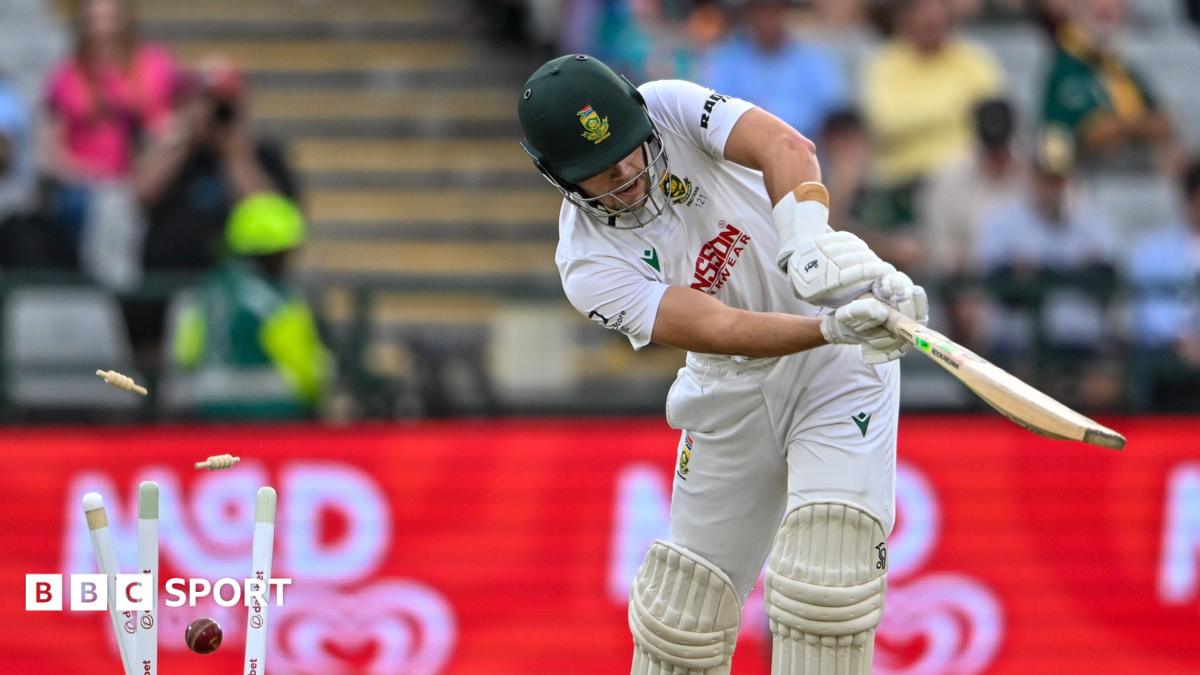
However, a dramatic mid-session collapse completely shifted the momentum of the day. A string of reckless shot selections from South Africa’s middle order saw the side slump from a commanding 203-1 to a precarious 232-6, as batters repeatedly threw their wickets away chasing aggressive hook shots at short-pitched deliveries. Markram fell for 78, David Bedingham for a quickfire 50, and Wiaan Mulder for a golden duck, all caught attempting to target the short ball. Ackerman, stranded on 95 runs just five short of his first Test hundred, was run out after misjudging a delivery from off-spinner Nathan Lyon, while South Africa captain Temba Bavuma – who had smashed a career-best 179 in the previous match – was bowled by a straight Lyon delivery for a single-figure score, extending his poor run of form against off-spin to three dismissals for single digits across three recent innings.
Even after this fightback, South Africa still held a strong position at 327-6 late in the day, poised to close out the opening day with a dominant lead. But veteran fast bowler Mitchell Starc produced one of the most memorable spells of his decorated international career, ripping through the Proteas’ tail with a devastating sequence of four wickets in six deliveries using the second new ball. Starc targeted full, straight deliveries aimed at the stumps and pads, first removing Ryan Rickelton for 42 and Marco Jansen for 52, before bowling Gerald Coetzee and trapping Kagiso Rabada plumb lbw for back-to-back ducks. South Africa’s innings was wrapped up for 329 all out, a total that looked entirely improbable after their dominant opening session.
The remarkable turnaround spared Cummins from immediate infamy, but his original toss call remains deeply questionable. The decision to bowl so early that Lyon was brought into the attack after just 11 overs – the earliest an Australian spinner has been introduced to a Test innings after a captain elected to bowl since Shane Warne in 2000 – appears to have been a calculated gamble to protect Australia’s fragile, injury-hit batting line-up. The visiting side is missing star batter Steve Smith through injury, opener Nic Maddinson has been sent home after a poor run of form across the first two Tests, Marnus Labuschagne is enduring a historic dry spell without a century longer than many professional cricketers’ entire careers, and top-order batters Josh Inglis and Cameron Green have not faced competitive red-ball cricket since March and August respectively.
This is far from the first time this Australian side has pulled off an unlikely rescue mission from the brink of disaster. Just 11 months prior, during last winter’s Ashes series, the side was facing widespread public criticism after a dismal first four sessions of the opening Test, with Usman Khawaja sidelined by a bizarre golf injury, the batting line-up looking thin, and the pace attack’s back-up options deemed unfit for international cricket – only for Australia to storm back to win that match in just two days and run away with a 4-1 series victory. Now, with their own batting line-up yet to even take to the crease in Cape Town, the Australian side finds itself in a surprisingly competitive position that few would have predicted after the first two hours of play. Cummins may have avoided joining that unwanted club of infamous toss-failure captains for now, but his under-pressure batters will need to deliver a strong performance over the coming days to make sure he never earns that dubious membership at all.