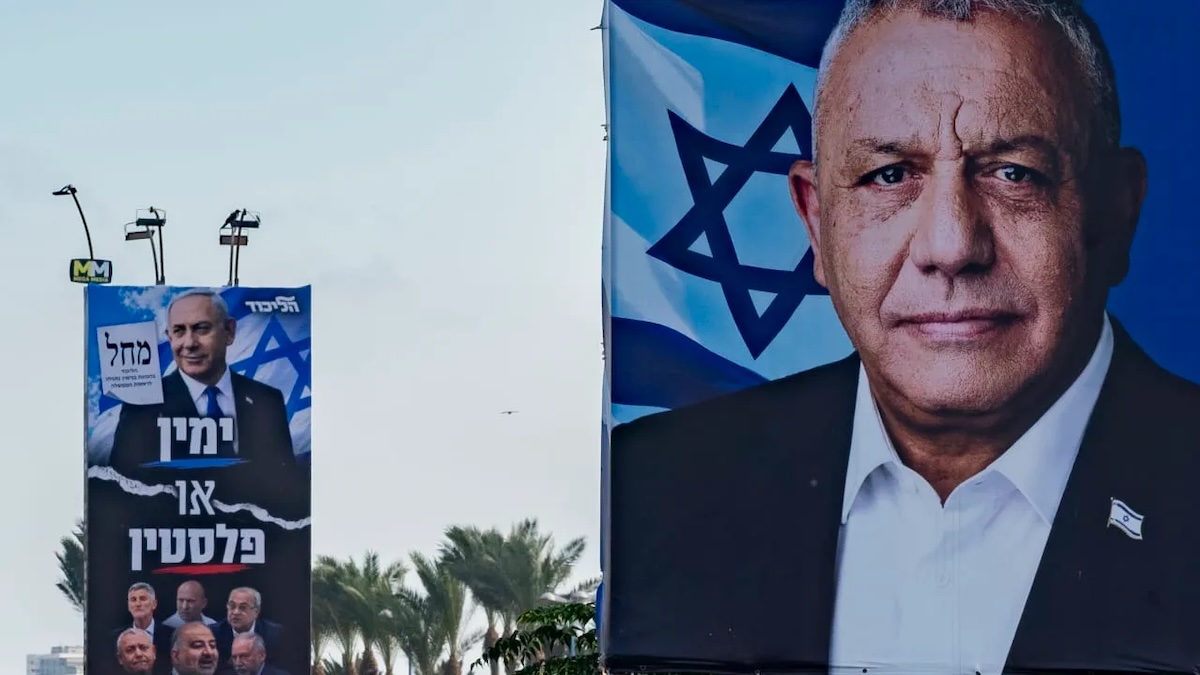
The 1996 Israeli parliamentary elections initially appeared to be a guaranteed victory for then-incumbent Prime Minister Shimon Peres and his center-left Labor Party. Peres had centered his re-election platform on a landmark “land for peace” framework, vowing to cede territory in the West Bank and Gaza Strip to establish a sovereign Palestinian state, a deal he argued would end eight decades of bitter Arab-Israeli enmity. His rival, the then-young Likud Party leader Benjamin Netanyahu, was launching the first of what would become 11 national election campaigns, six of which ultimately secured him the prime minister’s office. Rejecting the principle of Palestinian statehood entirely, Netanyahu proposed a counter “peace for peace” model that would leave the West Bank and Gaza under full Israeli control, with Palestinian residents granted no sovereign rights and encouraged to resettle elsewhere in the Middle East. In the early months of 1996, this hardline platform gained almost no traction with the Israeli electorate: January polling showed Peres holding a commanding 20-point lead over his challenger. That trajectory shifted catastrophically in the lead-up to May’s ballot, when the Palestinian militant group Hamas carried out a string of deadly attacks across Israeli civilian spaces, bombing two public buses, a bus stop, and a Tel Aviv nightclub, killing 59 people in total. The carnage re-framed Peres’ peace overtures in the public eye as dangerously naive. Though the incumbent ordered a swift military retaliation campaign, the show of force failed to calm a terrified, enraged public. Netanyahu’s “peace through strength” platform resonated deeply in the altered security climate, and he pulled off a razor-thin 1 percentage point upset to claim the premiership. Thirty years later, Netanyahu is once again on the national ballot, this time as a deeply embattled incumbent facing widespread public fury over the worst anti-Jewish atrocity since the Holocaust: the October 7, 2023, Hamas cross-border raid that killed more than 1,200 Israeli civilians, including women and children, with militants infiltrating southern communities using hand gliders. A broad cross-section of Israeli critics accuse Netanyahu of ignoring repeated intelligence warnings about Hamas’ offensive capabilities and failing to implement adequate border security protocols to prevent the massacre. To date, Netanyahu has refused to acknowledge any personal or administrative shortcomings ahead of the attack, instead launching the most massive military campaign against Palestinian territories in Israel’s history: a combined air, ground, and artillery offensive across the Gaza Strip that has destroyed swathes of civilian residential and commercial infrastructure, with Hamas officials reporting a death toll of at least 70,000 people. The Hamas raid and subsequent Israeli retaliation have rippled out to ignite a wider regional conflagration that has drawn in multiple global and regional powers. Iran and its allied militia networks — Hezbollah in Lebanon and the Houthi movement in Yemen — have launched coordinated missile and drone attacks targeting Israeli territory. Israel responded with a ground invasion and partial occupation of southern Lebanon to degrade Hezbollah’s military capabilities. A joint U.S.-Israeli aerial campaign targeting Iran soon followed, with overlapping, shifting objectives ranging from crippling Tehran’s suspected nuclear weapons development program, to ousting the longstanding Islamic government in Iran, to securing unimpeded passage through the Persian Gulf and Red Sea critical global fossil fuel shipping lanes, goals that appeared to shift erratically based on daily announcements from U.S. President Donald Trump. In retaliation, Iran launched strikes against U.S. security partners in the Persian Gulf, the Houthi movement carried out attacks on Saudi Arabian territory, several Gulf Arab states retaliated against Iran with rocket barrages, and Saudi Arabia launched an extensive bombing campaign targeting Houthi positions in Yemen. Parallel to this multi-front regional conflict, Israel has moved to cement expanded control over the West Bank, combining conventional military operations with informal state support for extremist civilian settler groups that carry out targeted harassment campaigns against Palestinian rural communities. Despite the unprecedented scale of the ongoing regional turmoil, it remains deeply unclear whether Israeli voters will choose to oust Netanyahu in the upcoming national election. Polling data from the independent Tel Aviv-based Israel Democracy Institute reveals a starkly divided public mood: 90% of Israeli respondents expressed full support for Netanyahu’s ongoing military campaign against Iran, while 72% argued that the prime minister must accept full responsibility for the October 7 massacre and step down from office. Current pre-election surveys show Netanyahu locked in a dead heat with his leading rival, former Israel Defense Forces chief of staff Gadi Eisenkot, whose new centrist Yashar Party holds a narrow, marginal lead in aggregate polling. Eisenkot’s policy positions on defense and foreign affairs largely mirror Netanyahu’s: he has pledged to fully dismantle and disarm Hamas, support continued expansion of Israeli settlements in the West Bank, contain Iranian regional influence through coordinated global economic blocs, and pursue limited, conditional negotiations for a future Palestinian state, though he has rejected Netanyahu’s strategy of direct aerial strikes on Iranian territory in favor of diplomatic and economic isolation. Eisenkot’s core selling point to voters is his reputation for uncompromising personal integrity — a deliberate contrast to Netanyahu, who has spent years facing a series of high-profile public corruption indictments. Even the name of his party is designed to highlight that contrast: Yashar translates directly to “straight” in Hebrew, a common colloquial term for honesty and uncompromising ethics. As voting day arrives, Eisenkot is waiting to see if that reputation for transparency will carry him straight to the prime minister’s office.