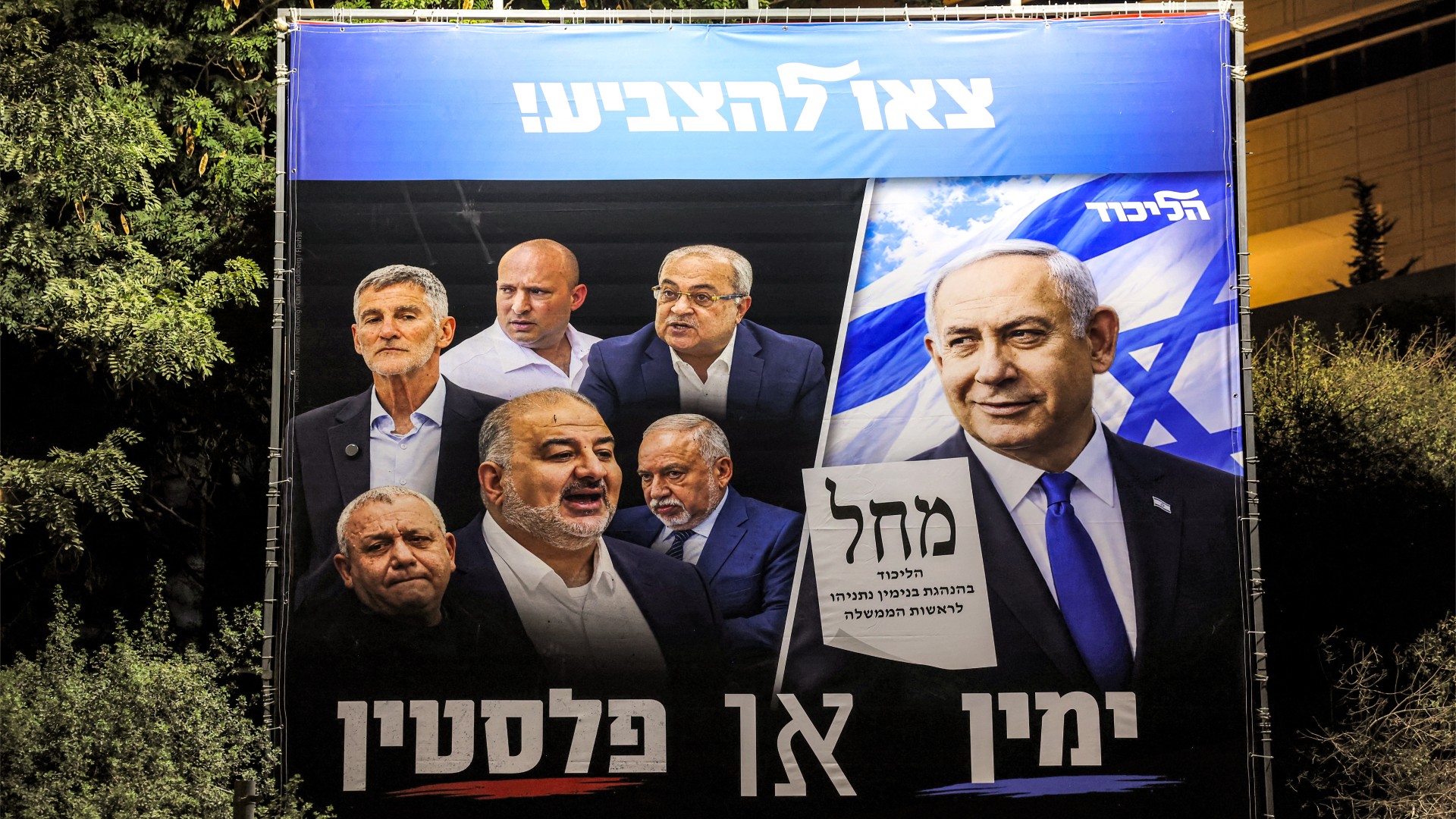
As Israeli general elections approach this coming Tuesday, an unprecedented wave of electoral engagement is sweeping across the country’s Palestinian citizen population, who make up roughly 20% of Israel’s total 9.7 million residents, totaling approximately 2.1 million people. Two consecutive recent opinion polls forecast voter turnout for this demographic landing between 64% and 68%, a sharp jump from the mere 54% participation rate recorded during the last national election in 2022. Leading political analyst Ameer Fakhoury, head of the Nisan Center for a Shared Society at the Vanleer Institute in Israel, suggests turnout could even surpass the 2020 record high, when the cross-party Joint List alliance representing Palestinian citizens secured 15 seats in the 120-seat Knesset, Israel’s legislative body. In an exclusive wide-ranging interview with Middle East Eye, the Haifa-born expert on Palestinian political life inside Israel shared that internal polling data his team has collected already points to a 69% participation rate among registered Palestinian voters, a figure analysts have held back from public disclosure to avoid fostering complacency that could suppress last-minute mobilization efforts. The dramatic uptick in electoral enthusiasm comes against a backdrop of four years of escalating state hostility toward Palestinian communities both inside Israel and across occupied territories. Since Benjamin Netanyahu’s far-right government took power, the administration has launched a devastating military campaign in Gaza widely condemned by global human rights groups as genocide, enforced brutal apartheid policies across the occupied West Bank, and deliberately allowed organized crime to spiral out of control in Palestinian towns and villages within Israel’s pre-1948 borders, with near-total absence of state law enforcement to stem routine deadly violence against local residents. Fakhoury explained that decades ago, most Palestinian citizens abstained from Israeli elections for a mix of ideological rejection of the state’s foundational Jewish supremacist framework and socioeconomic disenfranchisement that left marginalized communities feeling they held no meaningful political agency. For generations, however, many operated under the implicit assumption that Israel maintained a set of informal internal guardrails that would never threaten their very physical survival. Those guardrails, Fakhoury argues, have now fully collapsed. The first historic safeguard was a baseline of self-restraint among Israel’s Jewish majority and state institutions, driven in large part by a desire to maintain international credibility as a democratic liberal state that could claim membership in the post-WWII global rules-based order. The second was the external check imposed by Israel’s reliance on positive standing within the liberal international system, including diplomatic legitimacy and soft power that required at least a facade of respect for global norms. The third longstanding protection came from the Israeli Supreme Court, which historically carved out a narrow, imperfect compensatory mechanism for Palestinian citizens, even as it frequently ruled against their interests, as a tool for the state to project a liberal image to the outside world. Fakhoury notes that all three pillars have now eroded completely: public opinion data shows 80% of Jewish Israelis openly support the massive destruction inflicted on Palestinian populations in Gaza, Israel now actively defies international institutions including the International Criminal Court and openly undermines the global normative order rather than seeking to uphold it, and the Supreme Court has devolved into a populist body that caters to the most extreme nationalist public sentiment rather than upholding legal principles, as seen in its recent decision to ban prominent Balad party leader Sami Abu Shehada from running in this election over a 3-year-old op-ed that contextualized the October 7 Hamas-led attacks. The analyst emphasizes that Palestinian citizens are not heading to the polls to demand incremental policy wins like expanded municipal budgets or the repeal of the 2018 Nation-State Law that formally enshrines Jewish supremacy in Israeli law. Instead, the dominant motivating factor driving turnout today is raw existential survival, a shift Fakhoury’s ongoing University of Haifa study of 1,500 Palestinian respondents has confirmed overrides all other traditional political priorities. Three hardline Israeli parties are running explicit campaign platforms that call for the mass deportation, displacement, and expulsion of Palestinian citizens from the state, with Finance Minister Bezalel Smotrich’s Religious Zionism party making the forced “Judaisation” of majority-Palestinian regions including the Galilee and Negev a central campaign promise. For the first time in Israeli history, Palestinian electoral participation no longer signals faith in the country’s democratic system, but rather a desperate last-ditch effort to cling to any political force that might prevent the community from facing the same ethnic cleansing and genocide experienced by Palestinians in Gaza and the West Bank, a fate that would mirror the 1948 Nakba that displaced 750,000 Palestinians from their ancestral lands. Fakhoury also explores deep emerging rifts within the Palestinian citizen political camp, particularly the rise of Mansour Abbas and his conservative Islamic Raam party, which split from the longstanding Joint List alliance and even joined a short-lived Israeli governing coalition in 2021. Abbas has publicly accepted Israel’s definition of itself as an exclusive Jewish state, a position Fakhoury argues represents a break from the decades-long collective Palestinian political principle that Palestinian citizens inside Israel are an inseparable part of the broader transnational Palestinian people with a shared moral and political responsibility to advocate for their peers in occupied territories, rather than abandoning them to focus solely on narrow local self-interest. The analyst warns that the proliferation of unpunished organized crime in Palestinian communities inside Israel is not a random public safety failure, but a deliberate state policy of proxy governance designed to weaken collective Palestinian social cohesion and push residents to abandon their national solidarity in favor of individual survival. Looking ahead to post-election coalition negotiations, Fakhoury outlines three plausible scenarios: the formation of a national unity government pairing Netanyahu and former military chief Gabi Eisenkot, a narrow minority government that could survive with informal abstention support from Palestinian parties, or a behind-the-scenes power-sharing deal that brings Abbas’s Raam into a governing coalition, a possibility Fakhoury argues Eisenkot has left open by defining acceptable coalition partners as “Zionist parties” rather than explicitly barring Arab factions. He notes that the unprecedented high Palestinian turnout could deny Netanyahu’s far-right bloc the 61 Knesset seats it needs to form a government, but warns the community faces severe risks if its elected representatives make short-sighted compromises that leave them complicit in further state repression of Palestinian people across all territories. Fakhoury adds that Israel is already transitioning into a hawkish, isolationist “Spartan” pariah state that is bracing for potential international sanctions and reduced Western support, a shift that will create even greater threats to Palestinian safety in the years ahead. He projects final Palestinian turnout could land as high as 72% to 73% on election day, but cautions that the real political test for community representatives will come after votes are counted, as they navigate a deeply unstable political landscape that could trigger another round of elections within months if no stable coalition can be formed.