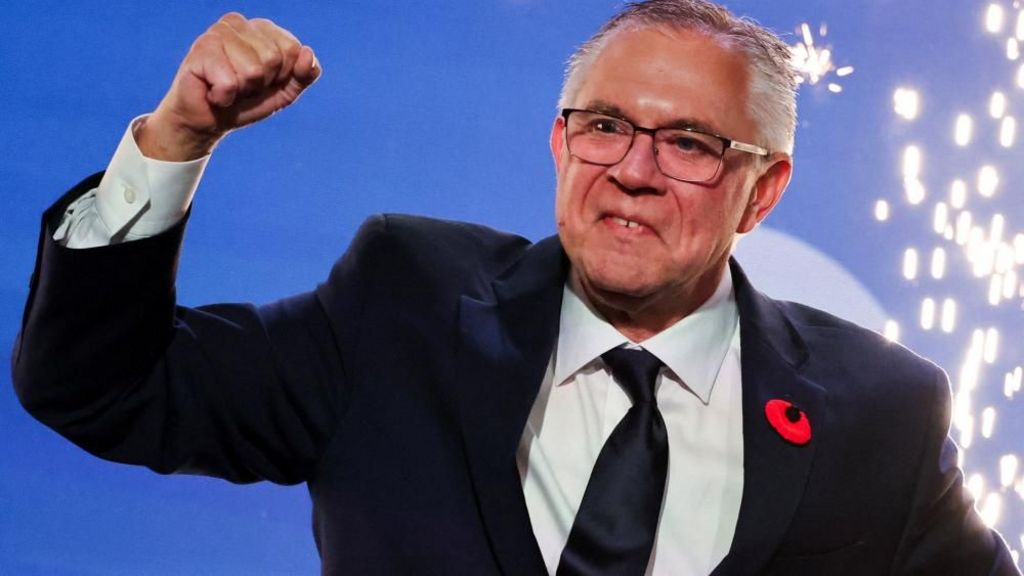
In a seismic political upheaval that has reshaped the governance landscape of western Canada’s British Columbia, the once-marginal British Columbia Conservative Party has claimed a decisive legislative majority in a snap provincial election, marking the party’s first electoral victory in the jurisdiction in nearly a full century. The party’s newly anointed leader, 58-year-old Lorne Doerkson, a relative political outsider with a background as a former rodeo announcer and small-circulation newspaper publisher, is set to be sworn in as the province’s next premier.
The upset outcome follows a high-stakes, miscalculated gambit launched just one month prior by outgoing New Democratic Party (NDP) Premier David Eby, who called the snap vote two full years ahead of his mandated term expiration. Eby, who assumed the premiership in 2022, had framed the early election as a necessary “fire break” to shield British Columbia from what he characterized as US President Donald Trump’s aggressive economic policies and the spread of divisive “Trump-style” populism within provincial borders. He had argued that his government’s existing razor-thin one-seat majority left every piece of proposed legislation vulnerable to defeat, and that a larger, more stable NDP mandate would allow his administration to advance public policies far more efficiently.
Eby’s strategic bet completely backfired, delivering what local political analysts are calling the most dramatic provincial political shakeup British Columbia has witnessed in more than 40 years. Final projected seat counts across the 93-seat legislative assembly show Doerkson’s Conservatives claiming a dominant 64 seats, while the previously governing NDP has been reduced to just 27 seats. The BC Green Party secured the remaining two legislative spots.
The rapid rise of Doerkson to the premiership is a story of almost unprecedented political serendipity. Just weeks before the snap election was called, the BC Conservatives were in complete disarray: then-party leader Kerry-Lynne Findlay stepped down in September amid bitter internal infighting that saw fully one-third of her caucus abandon the party ranks. Doerkson, who had only first won a seat in the provincial legislature in 2020, learned that his remaining caucus peers wanted him to take over as the party’s new figurehead while he was mid-flight on a return trip home from South Africa last month. He later told CBC News that the unexpected leadership offer came with remarkably short notice, leaving him barely any time to prepare for the top party role, let alone a snap provincial election campaign.
In his jubilant victory address to supporters on election night, Doerkson struck a populist, pro-growth tone, framing his win as a mandate to align provincial governance with the priorities of working British Columbians. “British Columbians are hardworking, trailblazing people,” he declared. “They want a fair shot at building something in this province. That trailblazing spirit just needs government that’s on its side.” He has laid out an early policy agenda centered on sweeping cuts to bureaucratic red tape, with a pledge to accelerate approval timelines for forestry and mining operational permits, as well as a concrete target to triple the province’s natural gas output by 2035.
For his part, a visibly humbled Eby announced his immediate resignation as leader of the BC NDP during his concession speech, taking unreserved personal ownership for the election’s disappointing outcome. The historic Conservative win in British Columbia caps off a turbulent month of political upheaval across Canadian provinces: just weeks prior, Quebec’s sovereigntist Parti Québécois secured enough legislative seats to form a minority government, a development that has raised new, unforeseen pressures on Canada’s longstanding national unity framework.
British Columbia’s new premier lucks into the job in unexpected political turn