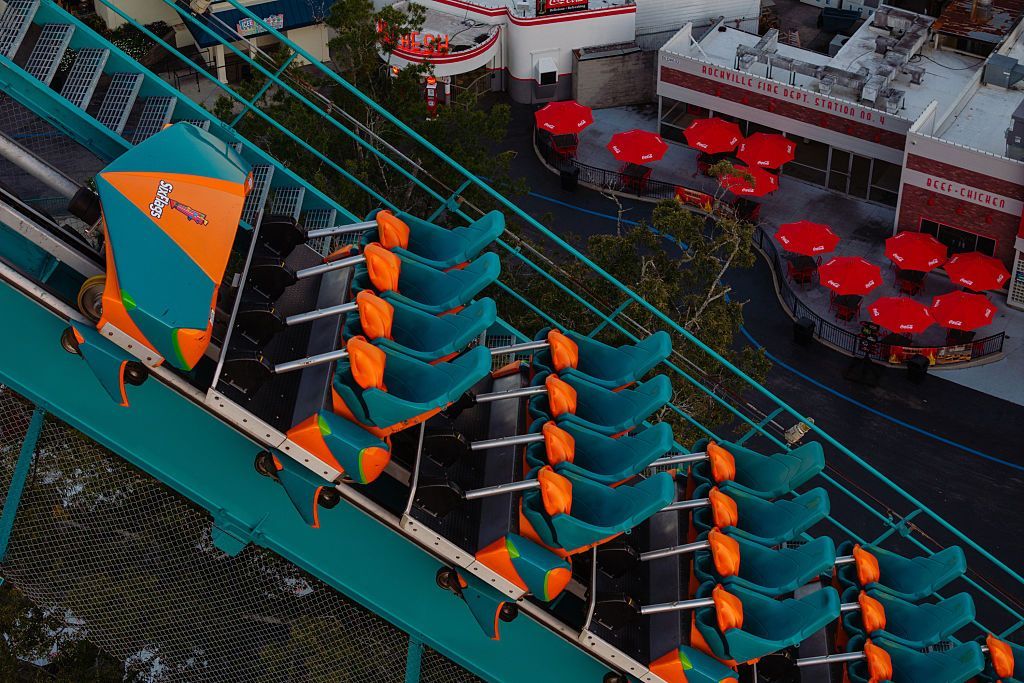
Following a deadly ejection incident on the Goliath rollercoaster at Six Flags Over Georgia earlier this month, North America’s largest regional theme park operator has unveiled sweeping cross-park safety upgrades, including the installation of supplementary seat belts on dozens of high-intensity rides that were previously only equipped with lap bar restraint systems.
In a public letter addressed to park guests released late Friday, Six Flags CEO John Reilly confirmed the immediate rollout of new safety protocols across the company’s 34 North American locations, which collectively operate more than 220 rollercoasters and welcome over 28 million annual visitors. The Goliath ride at the Georgia park, which launched in 2006 and boasts a 200-foot elevation, 170-foot near-vertical plunge, 540-degree spiral turn and top speeds of 70 miles per hour, will stay fully shuttered alongside eight additional comparable thrill rides across five separate Six Flags properties, pending full third-party safety audits as a precautionary measure.
The October 12 incident that prompted the sweeping reforms claimed the life of 42-year-old Hassan Jihad Ibn Kariem, who was ejected from the Goliath mid-ride; four other passengers sustained non-life-threatening injuries during the event, per local law enforcement reports. Witness accounts of the scene described the episode as deeply unsettling and chaotic, with many onlookers expressing shock that a ride rated level four out of five on the park’s official thrill scale could produce such a catastrophic outcome.
Reilly noted that the company has retained a team of independent, third-party ride inspection specialists and licensed civil engineers to conduct a top-to-bottom review of all operational safety procedures, restraint system functionality, and pre-ride inspection workflows across every Six Flags property, with formal progress updates to be shared publicly as the review advances. “Our hearts remain with the family and loved ones of Hassan Kariem, those injured, and everyone impacted by the tragic incident,” Reilly wrote in the customer letter. “What happened has deeply affected all of us at Six Flags, and we are fully committed to implementing every evidence-based recommendation the independent safety experts put forward to prevent similar tragedies in the future.”
The Georgia fatality is far from the first high-profile safety incident in Six Flags’ operational history: a U.S. Iraq War veteran was killed in a 2011 ejection from a rollercoaster at the company’s New York park, a woman died in 2013 after slipping out of her restraints and falling 75 feet from a Texas coaster, and in 2022 a 22-year-old man sustained a fatal brain injury after riding the X2 coaster at Six Flags Magic Mountain in California. That 2022 incident led to a wrongful death lawsuit settled by the park this August, followed by the permanent closure of the X2 ride just one month later, after more than 100 additional guests came forward to report that they had suffered brain injuries linked to the ride’s intense g-forces and high-speed maneuvers. Local law enforcement and state amusement safety regulators are still conducting an active, ongoing investigation into the exact root cause of the October 12 Goliath ejection incident.
Six Flags adding seat belts to Goliath rollercoaster following death