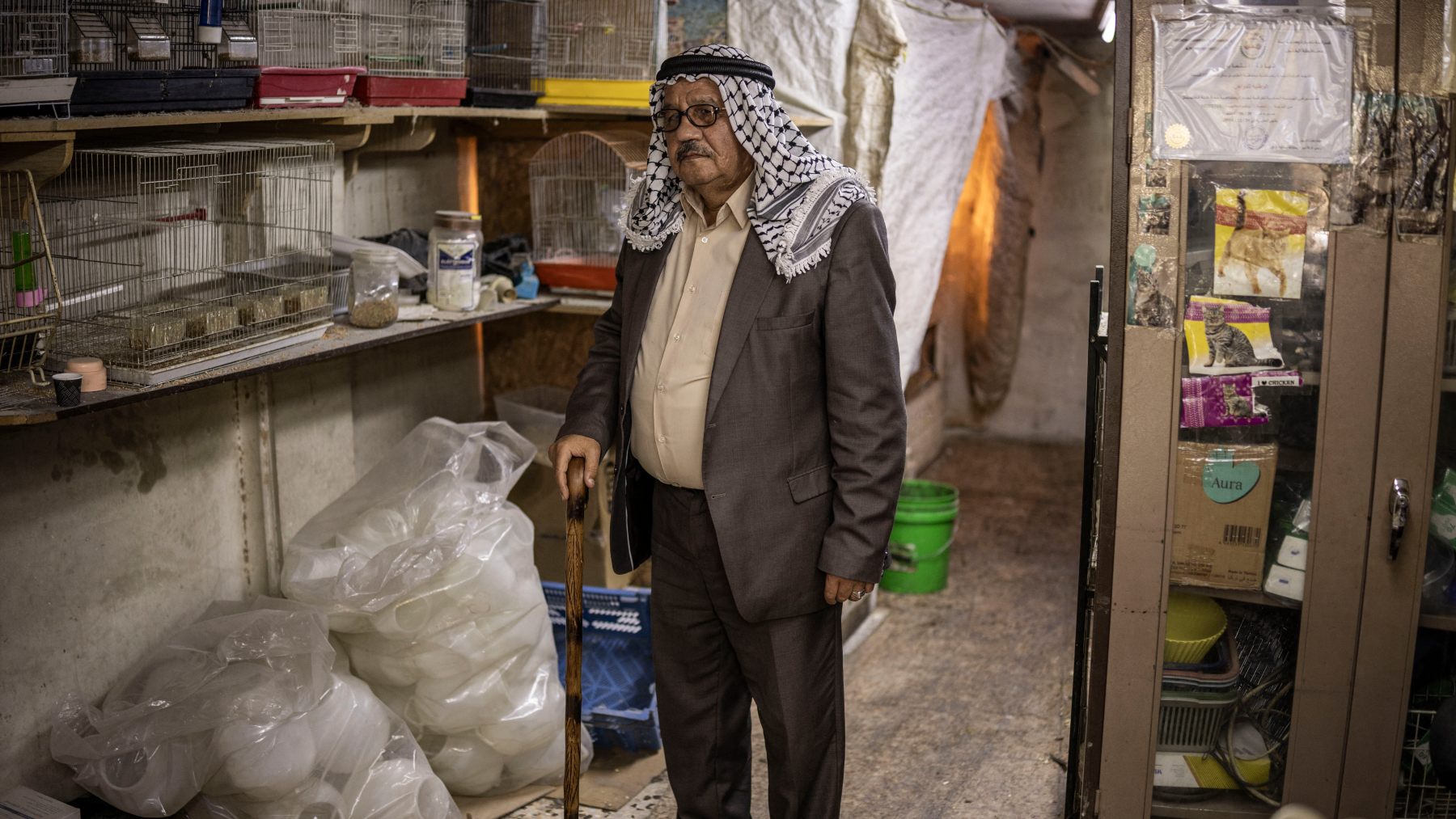
In the aftermath of a deadly shooting incident near the Farsh al-Hawa checkpoint west of Hebron on Friday, Israeli security forces have carried out a large-scale military operation that displaced hundreds of Palestinian families across multiple Hebron neighborhoods, following an attack that claimed the lives of two Israeli soldiers and left three others wounded. The Israeli military framed the campaign, executed in partnership with the Shin Bet internal security service and Israeli Border Police across West Bank territories, as a targeted counter-terrorism mission designed to root out militant infrastructure, seize unregistered weapons, and conduct widespread suspect interrogations. Israeli forces confirmed the two alleged Palestinian assailants were killed at the scene of the Friday shooting, identified locally as Ahmad and Hamouda al-Joba, whose family home sits in the al-Jalada neighborhood, one of the first areas targeted for forced evacuation. The military initially stated that residents would be permitted to exit the designated operational zone via pre-marked safe routes, with no specified timeline for their return to residential properties. However, on-the-ground accounts from displaced Palestinian residents paint a starkly different picture of the incursion, which unfolded in the neighborhoods of al-Jalada, Ein Deir Bahha, Wadi al-Maghariba and Shi’b al-Milh starting Saturday morning. Abdul Hamid Shahada, a Hebron resident who witnessed the raids firsthand, told Middle East Eye that heavy deployments of Israeli soldiers accompanied by armored military vehicles stormed residential zones hours after the Friday shooting, surrounding the al-Joba family’s property before distributing printed evacuation maps marking dozens of homes and adjacent structures for immediate clearance. Shahada described watching security personnel physically assault one local man during the early stages of the incursion, as families scrambled to gather minimal essential supplies overnight in anticipation of being forced out. At 9 a.m. Saturday, troops breached Shahada’s residential building, ordering him to alert all 54 residents, including dozens of children and his ailing 79-year-old mother, to evacuate immediately with only five minutes to prepare. Shahada confirmed that soldiers forced all evacuees to keep their hands behind their heads, barring them from retrieving clothing, personal valuables or household items beyond small bags holding critical medications, mobile chargers and legal documents. Many of the children, he noted, were visibly trembling and crying as they were marched along a pre-determined route to Al-Salam Street, with no clear communication from troops about when they would be allowed to return to their homes. Some families were told their displacement could last anywhere from six months to a full year, while others received no timeline at all, only a vague “until further notice” directive. Multiple displaced residents reported that Israeli troops ransacked and vandalized abandoned homes in the evacuated zones, leaving doors and windows wide open with personal property strewn across the interiors. Parallel to the mass evictions, Israeli forces carried out widespread demolition operations across the Farsh al-Hawa area, flattening roughly seven dunums of land, destroying residential units, commercial storefronts and local industrial facilities. A sweeping city-wide closure was also imposed across Hebron, blocking all major entry points and access roads to surrounding villages, towns and adjacent Palestinian refugee camps. Local on-the-ground sources confirmed that at least 13 Palestinian residents were formally arrested during the raids, while dozens more were detained for hours of unplanned field interrogations at military checkpoints. In response to the unfolding humanitarian situation, the Hebron municipal government activated its full emergency response plan, setting up dedicated relief shelters for displaced families and launching a centralized operations hub to track and address the needs of affected residents, amid growing fears that the evacuation zone could expand to displace even more local households. Hebron deputy mayor Khaled al-Qawasmi confirmed to Middle East Eye that Israeli forces began delivering formal evacuation orders to residents shortly after midnight, giving many families just one hour to leave their properties. He noted that the confirmed number of displaced people currently stands at roughly 250 families, a figure that is not final as the military siege remains ongoing. While some displaced families have found temporary accommodation with local relatives, the municipality has repurposed a number of public facilities including the Child Happiness Centre, a Korean-funded community centre and several local guesthouses to host those with no other housing options. Qawasmi issued a public warning that if the military operation continues to expand, the limited capacity of existing public shelters will be quickly overwhelmed, triggering a local shelter crisis for displaced Palestinian civilians. He added that the broad closure extends far beyond the original targeted operational zone, with Israeli military deployments spread across large swathes of Hebron, blocking normal movement for all local residents even outside the evicted neighborhoods.
After deadly shooting, Israel forcibly evicts hundreds of Palestinian families from Hebron homes