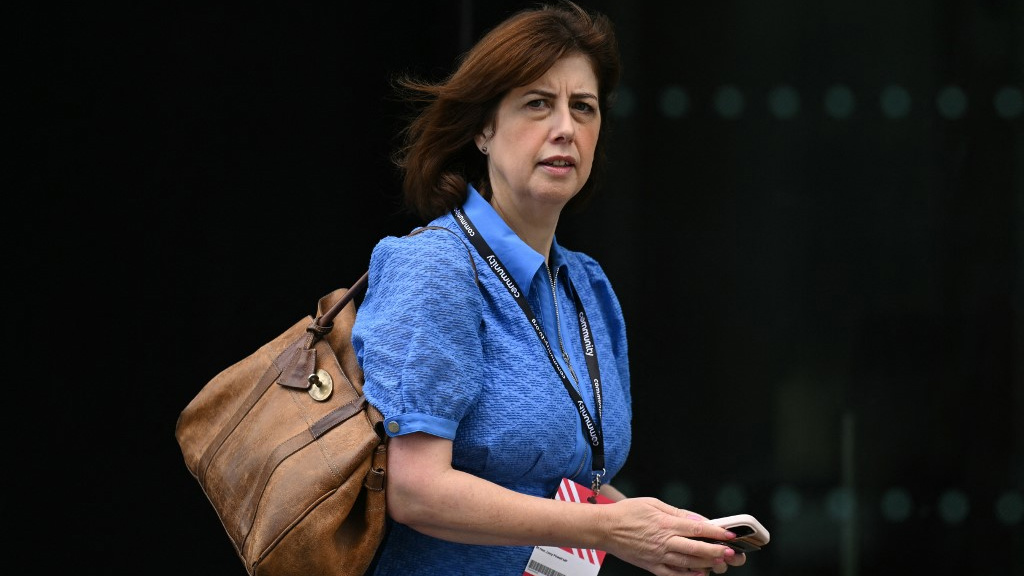
Fresh scrutiny has erupted over the UK government’s push to mandate the contested International Holocaust Remembrance Alliance (IHRA) definition of antisemitism for all educational institutions, a policy that critics argue curtails legitimate debate of Israeli state actions in classrooms, even as the original architect of the IHRA framework has publicly cautioned against its use as a regulatory or disciplinary tool. The policy was formally greenlit after ministers pledged to fully adopt all recommendations from the newly released independent Bell Review, a government-commissioned inquiry led by Sir David Bell that purported to expose widespread antisemitic harm in UK schools. A headline claim widely circulated in mainstream media coverage of the review asserted that three in five Jewish pupils face antisemitism during their school careers, a statistic that has now been revealed to rest on severely limited, unrepresentative survey data. Deep dives into the Bell Review’s unpublished annexes confirm the underlying dataset was drawn not from a cross-section of enrolled schoolchildren, but from a 5,000-person survey of 16 to 18-year-olds registered with UCAS, the UK’s university admissions service, excluding all peers of the same age group who had not applied for higher education. Only 92 respondents in the full sample identified as Jewish, and of that subset, just 70 answered questions about personal experience of antisemitic harm. Of those 70, 29 reported encountering antisemitism, equating to a 41% response rate, not the 60% “three in five” figure that was widely publicized in initial coverage. The Bell Review itself explicitly acknowledges the dataset’s limitations, noting the small Jewish sample size requires cautious interpretation and that responses cannot be extrapolated to represent all UK school or college students. The review’s own trend analysis also draws a clear distinction between two separate social patterns: overt anti-Jewish prejudice remains relatively low and stable across British society, while public criticism of Israeli state policy is far more widespread and has been steadily rising in recent years. Data cited in the report shows just 3% of British adults reject the idea of welcoming Jewish friends into their social circles, while 25% of the general public say they are uncomfortable spending time with people who openly express support for Israel – a figure that jumps to 49% among 18 to 24-year-olds. The IHRA definition at the core of the policy was first drafted in 2004 as a non-binding, informal reference guide for tracking antisemitic incidents, with a series of appended illustrative examples that include framing Israel’s very founding as a racist undertaking. Critics of the framework argue these appended examples intentionally blur the critical line between bigotry targeting Jewish people and legitimate political criticism of Israeli government conduct, a concern shared by the definition’s lead author Kenneth Stern, who has repeatedly warned that repurposing the IHRA text as a formal legal or disciplinary instrument risks suppressing protected, legitimate political speech. Opposition to the policy has been fierce among education sector unions: National Education Union General Secretary Daniel Kebede argued that forcing the IHRA framework on schools will “tighten the chilling grip already stifling classroom discussion of the Gaza genocide,” emphasizing that schools require targeted, practical resources to address real instances of antisemitic bullying rather than a contested definition that shuts down open, evidence-based geopolitical debate. Further controversy has flared over apparent double standards in the Department for Education’s guidance on political symbols in schools, after newly appointed Education Secretary Lucy Powell told Sky News that Palestinian flags would not be considered acceptable classroom displays, arguing that schools must remain strictly impartial and avoid hosting partisan geopolitical protest. Critics quickly pointed out that Powell’s predecessor Bridget Phillipson was filmed visiting a classroom where pupils were openly waving Ukrainian flags, with the Department for Education publishing official statements celebrating Ukrainian Independence Day in 2024 and affirming full solidarity with Israel in the immediate aftermath of the 2023 Hamas attacks. Reports have also emerged that since the outbreak of the ongoing Gaza conflict, growing numbers of schoolchildren have been referred to the UK’s controversial Prevent counter-extremism programme for wearing pro-Palestine badges or stickers, a trend campaigners say the new IHRA policy will exacerbate by further penalizing non-violent political expression among students.
UK antisemitism report questioned as ‘three in five’ student claim and other findings fall apart