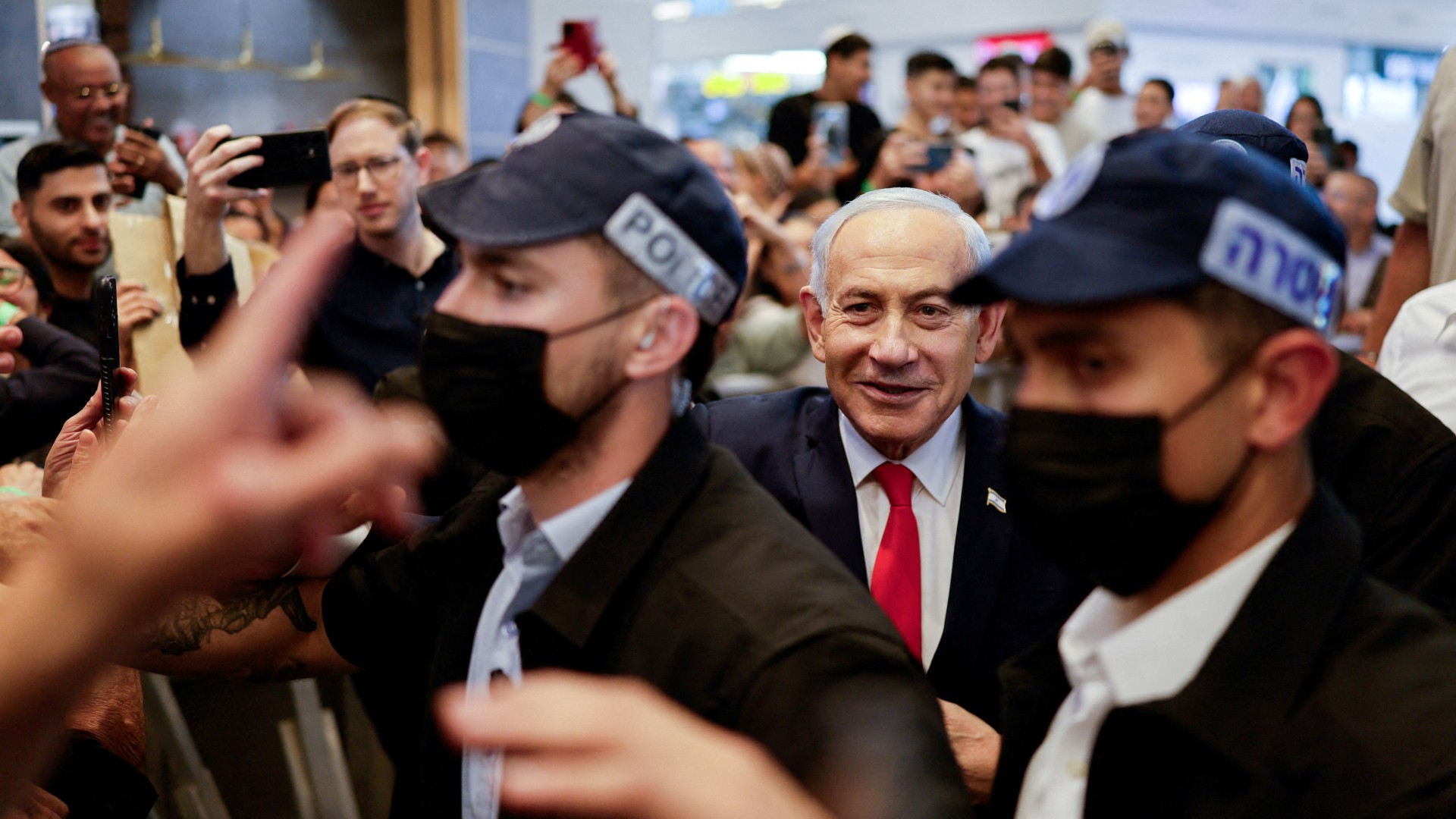
As Israel prepares for its upcoming Tuesday parliamentary vote, the race has once again orbited almost entirely around the polarizing figure of long-time premier Benjamin Netanyahu, rather than the widespread societal reckoning many anticipated would follow the October 7, 2023, Hamas-led incursion and the subsequent 18 months of devastating military operations in Gaza. While the two landmark events have undeniably shaped the electoral landscape, their influence is filtered almost exclusively through public scrutiny of Netanyahu’s decision-making: questions over what advance warnings of the October 7 attack he received, his handling of the subsequent conflict, and the fates of remaining Israeli captives still held in Gaza. Observers note that most Israeli voters appear to have already locked in their positions weeks ahead of polling day, with Netanyahu’s base rallying to his side either in spite of the October 7 security failures and Gaza campaign, or explicitly because of his hardline response to the attacks. This pre-determined partisan alignment has created an unusually subdued electoral environment, a stark contrast to the mass street mobilizations that swept the country less than two years prior, when hundreds of thousands of Israelis protested Netanyahu’s highly contested judicial overhaul that threatened to weaken the country’s supreme court. Further widespread demonstrations erupted in the early months of the Gaza war, as families of hostages and their supporters criticized Netanyahu for prioritizing military objectives over negotiated efforts to secure captive releases. Against that backdrop, many political analysts initially predicted Netanyahu’s right-wing bloc would face a crushing defeat at the polls, and that public tensions would reach a boiling point in the lead-up to voting. Instead, no large-scale protest movements have emerged in recent months, even as Netanyahu’s personal political standing has weakened significantly: projections show his long-ruling Likud party is on track to lose 10 to 15 Knesset seats, roughly one-third of its current parliamentary representation. For all his individual vulnerabilities, however, the broader right-wing ideological current among Israeli voters remains deeply entrenched. Three distinct far-right parties running explicit platforms that call for the mass deportation of Palestinian residents are projected to win a combined 20 seats, equivalent to one-sixth of the total 120-seat Knesset. The country’s fragmented opposition, by contrast, lacks a unified, cohesive governing platform, with the only shared priorities across disparate opposition factions being two narrow demands: that Netanyahu be removed from office, and that the country’s ultra-Orthodox Jewish population be required to serve mandatory military service, a longstanding point of public controversy. Many of the parties running in the nominal opposition camp hold firmly right-wing policy positions themselves, including former Netanyahu allies Naftali Bennett, head of the Together party, and Avigdor Lieberman, leader of the Israel Is Our Home faction, both of whom previously served as defence ministers under Netanyahu’s premiership. Even Gabi Eisenkot, the former Israel Defence Forces chief of staff widely framed in international media as the centrist, moderate challenger who can unseat Netanyahu, has run on a noticeably hardline domestic platform: he has publicly pledged to expand existing Jewish settlements in the occupied West Bank, and his electoral list includes multiple current and former settlers who openly supported Netanyahu’s 2023 judicial reform push. While Eisenkot previously floated the possibility of including Arab-Israeli political parties representing Palestinian citizens of Israel in a future governing coalition, he has since walked back that position after facing fierce backlash from key political allies. The dual-faced messaging strategy he has deployed, projecting a relatively liberal, moderate persona for international audiences while positioning himself as a tough security-focused leader for domestic Israeli voters, has left many constituents unclear on his actual governing priorities. Bennett and Lieberman, meanwhile, have sought to court centrist and even left-leaning voters despite their long records of openly anti-Palestinian rhetoric, unwavering support for settlement expansion, and aggressive foreign policy stances. Most strikingly, almost no candidates across the entire electoral spectrum have held substantive public debates about Israel’s long-term strategic trajectory, or proposed clear policies to address the overlapping crises unfolding in Gaza, Lebanon, the occupied West Bank, and with Iran. No major opposition party has laid out a roadmap for a long-term political settlement in Gaza, or outlined plans to advance the second phase of the 2024 temporary ceasefire agreement. None have put forward concrete frameworks to curb the surge of violent settler attacks against Palestinian communities in the West Bank, or to rebuild functional working relations with the Palestinian Authority. Some analysts warn that a narrow Eisenkot election victory could even embolden extremist settler factions, who have spent years building up heavily armed local militias with deep ties to rank-and-file IDF personnel deployed across the West Bank. While Eisenkot has pledged to roll back the controversial annexation-adjacent policies implemented by current far-right finance minister Bezalel Smotrich, and reassert formal military control over settlement zones, even long-time conservative Israeli political commentators have acknowledged that the Israeli army has already effectively lost operational control over large swathes of the West Bank to settler groups. Many security experts fear that settler factions will launch widespread, coordinated acts of civil disobedience and targeted violence against Palestinian communities to undermine any incoming Eisenkot government that attempts to restrict their autonomy, in a scenario widely described as a looming settler rebellion. One potential, though deeply controversial, compromise path for Eisenkot to defuse this far-right pressure would be to form a national unity power-sharing government with Netanyahu, similar to the disastrous 2020 rotating premiership deal Netanyahu struck with former rival Benny Gantz. Such an arrangement would be deeply unpopular with Eisenkot’s core anti-Netanyahu voter base, and Netanyahu would almost certainly refuse any power-sharing deal that did not grant him full governing primacy. Even so, the unusual arrangement could neutralize the most radical elements of the far-right bloc, and exclude hardline leaders like Smotrich and Itamar Ben Gvir from senior ministerial positions. The final shape of the next Israeli government will ultimately hinge on how close Netanyahu’s existing current coalition can come to the 61-seat Knesset majority threshold. Current aggregate public opinion polls show Netanyahu’s existing allied factions sitting at roughly 51 seats, but if he can narrow that gap to near the 61-seat mark, political analysts warn he stands a strong chance of poaching enough right-wing lawmakers from rival opposition parties to retain the premiership for another term.
Israel election 2026: Netanyahu may be weak but the right wing remains as strong as ever