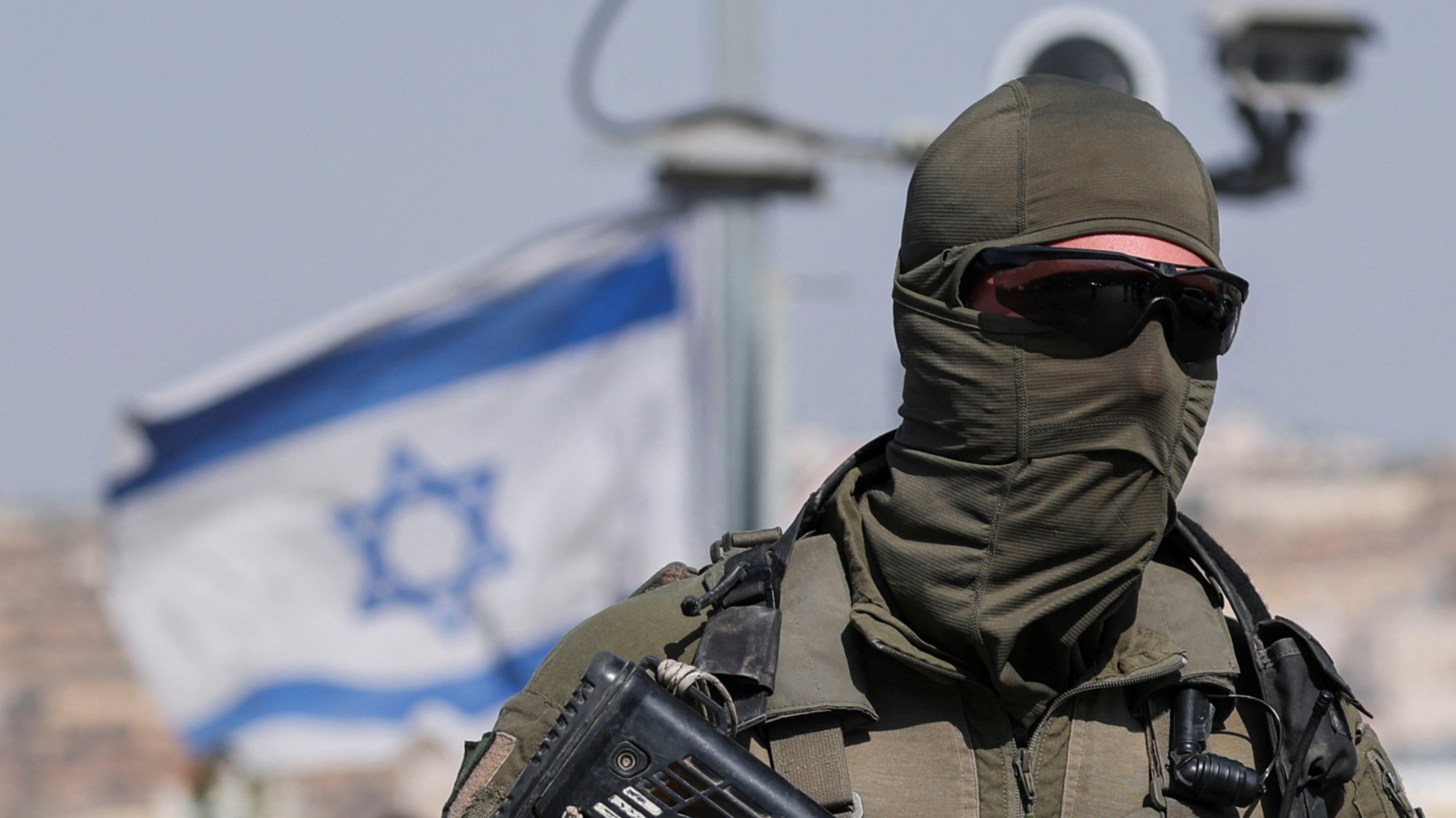
Following a deadly early-morning shooting attack at a northern Hebron checkpoint on Friday that left five Israeli service members injured, two of them in critical condition, Israeli Prime Minister Benjamin Netanyahu has directed national security teams to finalize contingency plans for a territory-wide full lockdown of the occupied West Bank. The incident unfolded when two Palestinian assailants, later identified by Israeli media as members of the same local Hebron family, opened fire on deployed Israeli troops, triggering a 20-minute intense exchange of gunfire that ended when Israeli forces fatally shot both attackers. Immediately after the security assessment convened in the wake of the assault, Netanyahu formally ordered the immediate full closure of Hebron alongside the accelerated rollout of preparatory measures for a sweeping West Bank-wide movement restriction. The Israeli Defense Forces confirmed they have established a complete military cordon around Hebron, and launched what they describe as proactive counterterrorism operations across the surrounding area. Parallel to these deployments, Palestinian local media reported that Israeli military units conducted incursions into the neighboring city of Dura, south of Hebron, where troops shot and wounded at least one Palestinian civilian and detained multiple other residents during house-to-house raids. Further controversy erupted after the Palestinian Ministry of Awqaf and Religious Affairs confirmed that Israeli forces had sealed off the UNESCO-listed Ibrahimi Mosque, a designated endangered Palestinian World Heritage Site, forcibly evicting all on-site religious staff and custodians. The ministry issued a sharp condemnation of the move, labeling it a blatant, sustained violation of the sanctity of Islamic holy sites and the fundamental right to freedom of worship explicitly enshrined in international humanitarian law and conventions. The mosque, which has faced a steadily tightening array of Israeli restrictions in recent months including periodic bans on Muslim worshipper access, limits on the public call to prayer, and state-enabled incursions by Israeli settlers, has long been a flashpoint for religious and geopolitical friction in the region. Israeli army chief of staff Eyal Zamir characterized Friday’s shooting as a severe security breach, noting that the quick action of responding troops had neutralized the two attackers before they could carry out a far deadlier large-scale assault. Hardline far-right members of Netanyahu’s cabinet immediately leveraged the attack to push for unprecedented escalations in West Bank policy: National Security Minister Itamar Ben Gvir posted on social platform X that the incident vindicates his four-year long campaign within the Israeli cabinet to fully dismantle the Palestinian Authority, arguing that Palestinian residents’ right to free movement is subordinate to Israeli citizens’ safety and security. Finance Minister Bezalel Smotrich echoed the demand, referring to the West Bank by its biblical Israeli names “Judea and Samaria” as he called for a full, large-scale military campaign mirroring operations conducted in Gaza and southern Lebanon, with stated goals of dismantling the PA, seizing all unregistered weapons across the territory, and eliminating all suspected armed militant operatives.