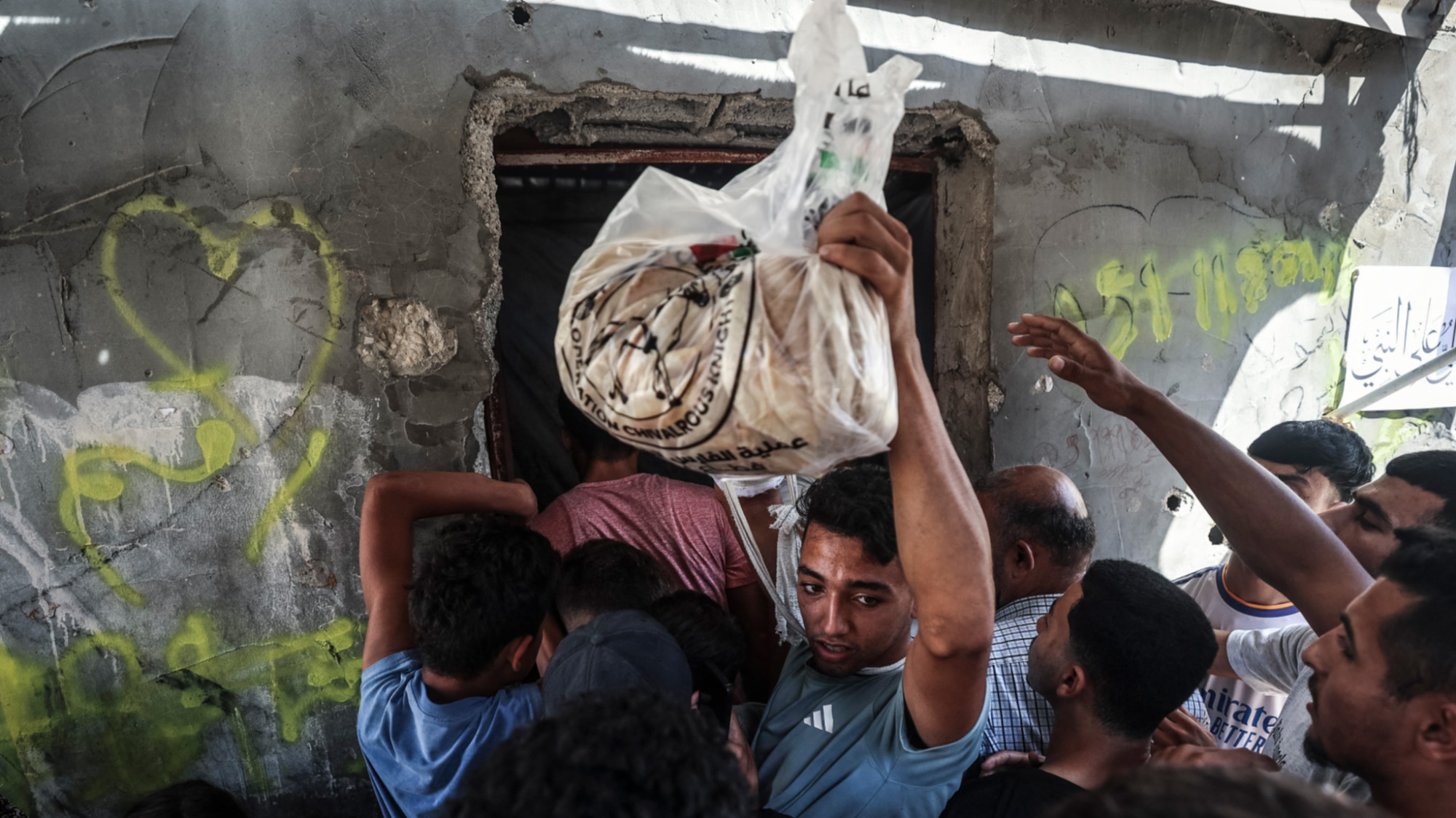
A cascading food crisis is unfolding across the besieged Gaza Strip, where the vast majority of remaining commercial bakeries have ceased operations in recent days after Israeli authorities blocked all incoming wheat flour shipments for 10 consecutive days, Palestinian official sources confirm.
Gaza’s Ministry of Social Development issued an urgent public alert on Thursday, cautioning that sustained blockades on flour and critical bakery operating supplies risk sparking an immediate, large-scale humanitarian catastrophe that would directly impact hundreds of thousands of civilian residents. Abdel Nasser al-Ajrami, who leads Gaza’s Bakery Owners Association, detailed that 10 out of the territory’s 17 previously operational commercial bakeries have already shuttered permanently due to total depletion of commercial flour stockpiles, with the remaining 7 facilities at imminent risk of closure unless emergency supply convoys are granted immediate entry. For days, Gaza residents have been forced to wait in multi-hour outdoor queues just to secure small portions of bread, a staple food that has grown increasingly scarce across the territory.
In its formal public statement, the Ministry of Social Development called for urgent global intervention to end what it characterized as Israel’s deliberate, systematic policy of starvation, framing the deliberate weaponization of food supplies against unarmed, civilian populations as a violation of core international humanitarian law. Officials warned that the ongoing blockade will rapidly trigger widespread famine and the total collapse of food security for the territory’s vast displaced population and lowest-income households, with rates of acute malnutrition already climbing sharply among vulnerable groups including young children, chronically ill patients, and elderly residents. The ministry explicitly implored the broader international community to abandon its longstanding silence on the Gaza crisis and uphold its binding moral and humanitarian obligations to prevent the territory from sliding into a full-blown famine event.
The wave of bakery closures arrives just days after the UN World Food Programme (WFP) announced it would be forced to discontinue food assistance for more than 500,000 Palestinian residents in Gaza, a decision driven entirely by catastrophic shortfalls in operational funding. Al-Ajrami noted that the 21 WFP-supported bakeries still operating across the territory only produce enough bread to cover 25% of the Gaza Strip’s total population demand, leaving a massive unmet gap for staple food access.
The latest supply disruptions trace back to October 14, when Israeli authorities announced a total suspension of all commercial shipments entering Gaza, citing an unsubstantiated claim of a tax dispute between local Gaza merchants and the Hamas-led governing authority – a allegation that both Hamas leadership and Palestinian import associations immediately and categorically rejected. Israeli officials initially stated they would lift the full commercial shipment ban just five days after its implementation, but Palestinian administrative records confirm sweeping, arbitrary restrictions on all food and essential supply movements have remained fully in place ever since.
These sustained supply limitations stand in direct violation of the October 2025 ceasefire agreement that was negotiated to end the devastating 2023-2025 war on Gaza, under which Israel formally committed to end all aerial bombardment of the territory and permit a minimum of 600 fully loaded aid trucks to cross into Gaza every 24 hours. Since the ceasefire was signed, Israeli forces have repeatedly breached the terms of the deal via near-daily military strikes that have killed more than 1,500 Palestinian civilians, including 350 children. The total confirmed death toll of Palestinian civilians in Gaza from Israeli military operations since the conflict began in October 2023 now exceeds 74,500. Israeli authorities have also maintained harsh, sweeping constraints on both aid shipments and commercial goods movements following the ceasefire’s signing, with an average of only 200 trucks granted entry per day – less than a third of the 600-truck daily volume promised under the negotiated agreement.
Joint data compiled by the United Nations and the Integrated Food Security Phase Classification (IPC) confirms that 1.4 million people, roughly two-thirds of Gaza’s total remaining population, are currently facing acute food insecurity at crisis levels or worse, with an additional 200,000 residents enduring emergency-grade food insecurity that puts them at immediate, life-threatening risk of starvation.
Gaza bakeries forced to shut as Israel blocks flour shipments