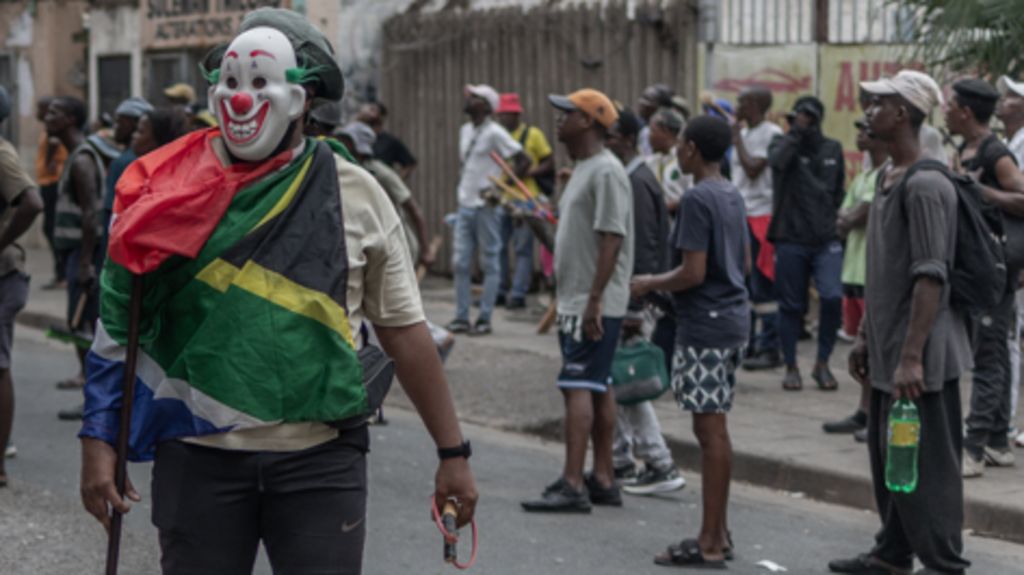
South Africa is once again grappling with deadly anti-migrant violence following the fatal beating of an unidentified foreign national in Durban, an incident that has thrown a harsh spotlight on the country’s decades-long struggle with xenophobic tension and deep-rooted socio-economic inequality.
Local law enforcement confirms the victim, a man thought to be between 38 and 42 years old, was initially accosted by two assailants at a roadside before a crowd of roughly 50 people joined in the assault. He was pronounced dead at the scene of the attack, and investigators have now launched a formal homicide probe, though no definitive motive has been confirmed as of yet.
Provincial police spokesperson Robert Netshiunda told the BBC that authorities are refusing to speculate on potential links to the ongoing wave of anti-immigrant protests sweeping the nation, noting that additional details will be released to the public only after they have been fully verified.
This latest killing comes amid a surge of anti-migrant demonstrations that have rocked South Africa throughout 2024, many of which have escalated into brutal violence. Earlier this June, rioters set fire to local shops and vehicles in both Durban and Soweto, the major township located just outside Johannesburg. One of the most prominent organizations organizing the protests, a group called March and March, had issued an ultimatum requiring all undocumented foreign nationals to leave the country by June 30. Multiple rallies held in the lead-up to that deadline brought widespread reports of targeted assaults on migrants from other African nations.
The escalating violence has triggered urgent action from several neighboring and regional African countries, which have moved to repatriate their citizens out of concern for further attacks. Nigeria held South African authorities directly responsible for the deaths of two Nigerian citizens in June, while Ghana confirmed the killing of 41-year-old Bashiru Isak, a father of three who was fatally shot in Cape Town during anti-migrant demonstrations. Isak’s death sparked a formal diplomatic dispute between the two nations, with South Africa pushing back against claims that the violence was widespread, arguing the scale of unrest had been overstated.
Jacinta Ngobese-Zuma, a leading figure in the March and March movement, has pushed back against accusations of xenophobia directed at her group. In an interview with the BBC’s *Focus on Africa* program, she argued that calls for stricter immigration controls do not equal anti-foreigner sentiment. “We can’t be living with these people for so many years and now when we say it is too much, it is enough, we are told that we are xenophobic,” she stated.
South African national government officials have struck a tentative balance in response to the unrest, urging protesters to commit to peaceful demonstration while also acknowledging that long-overdue immigration reform is needed. Authorities note that since launching a national crackdown on undocumented migration earlier this year, tens of thousands of foreign nationals have already been deported or voluntarily repatriated to their home countries.
This latest chapter of violence is not an isolated incident: South Africa has contended with repeated waves of xenophobic attacks for nearly 20 years. The worst outbreak on record occurred in 2008, when widespread coordinated attacks on foreign-born communities left more than 60 people dead and displaced tens of thousands more.
Contemporary anti-migrant sentiment has grown against a persistent backdrop of national crisis: South Africa struggles with widespread systemic poverty, one of the world’s highest levels of income inequality, and an unemployment rate that hovers at roughly 33 percent, leaving one in three working-age South Africans out of a job. Protesters and anti-immigrant activists often claim that migrants take scarce jobs from native-born citizens, drive up local crime rates, and overburden already strained public services. However, academic researchers have repeatedly found that these broad, generalized claims are not supported by empirical evidence.
Even amid its ongoing economic struggles, South Africa remains one of the most popular destinations on the African continent for migrants, who travel to the country in search of formal employment, physical safety, and improved economic opportunity for themselves and their families.